A Dinosaur with a Quill

I work in a very laptop-obsessed office. Every meeting we have is vaguely comical: all of us clustered around a table together and making zero eye contact because so many of us are staring at the screen and/or typing busily away taking notes. It’s especially funny in the offices furnished more by a bistro table than an actual conference table — imagine, if you will, some bizarre version of office jenga.

DINO_PEN_COL_921211fI’m not going to say I’m immune to exhibiting some of these behaviors myself. I carry my laptop into most meetings, in case something comes up in conversation that I need to pull down off a website or pull up out of my email or the document server. But unless I’m capturing the formal minutes of a meeting, I don’t usually use the computer to take notes. Instead, I use the old-fashioned tools of pen and paper.

Yes, I know: this makes me a veritable dinosaur in the contemporary work world. I’ve even read a viciously dismissive article by an Evernote aficionado* that talks about how anyone who takes pen and paper notes automatically loses her respect:

I knew right away, when you walked in here with a paper notebook — a paper notebook! — I realized that this meeting was not going to be a good use of our time. . . . You could be one of those romantic types who say that the visceral process of putting pen on paper liberates your creativity and engages lateral thinking. If you’re an after-hours poet, then, yes, that paper notebook will come in handy. For this, though, can you please go back and grab your laptop?

I’ve tried multiple times to adopt electronic note-taking methods. Nothing yet has worked to my satisfaction. I’m not sure that nothing ever will, and I wouldn’t be surprised to find myself, some stretch of time in the future, trying another technique, another structure, another iPad app, to crack the note-taking enigma.

But for now, I’m at peace with my antiquated habits. Especially now that I’ve tucked away these two articles (one and two) that suggest my handwriting habits may not be such a bad thing after all. Both articles summarize a study done at UCLA (or was it Princeton? the study authors split their affiliations between those two universities, but I’m fuzzier about which campus actually housed the research) comparing the efficacy of typed note-taking versus handwritten notes. As summarized by Wray Herbert in HuffPo:

Those who took notes in longhand, and were able to study, did significantly better than any of the other students in the experiment — better even than the fleet typists who had basically transcribed the lectures. That is, they took fewer notes overall with less verbatim recording, but they nevertheless did better on both factual learning and higher-order conceptual learning. Taken together, these results suggest that longhand notes not only lead to higher quality learning in the first place; they are also a superior strategy for storing new learning for later study. Or, quite possibly, these two effects interact for greater academic performance overall.

The scientists had an additional, intriguing finding. At one point, they told some of the laptop users explicitly not to simply transcribe the lectures word-by-word. This intervention failed completely. The laptop users still made verbatim notes, which diminished their learning. Apparently there is something about typing that leads to mindless processing. And there is something about ink and paper that prompts students to go beyond merely hearing and recording new information — and instead to process and reframe information in their own words.

Take that, bitchy Evernote ambassador! Science trumps your unfounded assumptions and prejudice! (Actually, science probably won’t do a damn thing to chip away at Ms. Evernote’s preconceptions. We always cling mostly strongly to the myths that are most unfounded.)

Anyhow, I’m sure there’s a connection between my old school pen-and-paperness at work and the continued parallelism of me blogging while maintaining a pen-and-paper journal as well.

Sometimes my diarizing feeds into the blog: keeping a physical journal can help me have space to process and synthesize things prior to presenting them out here. Sometimes the diarizing stays contained on the notebook pages: a place to process things that are too raw, too private, or just too far off-topic to make sense here. So, partly because of the ways it supports my writing on JALC, and partly for how it supports my life outside of here, I see myself happily filling more notebooks with pen-scribbles for years to come.

* Who is oh-so-coincidentally hawking her own “How to Use Evernote Effectively” e-book.

———-

Image credit: http://www.thehindu.com/opinion/open-page/with-ipad-and-notebook-around-who-needs-a-pen-anymore/article2883480.ece

Tipping into Jealousy

This morning, I spent some time writing in my pen and paper journal* to study the eruption of anger and envy I was wrestling with last night. Given everything I said — even in the moment of my emotional tantrum-ing — about my heartfelt wish for a full-society evolution past the chokehold of patriarchal, misogynist structures, then why was I so quick to fall into that resentful funk?

As best as I was able to sort it through, there are two primary threads to it: a sense of distrust and, more prominently, my addiction to being accepted and acknowledged.

First, the distrust. I’ve already written about the eerie sense of similarity I feel between Elliot Rodgers and George Sodini’s actions, and the ways both those mass murders are part of a long and ugly tradition of misogynist crimes. So even as I try to hope that things might finally change in the culture, I’m also feeling a lot of distrust that anything really will. Maybe there will just be this temporary explosion of rhetoric which quickly sinks back into complacency and the status quo.

I very much hope that isn’t the pattern that unfolds. And for all my snarky distrust, I have some portion of hope in my system. The tone of the discussion just senses different this time around. I’m not naive enough to think that everything will unfold as uninterrupted progression from today forward, but I wonder if we’ve reached (or if we’re approaching) a tipping point of cultural awareness. Once enough folks wake up, I believe, the old opiates won’t work to stop evolution.

blue-ribbonBut the deeper, darker piece of self-examination has had me taking a really close look at how my addiction to being right and being acknowledged is so strong that part of me is really envious and resentful around the idea of the culture reaching this tipping point.

Like, I get that the awareness of misogyny has to become common knowledge for things to change, but if it becomes common knowledge then those of us who were at the vanguard, thinking and talking about these issues ahead of the curve, then we won’t get credit. And the truth is, even if I can claim a place in the vanguard, it’s probably only a molecule’s worth if real estate. But man, the desire to “get credit” for that molecule’s worth of territory is hella strong.

Ultimately, I tried to boil things down to the essence and asked myself baldly and bluntly: “What do I care about more? Humanity’s evolution or getting the credit?”

The answer is that the soul-force me DOES care more about evolution occurring than anything else. But it’s a closer race than I would prefer it to be, measuring my investment in evolution against my investment in acknowledgement.

It has been really sobering to see how virulent this addiction is, and then to force myself to face up to the truth of it. Facing up to the real truth — that yes, even this thing I am so tangled and addicted to, this yearning for acknowledgement, yes, even this I am willing to give up if it means the culture can shift.

But, of course, the giving up of the addiction is a day-by-day (minute-by-minute?) practice, rather than anything as simple as turning off the faucet…

So, as with so many things: more to study. Progress rather than perfection, ongoing awakening rather than an arrival point.

* Yes, I keep an analog journal in addition to a blog. Why? As with so many of the dangling participles I leave around here, that’s a story for another day.

———-

Image credit: http://nursegail.com/nursing-profession-most-trusted-gallup-poll/blue-ribbon/

Be Still, My Weeping Heart

Hulk-YAWPMr. Mezzo and I watched Ryan Murphy’s HBO adaptation of The Normal Heart this evening. I’d not seen the original play performed, although I had read it numerous times as part of my teaching and dissertation work. So I was really interested to see what differences there might be between Kramer’s play and Murphy’s film.*

The play debuted off-Broadway in 1985. And its initial impetus and power is summarized by Mary McNamara in the LA Times thusly:

In the early 1980s several things were obvious to writer Larry Kramer. Gay men were literally dropping dead and neither the government nor the medical establishment seemed to be doing much to stop it. Moreover, no one, outside of other — increasingly terrified — gay men, seemed to care.

So Kramer wrote “The Normal Heart,” a blunt instrument of a play debuting in 1985 in which his thinly disguised avatar, a New York writer called Ned Weeks, watches friends die, helps form the Gay Men’s Health Crisis center and does a lot of yelling. About homophobia and the Holocaust, about the perils of the closet, about society’s unforgivable hypocrisy and gay men’s own self-destructiveness.

“The Normal Heart” was a howling call to action, designed to push people out of their ignorance, complacency and seats to demand justice, and funding, for all.

Almost 30 years have passed since the play’s debut, and more than 30 years since the CDC first reported mysterious cases of kaposi’s sarcoma. With the unfolding of so much time (and the waves of cultural change wrapped in these decades), I’ll admit I was among the many individuals wondering a little bit about whether the movie would be meaningful, or effective.

It was. In a different way, but yes: deeply effective. To quote Tim Goodman in The Hollywood Reporter:

The movie is a way to remember. It takes something revered in theater circles and give it a wide release with a cache of bright stars. It will get seen, and the message about the horrible history of the beginning of the AIDS epidemic won’t be forgotten. . . . For those people who didn’t see the play or, more importantly, weren’t there to witness or read about the onset of what was first described as “gay cancer,” The Normal Heart works best as modern history. Knowing what we do now, it’s hard to fathom that so many people looked the other way.

It’s a bit hard for me to judge the film’s effectiveness as “modern history” because of the peculiarity of my knowledge around the early years of the HIV/AIDS epidemic. I’ll unpack that story in full some other day.**

Suffice for the moment to say that much in my adolescence — socioeconomic privilege, suburban home, mainstream media diet — worked to keep the spread of HIV/AIDS completely off of my threshold of awareness. However, since I chose to write my (ultimately unfinished) dissertation about artistic responses to the AIDS epidemic, I made up for my early years of sheltered ignorance with a lot of research and study.

Still, it’s one thing to research a topic, and it’s quite another to bear witness. And it is in bearing witness to those first years where I am was most profoundly moved by Murphy’s film. To my ears, Kramer’s play had always functioned better as a piece of agitprop than anything else. A howl of outrage, a wake-up call — a piece that condemned inaction but perhaps not one that opened the heart to sympathy or empathy.

And don’t get me wrong: I don’t intend this observation to suggest I have any less respect for Kramer’s play. I am not a member of the tone police, and I know that yawps of outrage and agitprop are vitally necessary. I also believe that acts of witness and stories that inspire empathy are necessary, too. Which is why it’s such an amazing thing for the seed of Kramer’s work and activism to have offered me both of those gifts.

Back in the day, Kramer’s play was one of the things that woke me up to AIDS, to its early spread, and especially to the devastating effects of prejudice and homophobia. The play opened my eyes; it made me angry.

And tonight, Murphy’s film helped re-ignite my empathy for what it might have been like to live through the early years of HIV/AIDS. It bore witness to a time when a community felt such sorrow and loss and — because of cultural disdain and indifference — it faced those losses alone. The film opened my heart; it made me cry.

Both gifts of awareness. Both gifts to be grateful for.

* For lack of a better coinage, I’m going to talk about these two different adaptations as “Kramer’s play” and “Murphy’s film.” I haven’t yet done a textual comparison, but the screenplay sure senses different enough from the original script that I think there’s some validity to addressing these as distinct — though related — artworks, rather than talking about them as two interpretations of a core text.

** I wrote a damn novella last night, so I’m trying to be a bit less loquacious tonight. Especially since I have to get up early tomorrow for work.

———-

Image credit: http://poetry.rapgenius.com/Tom-schulman-dead-poets-society-yawp-freestyle-scene-annotated#note-1685661


What We Measure Matters

I don’t usually write about the details of my 9-to-5 work (0r 8-to-6, or whatever) here in the Wild West of the blogosphere. Besides my general level of caution about being “inappropriate” or “indiscreet,” I also know someone in my circle of acquaintance who was quite literally Dooced, some years ago. So yeah: I consider discretion to be very much the better part of valor.

Marshallville-One-room-Schoolhouse-300x225What I do feel comfortable saying is that I do advancement work for an educational non-profit — which is the field and non-profit sector I’ve been working in for 11 years now. And, because it’s helpful to my work AND because I have a genuine interest in the topic, I regularly make the time to read books, articles, blogposts, etc. that help me expand my understanding of the challenges, trends, concerns, and opportunities that exist in schools and in the educational field writ large. Sometimes I even borrow books from the office “library” to help me stay plugged in.

And today, in that spirit — between the truly massive amount of sleeping I did last night, the tiny bit of laundry-folding/house-puttering that occurred, and then the lengthy nap that was required ‘cos I hadn’t slept enough last night* — I finished reading Mike Rose’s collection of essays Why School?

Rose’s subtitle, Reclaiming Education for All of Us, is suggestive of his desire to refocus the lens of educational discourse away from the usual obsessive focus on knowledge and workforce preparation as signaled by the results of high-stakes standardized testing. This desire is summarized by Rose in this HuffPo post about the book:

There’s not much public discussion of achievement that includes curiosity, reflectiveness, imagination, or a willingness to take a chance, to blunder. Consider how little we hear about intellect, aesthetics, joy, courage, creativity, civility, understanding. For that matter, think of how rarely we hear of commitment to public education as the center of a free society. . . . My hope is that “Why School?” contributes to a more humane and imaginative discussion of schooling in America.

The book is an engaging and thought-provoking read, and I definitely recommend it for folks interested in education. Be aware going in that the book is about asking big questions and providing answers that rest at the level of ideals, values, and visions. Not so many concrete implementable suggestions, but that’s okay by me.

Rose lays out a cogent analysis of how current educational trends are the inevitable flowering of a flawed set of values. I found some of the middle essays in the collection most persuasive and illuminating on this score.

For example, “Business Goes to School”  highlights the self-serving contradictions of a corporate culture that demands the education system prepare critically reflective problem-solving workers-of-the-future while also selling an easy economy of glitz and glamour and anti-intellectualism:

So many of the commercially driven verbal and imagistic messages that surround our young people work against the development of the very qualities of mind the business community tells the schools it wants. (61)

“Reflections on Intelligence in the Workplace and the Schoolhouse” calls out the intellectual laziness of intellectual snobbery around defining “intelligence” as solely located in the institutions of schoolhouse and university:

If we think that whole categories of people–identified by class, by occupation–are not that bright, then we reinforce social separations and cripple our ability to talk across our current cultural divides. . . . To acknowledge our collective capacity is to take the concept of variability seriously. . . . To affirm this conception of mind and work is to be vigilant for the intelligence not only in the boardroom but on the shop floor; in the laboratory and alongside the house frame; in the workshop and in the classroom. This is a model of mind that befits the democratic imagination. (86-87)

And, finally,** “Re-mediating Remediation”  draws on Rose’s own teaching history to argue that the most effective way to increase literacy skills for teen, college and adult learners is to address reading and writing challenges in the context of challenging, engaging, age-appropriate metrical, rather than through the usual menu of “dumbed down” workbook assignments:

[W]riting filled with grammatical error does not preclude engagement with sophisticated intellectual material, and that error can be addressed effectively as one is engaging such material. (130, emphasis added)

I am inclined to agree with Rose’s analysis that a lot of the flaws and misguided obsessions in the U.S. educational system are rooted in these flawed values and prejudices. Given that reality, I would suggest that an essential first step in effectively rethinking American education would be to plant the seeds of different, more functional values. And I’m grateful to Rose for carrying that task forward so persuasively.

* D’you think last weekend’s work finally caught up with me? I think so, too.

** “Finally” insofar as it’s the final essay I’m going to specifically highlight — not that this is the final insightful thing Rose has to say…

———-

Image credit: http://www.hcsv.org/visit/tour-the-village/marshallville-school/

The Challenge that Wasn’t


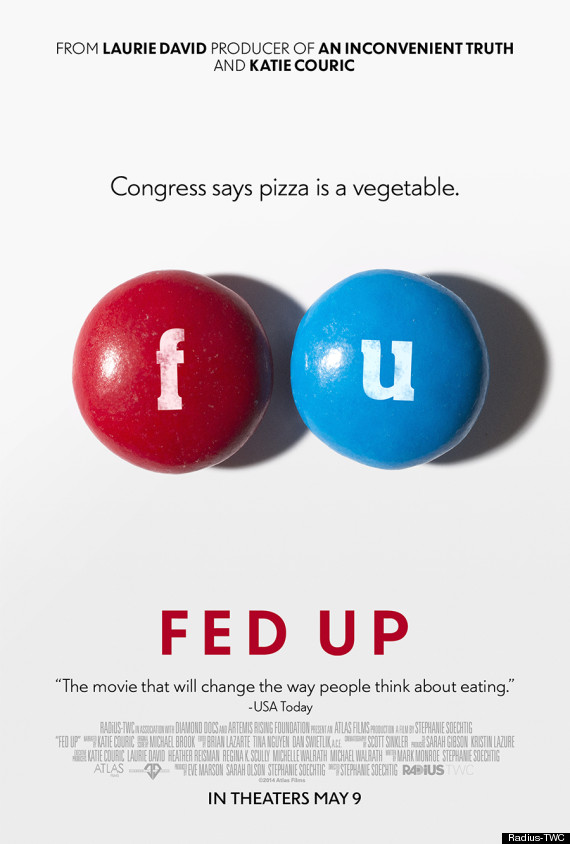
http://www.huffingtonpost.com/2014/04/10/fed-up-poster_n_5127876.html

This morning, Dan Harris and Katie Couric were on GMA reporting out on their separate experiences trying Couric’s 10-Day “Fed Up Challenge.” Basically, the challenge is an awareness-raising publicity stunt designed to accompany the release of the new documentary that, as Mark Bittman describes in the NYTimes, presents “heavy-hitting facts about the dangers of the overconsumption of sugar and other hyperprocessed food.”

Couric and the other filmmakers encouraged a sugar-elimination regime that may sound familiar to followers of my HCG journey: fresh fruits and natural sugars are okay. The challenge instead is about avoiding anything that has added sugar in it. And I’m assuming part of the motivation behind issuing this challenge was to raise some level of public awareness about the shocking number of packaged and processed foods that contain added sugars — even when you might not expect them to.

Of course, the funny thing about Couric’s challenge, when seen through an it’s-all-about-me lens, was the ways that this “new” 10-day challenged overlapped so perfectly and precisely with the final days of my HCG journey. So for me, the “challenge” to avoid added sugars was pretty much routine by the time Couric was talking about it on the news shows.

But that’s just me. I find myself wondering how many folks have chosen/will choose to take this project on.  The website currently lists close to 28,000 registrants, but my mind is racing with so many possibilities — some significant portion of those folks may have tried and stopped, or there could be many more folks who are doing the challenge without registering, and there may be folks who come across the film and the challenge in weeks to come who add themselves to the list of participants — that I can’t tell if the figure of 28,000 participants is a Mama Bear, Papa Bear, or Baby Bear kind of number. (Too big, too small, or just right?)

And whatever the number of participants is, I wonder how many of them are being impacted by the experience. Do they find the preponderance of sugar on food labels as shocking as I did? Are they contemplating changing the structure of their food habits, or are they waiting out the time before going on the next sugar binge? (And, to stop deflecting and judging others and instead to take my own damn inventory: which of those possibilities will be my path? I’ve already had some cheese popcorn and a small piece of chocolate tonight, so it didn’t take me hardly any time post-HCG to dip my toe back into the addictive waters…)

Bittner is hopeful that the movie will make an impact on the American public:

The movie addresses what the former Food and Drug Administration commissioner David Kessler calls “one of the great public health epidemics of our time.” The greater public needs to know that.

As of this writing, the movie is in 19 markets, and doing well. If it were in hundreds of theaters, it would probably change more lives than any movie released this year, because if people see the film, they will get the message. It’s not a subtle one.

And it certainly seems as if there’s enough fear of impact that the inevitable backlash from the corporate machine has started. (As, thankfully, has the backlash against the backlash, most cogently embodied by Boston’s own* Union of Concerned Scientists.)

So, I remain curious to see how this will unfold.

———-

I’m also feeling into the question of whether I’m going to see the movie, and if so, when and where I will choose to do so. I have some hesitation because of all the ways I expect the film will give me stabby feelings. Both in the desire to strike out against the food industry, but also, I fear, in my desire to take a knife to the filmmakers themselves.

Because I am pretty damn sure that the film’s argument in many instances is going to boil down to “It’s sugar’s fault for making us fat!” After all, the HuffPo teaser for the film from which I got the poster, above, leads not with the scientifically accurate and scarier facts about diabetes and the food industry, but instead with society’s true monster-under-the-bed: being fat!**

The more nuanced and accurate perspective would be to say: “Sugar causes numerous health challenges and deficits which are sometimes but not always correlated with (not causing) weight gain, so we should focus on the sugar and not on monitoring people’s body size.”

Anyone want to quote me Vegas odds for that possibility? Don’t bother: I know full well there’s not a snowball’s chance in Rome of seeing that inconvenient polemic anywhere in Fed Up. More’s the pity.

* Okay, “Cambridge,” not Boston proper. I’m still having some hometown pride…

** And believe me when I say that was the least offensive of the options I found to link to as image sources.

water well

The Well of Intuition

This great power, intuition, is composed of lightning-fast inner seeing, inner hearing, inner sensing, and inner knowing.

Over generations, these intuitive powers became as buried streams within women, buried by disuse and unfounded charges of disrepute. . . . I think we can be confident that things lost in the psyche are all still there. So, too, this well of women’s instinctual intuition has never been lost, and whatever is covered over can be brought back out again.

~~ Clarissa Pinkola Estes, Women Who Run With the Wolves, 76

Although my focus with the HCG journey was on detoxing rather than the usually-marketed weight loss routine, I will admit that I wondered whether the experience would support me in being able to move more fully towards intuitive eating. After all, the dietary regimen has given me a chance to get out of the habit of processed food, and I also had lots of opportunity to study the ways that my hungers are sometimes more about emotional needs than actual physical sustenance.

However, having been out of my dietary/cooking routines during the four days of the retreat, I’m not sure that intuitive eating thing has really kicked in. Instead, I can recall several moments when I kept eating — taking cashew after cashew out of the bag for a snack, or going back for that extra little bit of egg salad at lunchtime — well past the point of physical hunger. Responding instead to emotional tension or anxiety.

I don’t say this out of some self-flagellating, confessional instinct. After all, as I’ve said before (and will surely say again and again): I am not striving for a perfection movement.

What instead interests me is the awareness that I don’t yet have a lot of faith in my ability to eat intuitively.

Or, quite honestly, in any level of my intuition.

water well
http://brianmercerbooks.wordpress.com/2013/12/01/when-the-well-runs-dry-part-1/

The concluding movement from the weekend was a highly creative and individualized one, a movement that very much asked us to tune into our intuition. And although I have enough admiration for Clarissa Pinkola Estes that I will not choose to argue with her when she suggests that the well of intuition can always be mined and revived, I still gotta say that my intuition is feeling pretty far underwater.

I’m still too much trapped in my brain, caught up in the fear of “getting it wrong” to have the kind of surrender, the clear channel that allows my intuitive wisdom to come to the fore. And, as with my witnessing around those “extra” cashews, I am trying to name this in the spirit of honest self-examination rather than in a blaming/shaming tone. ‘Cos that sort of beat-up is the same kind of mind voice and ego eruption as the ones that kept me bottled up during the weekend.

Now I know, even in my self-imposed containment, I had some small offerings of intuition to make. And I also take some comfort in trusting that my faith and believing were contributions of their own flavor — perhaps an energetic support to those individuals who were more able to open up their creativity and intuitive insights.*

Still, it’s an area where I can keep studying, an area I can look to grow and express more fully. Which is why I started listening to the audiobook of Women Who Run With the Wolves during this morning’s commute. It’s probably well past time for me to become acquainted with this classic of feminist spirituality.

* Yeah, I know: coming up with this kind of justification to feel better about my contribution does serve also as a between-the-lines admission that, however much I’m trying to stay in witnessing rather than in self-castigation, there’s a little bit of that “mad at myself” piece going on. So, yeah: that happened.

Farmville Cash Cow

The Sequined Threat

Farmville Cash Cow
http://blog.games.com/2011/02/20/farmville-scam-no-free-cash-cows-are-being-given-away/

I knew from yesterday’s exercises that this morning’s concluding movements for the retreat were going to be physical ones. So when I got dressed, I said a small prayer of thanks that I had one T-shirt to wear for the work and a fresh shirt to change into before heading off to the airport and my travels home.

In retrospect, it might have been wiser to switch the order of how I wore these two items of clothing. In my own way of mixing vanity and propriety when I travel, I saved the “dressier” T-shirt for my travels: darker and more subdued colors as well as a subtler design. Dark blue flowers, grey leaves on a dark cocoa background, with a small smattering of sequins across the torso.

It seemed like a good idea at the time. But as it turns out, the security body scanning machine isn’t a fan of sequins, so wearing them may result in you getting sorta-kinda felt up by the lady TSA agent.

———-

Nota bene: As much as I love comic hyperbole, let me be really clear right now about the professionalism shown by the TSA agent in question. She told me what the scanner procedure required, and that she would be using only the back of her hands for this “pat-down.” She made it very clear this was not an enjoyable happening for her, either, and she gave me the option of stepping to a more private location before this extra-level search happened. She also warned me before every body contact within the pat-down, and was as quick as she could be within what was required.

All in all, she did the best she could within the structure to make an invasive and dehumanizing moment as painless as she could. So: honor to her.

———-

Nevertheless, the structure itself was incredibly dehumanizing — something I didn’t really get till I was in the middle of the happening. Foolishly, naively, defiantly, I had chosen not to step to a more private location for the “pat-down.” Naively, because I didn’t quite get how thorough the search was going to be. Foolishly, because I had zero foresight to understand how profoundly shocking this boundary-crossing was going to feel in my system. Defiantly, because even with my limited ahead-of-time understanding about the structure, I knew enough to want it to be out in the open.

Let them see what this system is like. Do not let this be swept over and hidden in the shadows.

No, I don’t really know who the “them” is I want to wake up to this structure. But even now that I know how thorough the search is, and how it really feels to stand and experience that, I have no regrets for staying out in the open for it. Let them see, indeed.

And although today’s happening was an especially charged case study, the principle of how dehumanizing air travel can be holds true in so many other expressions.

Yes, I’ve seen that Louis C.K. bit before. I know how miraculous it is that air travel is available to us at all, and I have profound gratitude at being able to use this miracle in order to attend these retreats, to study, to grow my awareness, and to move my life forward.

But still.

So many elements of airport design and airline systems reduce people to one or all of these things: cargo, cash cows and potential threats. Seats that keep getting more cramped and compressed to increase the profit capacity of each individual flight, and the endless up-charges to try and increase the profit potential from each individual passenger. The continued ridiculousness of taking your shoes off at the security checkpoint. The price mark-up on the Dunkin’ iced coffee bought in the airport as compared to the one a mile down the road from Logan, paired with the regulations that forbid you from bringing the more reasonably-priced caffeinated beverage along on your travels.

I am by no means a road warrior. But I travel enough to have some chances to study these dynamics. And I do see individuals — staff and travelers alike — taking what steps they can to maintain their humanity and bring it into the travel machine in whatever ways they can.

I’ve started making my own conscious efforts in this direction. Saying my “thank you” to someone with attention and sincerity rather than just by rote. Helping someone place a computer cord so he can use the extra plug at the charging station where I’m sitting and feeding my Apple gadgets. Holding my shit together when a TSA agent needs to pat me down rather than exploding any of my triggeredness on her.

But I can’t help but wonder. What would it be like if humanity were intrinsically woven into the travel structure? What would it be like if moments of humanity and connection were part of the design rather than operating as a sub rosa counter-narrative?

After all: how many other structures are similarly ripe for transformation?

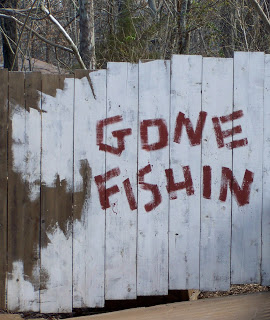
Gone Fishin

Gone Fishin’

Gone Fishin
http://ticktickdynamite.blogspot.com/2011/08/gone-fishin.html

Off on an early morning flight to the retreat tomorrow.

Last night and tonight I was/am deep in packing, preparation, and managing domestic tasks to compensate for the abbreviated week. And once I’m at the retreat center, I’m completely off-the-grid till I emerge Sunday evening.

So: no blogging for Sherri this week.

I’m excited. And nervous. And a little stirred up — some of the forces I expect I’ll be processing tomorrow-and-onward have erupted a tiny bit early.* The retreat will be hard work, but it’ll be good work, and work well-worth the doing.

———-

* Which is how it usually goes for me.

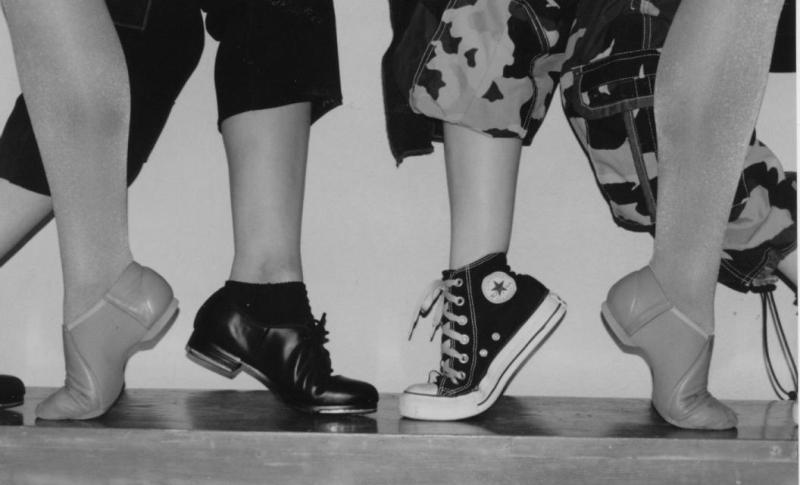
dance shoes

Trading Two Left Feet for a Regular Pair

I spent some time this evening getting organized and doing a little packing for my weekend retreat. And I should be doing my homework for said retreat. Instead, I’ve been trying to figure out another blog post while I watch Dancing with the Stars.*

dance shoes
http://www.dance.net/topic/3578896/1/Modern-Photos-Members/Dance-Shoes.html

Like with theater and musical theater, I have loved ballroom and contemporary dance for years. Unlike with musical theater, I have never had talents in that direction, so my love of dance has always been the love of a spectator rather than an aspirant.

(I mean, I can bluff my way through some basic stage choreography, like a lot of community theater participants. I think my natural musicality can give me some help in that department, but nevertheless: this gal would never be considered a triple threat.)

I’ve never been sure how much of my lack of dancing talent comes sincerely from a lack of talent in that direction and how much is the legacy of having lived dissociated or semi-dissociated for so many of my formative years.

There’s probably some aspect of a sincere lack of talent. I’m not naturally athletic in any direction, and I consider dance to be as sincere an athletic endeavor as any other sport. And then, when you look at my natural genetic body shape as compared to the body type of most dancers,** there’s another signal about how I’m not naturally suited for terpsichorean pursuits.

But as I’m learning more and more to live in my body and in communication with my physical self, and as that study overlaps with the possibility of me dipping my toes back into musical theater, I find myself wondering if the flavor of that experience might be a bit different now than from when I was last on stage, some decade or so ago.

Not that I’m expecting to be transformed from a faker to Fosse overnight, but I do wonder if there will be a bit more ease in my next dance audition. Hard to predict, but certainly something to watch.

* Fumbling fingers alert: my initial typing of the title was Dancing with the Tsars. How’s that for a new reality-show concept?

** You will, perhaps, notice that I don’t even list ballet as a dance style I’m strongly a fan of. That shit is just way too body dysmorphic for my tastes.

organ pipes, close-up

Respect or Complicity?

organ pipes, close-upThe concert went well. My packing tape hem didn’t deconstruct itself, the choir kept itself together and stayed attentive to our conductor, the soloists were fantastic, and we all muddled through some, er, “imperfections” in how the organist handled her duties.

After we were done singing and we’re listening to the Widor Toccatta that closed out today’s program,* I found myself reflecting on the many ways that involvement with classical choral music so often creates some tight interweaves with the Christian church tradition. After all, so much of the repertory, even up into the 20th century, was written to be a part of the church music tradition. And then there’s all the times community choirs use churches and cathedrals as concert locations.

This was all very present to me as I sat in a pew after singing an oratorio depicting the crucifixion of Jesus Christ, standing on a choral riser right next to a big wooden cross adorned with a crown of thorns and a white linen cloth.**

I am not a Christian. If I had to name my spirituality, I think the closest I could come right now would be to call myself a “UU Buddhist witch.” And yet, here I am, reclaiming my place as part of a musical tradition that is very much Christian.

Not all of it, of course. This particular choir I chose to join caught my eye because they’d programmed a setting of Mary Oliver’s poems by a composer whose e.e. cummings settings I have performed and deeply admired in the past. That greater breadth in programming is one of the things I look for in a choir. But even in a group that looks to widen its programming choices, there’s no escaping a heavy dose of Christianity in the music programming.

And I am so of mixed feelings about it.

On the one hand, much of this repertory is what I “cut my teeth” on since I began training my voice at the age of 9. There’s memory and affection tied up in here. And a lot of it is legitimately beautiful and moving — showing once again how something rooted in authentic creativity can often cross boundaries of historical, national or ideological separation.

And yet. I remain deeply concerned at the ways the narrative of Christianity is still so predominant in the USA. Just a couple of days ago, Alabama’s Supreme Court Chief Justice declared that the First Amendment of the Constitution only protects Christians, because “Buddha didn’t create us, Mohammed didn’t create us, it was the God of the Holy Scriptures.” Now, this is, obviously, both a legal and a historical fallacy, but I find it rather terrifying that a state supreme court justice (chief justice, no less!) would take such an ignorant and narrow-minded position publicly. (And without any negative repercussions, so far. That detail alone should be enough to show the ongoing cultural hegemony of Christianity in the states, today.)

So, in re-engaging with the classical choral tradition, to what degree am I re-opening to my own creativity and expression? To what degree am I showing respect to past composers and their creations, understanding the historical moments and context in which they worked?

And to what degree am I simply complicit in reinforcing the suppressive nature of dominant cultural structures, rather than engaging in resistance or offering counter-narratives?

I don’t know the answer to these questions. But I think I’ll be studying them for some time now. There’ll be another choral season starting in September, and in the meantime, I’m considering trying out for a local music theater production next month.

If I choose to do that (and if I were to get a part), there will be the chance for a whole new study around cultural narratives of gender, love and marriage.

* This organ piece went fine. The bitchy Mezzo in me wonders if the organist spent more time preparing her “spotlight” piece than her accompaniment for our oratorio.

** The crown of thorns I get, but I gotta admit, I’m rather clueless about why the white cloth gets draped there. The shroud he left behind in the tomb?

———-

Image credit: http://www.transformingeveryguest.com/2012/09/sermon-work-in-progress.html