A Reason or a Season

[Set-up] The Day 6 prompt for Writing 101 is a character study, a prose portrait of “the most interesting person you’ve met in 2014.” I know what follows is more an artifact of imagination and projection than anything else, but this individual has been on my mind now and again for the last few weeks, so I’m going to keep trusting my inner guidance in this, as with so many other things, and write the words I have in me to say. [/Set-up]

———-

misty-forestOne of the things we’ve been doing as part of growing roots up here in Boston is to attend services and find other (small) ways to become involved at one of the local UU parishes.

All told, it’s sort of been an odd time to be “dating” this new church. The customary minister has been on sabbatical, so the Sunday services have been a patchwork of experiences, from lay-led services (that so often sound more like academic lectures than actual sermons), to guest ministers, to services led by the congregation’s brand-new ministerial intern.

I know enough about how long it takes to get through divinity school to expect that Jeff is actually in his late 20s. However, he has that indeterminate appearance so many young men have — at least to my aging eyes — where his age could possibly be anything from 12 to 29. His frame is slender, such that he looks just the tiniest bit dwarfed by his minister’s robes. The eyes behind his glasses shine with warmth and brightness, but the glasses themselves, paired with the ministerial accoutrements and the care with which I have seen him perform his duties have created in me the strongest impression of seriousness.

The first time we saw him lead a service, Mr. Mezzo even criticized him for that seriousness. “I just prefer a minister who’s less formal, more able to laugh at themselves,” he said in our car ride home that day.

And I understood that, but I had my own theory. “Imagine being so young,” I said, “and you’ve been tasked with providing spiritual leadership and guidance to an established congregation full of people with decades more life experience than you, with more years of involvement in this congregation than you. A congregation that won’t stop comparing your performance unfavorably with that of their oh-so-beloved minister.*

“I remember how intimidated I was with the responsibility of teaching my first college class as a kid of 24, and that was just a low stakes music appreciation class! I can imagine choosing to act with a certain level of gravitas if I were in his shoes.”

———-

My level of church involvement and attendance is still pretty minimal, so I haven’t have opportunities to get to know Jeff to any particular depth. A couple of conversations during coffee hour, a number of services and sermons. My perception has been that he’s come a bit more fully into a comfort level as his months of service went by. I was glad to see that.

In a weird way, I was also glad to see the announcement that Jeff would be finishing his internship with us at the halfway mark rather than completing two full years of service. He was entirely gracious in his announcement of this news, and shared that he was in a process of discerning whether it sensed best for him to continue the path of UU ordination or if a different faith tradition would be better-suited as his spiritual and ministerial home.

And I get that, I really do. A college friend of mine went through a similar journey as she entered divinity school — leaving the faith of her fathers (Catholicism) to be ordained as a UCC minister, because she knew the call to ministry in her soul was true and deep and not to be denied. I also have my own small degree of resonance, recalling the ways I was brought up an a devoutly atheist household** and remembering my own journey of exploration and discernment towards the understanding and acceptance of Spirit I now possess — however ego-limited, nonetheless true and deep and not to be denied.

I also admit to wondering whether the congregation really gave Jeff a fair shake with this position. Instead of being actively mentored week after week by a sitting minister, he was being used as “substitute teacher” during that minister’s sabbatical. And, what with the number of church members expressing to me how “unfortunate” it was that Mr. Mezzo and I were starting to attend church during this sabbatical:

You’ll see how Reverend ______ is just so much better than this.

Well, if I (minimal participation and all) have gotten such a strong picture of the level of regard these folks have for their sitting minister (and of the attendant, not-so-subtle disdain they have for anyone who isn’t Reverend ______), I kinda think Jeff mighta been able to pick up on it, too.

So between my imagined resonance with his journey, and my soft regret for any discomforts he may have felt during this year, I have been holding Jeff in the light and wishing him all manner of support and guidance and acceptance as he journeys forward. May he find the home that best feeds his soul and where he can most authentically be of service.

I’ve been too chicken-shit to reach out and tell him this. Like I said, he and I barely spoke once or twice. The idea of emailing to share any portion of this just feels awkward and invasive and as if I’d be forcing him into the box of the story I made up about his life, rather than honoring his own knowledge about his own lived experience.

But, however on-point or off-base my understanding of Jeff’s decision may be, even if I never see him or speak to him again: this much I know to be true.

A small prayer, whispered up to the ether. You will always be part of  the church’s family tree in my drawing of its branches. Thank you. I wish you well.

———-

* More on that later.

** Yes, that’s a del thing. At least as far as I’ve experienced it, it is.

Image credit: http://www.seedsofunfolding.org/issues/02_11/feature.htm


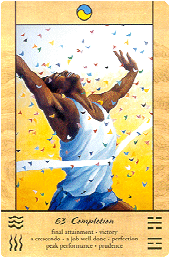
Completion

Celebrating a Finish Line

I’ve talked before about how I’m not thinking of the end of my HCG journey as some sort of arrival at a mythical “I never need to think about detoxing again” kind of place. Nonetheless, a former co-worker of mine always talked about how necessary it is to celebrate the finish lines you achieve. Yes, there’s always a next thing, next task, next project right around the corner, and that deserves attention and energy. But it’s also essential to honor the tasks/things/projects you’re able to complete, and honor yourself for being able to complete them.

Completion
http://www.learntarot.com/todesc.htm

And tonight is a moment where I may not have reached the finish line on my detox journey, but it certainly have reached a finish line. Because today was my last day under the post-HCG dietary restrictions, meaning that I have successfully navigated through and to the end of this nine-week experience.

So: yay.

Though no exclamation point on that, because I am decidedly of mixed feelings.

I am truly proud to have accomplished this, to have found the self-care and discipline to live within the rules of the protocol. I am also looking forward to releasing the strictness of these rules — to being able to start weaving grains, legumes, and carbohydrates back into my diet. (In fact, I think there may be a batch of my famous three-bean “chili” to cook up some time soon…)

I am grateful for the opportunity to get a clearer sense of the distinction between physical and emotional hungers, though there’s another post to write about how I don’t actually think “emotional hunger” or “emotional eating” are necessarily a bad thing. Even though I’d sort of known about this already, it was truly shocking for me to really see and understand the quantity of foods that have added sugar in them, and I’m going to try and limit my intake of added sugars as I move forward.

From an energetic perspective, I am also glad to have taken this HCG journey. Obviously, as last night’s post revealed, I still have many ways in which I am limited and lots of places to keep learning and growing. But it does sense as if the nurturance in this experience — the role of HCG as a sort of “mother vitamin,” allowing myself to be supported by the center and my coaches, practicing maturity and self-care — has really helped take my victim identity off-line. Some significant piece of chronic resentment and suppressed rage that I’ve been carrying with me for rather a while seems to have resolved itself.

Ultimately, though, I also feel slightly embarrassed at the notion of being too proud about this “accomplishment.” Because, honestly, it wasn’t that difficult an experience to go through for these months.

Still: there were some moments of difficulty here and there, and I did manage to weather them. So, honor the finish line, honor myself for getting there, and much honor to Spirit and to my teachers for aiding my way on the path.

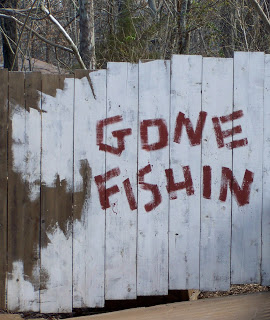
Gone Fishin

Gone Fishin’

Gone Fishin
http://ticktickdynamite.blogspot.com/2011/08/gone-fishin.html

Off on an early morning flight to the retreat tomorrow.

Last night and tonight I was/am deep in packing, preparation, and managing domestic tasks to compensate for the abbreviated week. And once I’m at the retreat center, I’m completely off-the-grid till I emerge Sunday evening.

So: no blogging for Sherri this week.

I’m excited. And nervous. And a little stirred up — some of the forces I expect I’ll be processing tomorrow-and-onward have erupted a tiny bit early.* The retreat will be hard work, but it’ll be good work, and work well-worth the doing.

———-

* Which is how it usually goes for me.

organ pipes, close-up

Respect or Complicity?

organ pipes, close-upThe concert went well. My packing tape hem didn’t deconstruct itself, the choir kept itself together and stayed attentive to our conductor, the soloists were fantastic, and we all muddled through some, er, “imperfections” in how the organist handled her duties.

After we were done singing and we’re listening to the Widor Toccatta that closed out today’s program,* I found myself reflecting on the many ways that involvement with classical choral music so often creates some tight interweaves with the Christian church tradition. After all, so much of the repertory, even up into the 20th century, was written to be a part of the church music tradition. And then there’s all the times community choirs use churches and cathedrals as concert locations.

This was all very present to me as I sat in a pew after singing an oratorio depicting the crucifixion of Jesus Christ, standing on a choral riser right next to a big wooden cross adorned with a crown of thorns and a white linen cloth.**

I am not a Christian. If I had to name my spirituality, I think the closest I could come right now would be to call myself a “UU Buddhist witch.” And yet, here I am, reclaiming my place as part of a musical tradition that is very much Christian.

Not all of it, of course. This particular choir I chose to join caught my eye because they’d programmed a setting of Mary Oliver’s poems by a composer whose e.e. cummings settings I have performed and deeply admired in the past. That greater breadth in programming is one of the things I look for in a choir. But even in a group that looks to widen its programming choices, there’s no escaping a heavy dose of Christianity in the music programming.

And I am so of mixed feelings about it.

On the one hand, much of this repertory is what I “cut my teeth” on since I began training my voice at the age of 9. There’s memory and affection tied up in here. And a lot of it is legitimately beautiful and moving — showing once again how something rooted in authentic creativity can often cross boundaries of historical, national or ideological separation.

And yet. I remain deeply concerned at the ways the narrative of Christianity is still so predominant in the USA. Just a couple of days ago, Alabama’s Supreme Court Chief Justice declared that the First Amendment of the Constitution only protects Christians, because “Buddha didn’t create us, Mohammed didn’t create us, it was the God of the Holy Scriptures.” Now, this is, obviously, both a legal and a historical fallacy, but I find it rather terrifying that a state supreme court justice (chief justice, no less!) would take such an ignorant and narrow-minded position publicly. (And without any negative repercussions, so far. That detail alone should be enough to show the ongoing cultural hegemony of Christianity in the states, today.)

So, in re-engaging with the classical choral tradition, to what degree am I re-opening to my own creativity and expression? To what degree am I showing respect to past composers and their creations, understanding the historical moments and context in which they worked?

And to what degree am I simply complicit in reinforcing the suppressive nature of dominant cultural structures, rather than engaging in resistance or offering counter-narratives?

I don’t know the answer to these questions. But I think I’ll be studying them for some time now. There’ll be another choral season starting in September, and in the meantime, I’m considering trying out for a local music theater production next month.

If I choose to do that (and if I were to get a part), there will be the chance for a whole new study around cultural narratives of gender, love and marriage.

* This organ piece went fine. The bitchy Mezzo in me wonders if the organist spent more time preparing her “spotlight” piece than her accompaniment for our oratorio.

** The crown of thorns I get, but I gotta admit, I’m rather clueless about why the white cloth gets draped there. The shroud he left behind in the tomb?

———-

Image credit: http://www.transformingeveryguest.com/2012/09/sermon-work-in-progress.html

My Fair Lady

I’ve been thinking a bit about fairness the past few days, and the ways I value and desire a sense of fairness in things. My thoughts are a little scattered tonight, so I may just rocket through a few different angles on the topic, rather than pretending I have a cohesive essay to share.

standardizedanimalsOne of the most common adages that comes to my mind when I invoke the concept of fairness is that old saying: “Life isn’t fair!” And there are times that I do remind myself of that fact. Because sometimes my wishing for fairness does come from the a child’s magical-thinking place, where I’m wanting a “big daddy in the sky” sort of God to pave the way for me to have an easeful and trouble-free life.

So when I’m invoking the term fairness as code for “privilege,” it is something that deserves to have a question mark placed in there, with the reminder that fairness in one’s external circumstances is never guaranteed. And also, for whatever mishap might have me wishing life were more fair advantageous, the fact remains that I have received many gifts from life for which I ought to be grateful.

———-

One of the things we talk about at work is the way that “fair” does not necessarily mean “equal.” Since we spend some portion of our time working to serve students with learning differences or other special needs, it is likely unsurprising that we would resonate to the insights of Dr. Richard Curwin in this recent(ish) Edutopia post:

But what is fair? Many define it as treating everyone the same, but I would argue that doing so is the most unfair way to treat students. Students are not the same. They have different motivations for their choices, different needs, different causes for misbehavior and different goals. I think this is good, because wouldn’t the world be very boring if we were all the same?

The cartoon above signals some of this, as does a quote I have up on my cubicle wall:

Everybody is a genius. But if you judge a fish by its ability to climb a tree, it will live its whole life believing that it is stupid.*

———-

The one place where I am most deeply studying fairness is the depth of my desire for people to emulate fairness in our dealings with each other. I know I am driven crazy by those petty sorts of individual inequities that arise during interactions — people changing the rules on each other, situations where I might hold myself to a looser standard of behavior than I ask of those around me (or vice versa). And then, more deeply, there is the heartbreaking injustice of systemic unfairness wrapped up in cultural ills and prejudices.

It is with these areas of human unfairness — whether on a personal or a systemic level — that the adage “life isn’t fair” rings hollow to me. Like it’s just a cop-out to spare ourselves the effort of practicing deeper levels of kindness and compassion with how we see each other and hold each other in regard.

* If you were to google this, most sources would cite this quote to Einstein, but that’s probably an apocryphal attribution.

———-

Image credit: http://www.joebower.org/2014/03/what-can-we-learn-from-honduruss.html

Looking for My Emerald Specs

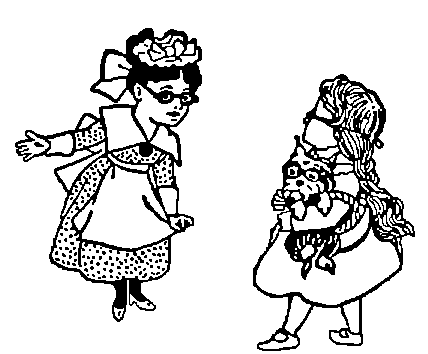
So d’you remember how in The Wonderful Wizard of Oz — note this is the title of the L. Frank Baum novel, not the Victor Fleming*/Judy Garland film — it turns out the Emerald City’s glorious emerald oversheen is caused by these lovely green goggles that get locked onto your head as soon as you get within the city walls, not be removed until you depart?

Why no, these things we've LOCKED onto you aren't significant in the littlest tiny bit....
Why no, these things we’ve LOCKED onto you aren’t significant in the littlest tiny bit….

I’m not really wanting some emerald overlord to lock more glasses onto my head. (The vision corrective specs I must to wear daily are rather enough on that score.) But I do find myself wishing for something spiritually similar to that tonight.

A coworker who I sometimes find challenging has been particularly so the last couple of days. She’s been running a bit of a martyr-complex kind of game, with all sorts of guilt-trippy chit-chat about how we don’t understand how HARD she’s working. And yet when any of us try to offer assistance or to share the workload, we are well and truly rebuffed.

It feels like a bit of a no-win situation, but I don’t especially feel like spinning through all my ego-emotional triggers around it. Instead, I’m on a bit of a different train of thought.

I truly believe that everyone has that intrinsic spark of divinity** within them. A “heart-self,” for lack of a clearer way to say it.

And I also believe that sometimes negative behaviors emerge because someone is unconsciously trying to get a little bit of care, attention, energy for their heart-self, but their past experiences have taught them the only way to get energy is to run these sorts of dysfunctional games. (I know for damn sure I’ve done that lots of times within my OWN limitations.)

So at one very small level, I can have compassion for this co-worker as I imagine the desire to get some energy for her heart-being. But the challenge I’m feeling is that I’m so triggered by the no-win/guilt trip/rejection cycle that I am not finding any capacity to actually see her heart-being.

Which brings me back to the magic specs. Wishing for that heart-colored lens or filter that I could hold in front of my eyes and see this woman’s heart-self. See everyone’s heart-self. See my world and the people in it with a lot more kindness, compassion, and acceptance.

Of course, the wizard’s magic was all humbug in that book, so I’m guessing that my ability to see beyond the behaviors into the heart-self is going to be a lot more about practice and prayer and a lot less about being the child who gets a magic present.

* I know. That’s not really even half of the directorial lineage here.

** Spirit, light, heart, authenticity….whatever name for the “Big Good Thing” speaks true for you.

——-

Image:

http://store.tidbitstrinkets.com/blog/?p=3237
(Responsibility for the caption 100% mine)

Showing Up

It was a kinesiology training weekend, so my hours have been very full and I am now exhausted. I can’t believe I’ve made it through 8 of the 10 training retreats. It seems like only yesterday I was just starting to learn the ReUnion Process. Conversely, it seems like I have undergone lifetimes since the first training session.

There’s a lot of new (and renewed) material from this weekend that I have to integrate around the deep potential this work carries for me to reach new layers of self-acceptance. But one of the big messages form the weekend was about the simply — and simply powerful — importance of continuing to do the work. In doubt, in confidence, when you’re feeling triggered, when you’re in the flow, when the work is challenging. Show up. Keep showing up. Keep doing the work.

Strikes me that it’s not a bad mantra to hang onto in the more focused project of growing into fat acceptance, or to the even more focused project of maintaining a blog. So it’s a shorter entry tonight. Nevertheless, I showed up.

==========

In other news, there’s a new MTT (“Meridian Tapping Technique,” formerly known as EFT) resource I’m thinking of tapping into.* But, like every other MTT resource package I’ve ever seen, this one has the evidently-obligatory materials about “Tapping for Weight Loss.”

So, do I get the package because I want to learn better ways to use MTT for other health and mental health issues (anxiety, insomnia, cramps, headaches, chronic pain), and just accept that the inclusion of weight loss materials is just another symptom of the deep cultural assumption about how thin=healthy? Or do I skip the resource package as a one-woman protest against the mindless perpetuation of that cultural assumption?

* Tap into. Get it? Get it? (I slay me.)

Addicted to Life

One of the topics that often circles through FA circles is a healthy skepticism about any dieting lifestyle change rhetoric that too strongly embraces that associates heaviness with addictive eating. Such skepticism is well-founded in part because fatness looks to be a way more complicated and individualized phenomenon than can be captured in a simple “calories in > calories exercised off” equation.

The other Very Good Reason to be skeptical is the cognitive dissonance around classifying a substance that is essential for the maintenance of life as an addiction — as if food is somehow like other addictive substances (like alcohol or drugs) that can be completely excised from life.*

This in large part is noodling around my brain again because of an insightful post over at Kataphatic.** It will be very hard for me not to quote the post in its entirety, but I’ll do what I can to pull out a passage or two that really started my wheels turning.

Katie was writing about the Candidacy Guidebook that lays out the steps on her path towards ordination as a deacon in her church, and specifically about a passage that discusses the need for substance abuse counseling for many individuals “who become dependent on alcohol or other drugs or food.”

Katie’s initial response is charming enough to warrant a healthy quote:

So here I am, reading along, thinking, “yep, I’m with you here, it’s not healthy for ministers to become dependent on alcohol or other drugs or… food?

Wait what? (cocking my head to the side and raising one eyebrow)

Does that really say FOOD?

Are they really saying that as a minister I am supposed to become super human and no longer be dependent on food??” [ . . . ]

Ooohhhh, okay.

So what they really mean is “emotional dependence.” Not just “dependence” period… because suggesting that we could become “dependent” or “addicted to” something that is actually necessary for our survival is just… silly, right? No one in their right mind would suggest otherwise! Right?

haha… hah… *sigh*

Katie goes on to thoughtfully examine notions about emotional dependence on food, suggesting that comfort food could perhaps more readily be classified amongst a whole host of self-soothing behaviors that are okay in moderation but could become problematic if taken too far. She also cautions about some of the dangers she sees that can stem from placing too much of an emphasis on “emotional eating” as something to self-monitor and judge oneself for.

It’s all very wise and heart-centered and I encourage you to read it all. But, in a narcissistic it’s-all-about-me moment, I’m going to riff off of her closing words:

But just because you’re fat, or just because you “emotionally eat” from time to time, doesn’t mean you have a disordered relationship with food! God has purposefully chosen to make this thing we need—food—bring us pleasure, draw us closer in community, and give us emotional comfort in addition to satisfying physical hunger. Let us be thankful for the good gift of food, and its ability to enhance our lives in such a complex and beautiful variety of ways!

I find real comfort here.

I’ve shared earlier about some of the ways it’s a tough summer for me. In addition to these upheavals (good and grief-laden) in my personal life, I’m still in my first 6 months at a new job which is rather demanding, and I’m starting coursework to begin the long road to an MBA. So in the midst of all of this, yes, I have been taking occasional refuge in the macaroni and cheese.

I know intellectually how FA activists work against the symbolic opposition of the “good fattie” (someone with pristine nutritional and exercise habits who remains fat) vs. the “bad fattie” (someone with imperfect eating and exercise habits). But as I’m trying to find my own voice in FA circles, I can feel the weight of internal pressure about how I’m not being a “good example” of Fat Acceptance, and I’m not being any sort of example for the idea of Health at Every Size. Talk about cognitive dissonance.

As I’m trying to find my own voice in FA circles, I can feel the weight of these internal pressures. But I can also tap into a growing sense of internal resource and acceptance that helps me resist such pressure. That helps me understand how turning to comfort food is an entirely natural way to respond to all the pressures and changes going on in my life. (One might even call it a healthy response, as compared to other self-soothing behaviors that got a little bit out of control in my life a decade or two ago.)

Perhaps best of all, as I continue to find my voice in FA circles, is the way that I don’t have to stand alone against the voices of internal pressure. Instead, I can be part of a community from which I can draw wisdom and support. Like I did from Katie’s post.

Blessed be.

* I do not mean to minimize how hard it can be for an addict to cut alcohol or drugs out of one’s life. I merely wish to make an obvious contrast between the theoretical possibility of letting go of a substance like alcohol — which has no inherent physical necessity for human life — versus the notion of giving up food — which is necessary for life.

** Allow me to pause for a brief squee over how terrifically inspired I am to know that there’s a blog out there writing about Fat Liberation Theology. Squeeeee!

The Comparison Trap: When Blogging meets Life

It’s interesting to me how my patterns of inadequacy and “not enoughness” can seep into so many corners of my life so subtly and so intractably.

Like here.

I started a blog because I wanted place to explore my own thoughts about self-acceptance. And yet I’ve found myself with a case of writer’s block these several days. Call it the Ecclesiastian block, a.k.a. the “nothing new under the sun” syndrome. Everywhere I look, it seems, there’s writers out in the blogosphere who are examining any topic I might, and they’re doing it with wit and thoughtfulness and profundity. In other words, they’re all doing it “better than I could” — at least, that’s what the voice in my head is telling me.

In other other words, I have fallen right into the comparison trap.

Comparison is just about the most effective self-esteem killer I know. After all, if self-esteem is intertwined with self-acceptance, what is the effect on self-acceptance when I look outside myself for the standards of how to be? Basically, it’s me stacking the deck against myself. Instead of honoring what is authentically Sherri, I judge my existence against someone else, which gets me into this loop where I beat up on myself for my inability to be someone else.

The absurdity of that logic should be evident in that last phrase I typed: beat up on myself because I can’t be someone else. Asking, expecting myself to be someone I’m not. And how fucked up is that expectation to put on myself?

After all, like Dave Matthews asked years ago, “Could I have been anyone other than me?”

Nope. And yet I so often fall into that trap of trying to be someone else, expecting to act like someone else, and then being bitterly disappointed and self-blaming when I (inevitably) fail in that project.

The road away from that habit has been a long one, and it’s not been an uninterrupted journey. But more and more I’m able to tap into an awareness of my authentic self, and the faith that I am authentically, uniquely perfect in my existence.

“Could I have been anyone other than me?” No, and that’s a reason to celebrate and to honor. And the beauty of that notion — and the fragility with which I am currently able to hold it — is likely the reason why that particular song always makes me tear up a little bit…

So in addition to Dave, I’m going to try and take a notion from my man Stephen Sondheim:

George: I’ve nothing to say

Dot: You have many things

George: Well, nothing that’s not been said

Dot: Said by you, though, George

“Said by you, though.” Things that have been said, things that are being said elsewhere, things that will be said differently by others — those things are still worth saying by me, if they’re things I want to explore and express. Because there is an essential difference between my voice and another writer’s. When I’ve fallen into the comparison trap, I fixate on that difference as the reason why my thoughts are “worse,” and why I shouldn’t bother saying them in public.

But when I separate myself from the habit of judgement, that same awareness of difference is the road to believing my words deserve their own airing. Not ‘cos they’re “better” than anyone else’s. Just because they are unique and strangely perfect in their own way, their own moment.

So I guess I fell into the black hole real fast, but at least I’ve come out of it pretty quickly.

Wrongness and Weight

So, I’m cautiously interested in the conversation going on in the comments to this post by Roni Noone over at We are the Real Deal. (I say “cautiously,” because the some of the comments in the thread have been taking a bit of a turn towards anger and intolerance. We’ll have to see what happens.)

There’s certainly stuff that could be said regarding the assumptive slip Roni makes between “having a healthy conscious relationship with food” and losing weight — as if one were always to lead to the other. But the piece I’m keying in on right now is this series of semi-rhetorical questions from the opening of her post:

Aren’t I suppose to be spreading a message of self love and body contentment? I mean, I definitely shouldn’t be inspiring people to lose weight? That’s just plain wrong. Isn’t it?

The anxieties expressed in Roni’s questions are also forefronted in her chosen post title: Is it Wrong to Want to Lose Weight?

Wrongness. So many times this comes back to notions of wrongness.

Wrongness about appearance — too blond, too short, too fat, too skinny, too flat-chested, too red-headed, hips too big, figure too boyish, wrong facial shape, too “ethnic,” too “white bread.” Too just plain wrong because we don’t thread the needle of what is deemed attractive in a celebrity culture. (And here’s a familiar reminder that even celebrities don’t come up to the standards of celebrity beauty.)

A couple months ago, I was asked, in an FA context, if I saw myself as beautiful. And I admitted that I’m not quite There yet. But here’s the thing, I remember saying.

I never saw myself as beautiful when I was younger and thin, either. I grew up skinny and had a really awkward adolescence, in which I had physical characteristics (flat-chested, glasses, braces) that in my white, upper-middle-class high school marked me as unattractive. As far as I can guess, there may have been a magic week or two during my transition for “too skinny” to “too fat” where I hit the mark of what I “ought” to weigh. But I wouldn’t be surprised if during those magic weeks where I weighed the supposedly-right amount, I carried some other marker that kept me from being attractive — or, more accurately, from feeling attractive.

Because there’s so much judgement out there, and so much internalized self-judgement that stems from that. And — no shocker here — the judgements, the feelings of wrongness aren’t even remotely limited to questions of weight, or appearance, or the physical realm. There’s plenty of societal messages about the ways to act, to live, to be. Which plays into all the ways we feel wrong in our behaviors, our choices, our circumstances.

I truly believe that fat is a feminist issue. But for me, fat acceptance is part of the larger challenge of self-acceptance. And for me, self-acceptance and self-esteem are very much spiritual issues. Letting go of feeling wrong. Letting go of the self-protective, defensive instinct to make someone else wrong when I’m feeling judged and threatened. Opening my heart to the possibility that each and every person I encounter is 100% perfect in this moment.

So, do I think it’s wrong to want to lose weight? No, I don’t.* We want what we want, and none of it is wrong, and going into the self-beat-up for wanting the “wrong” thing is only going to perpetuate  the patterns of self-judgement that keep me feeling bad about myself.

Where Roni’s questions get a little tricky for me is when she asks about “inspiring” folks to lose weight. Because that will all very much depend on how she wants to go about inspiring people. If it’s a process of living her own choices and speaking openly about them, and letting people choose freely whether or not to follow her path, I’m pretty much on board. (Insofar as I fully believe in the perfection of Roni’s choices for Roni while choosing myself not to aspire towards weight loss.)

But if her version of “inspiring” includes blindness to the perfection of choice for those embracing HAES — and that assumptive slip I mentioned above gives me some reason to fear that sort of blindness — then I’m a bit more troubled about the potential for this to be yet another message about how the FA/HAES community is wrong in our choices and our beliefs.

So Roni isn’t wrong. And I’m not wrong.

When we’re able to tap into compassion for self and make heart-centered authentic choices for ourselves, each of us is wonderfully right.

* Not that anyone needs my approval anyways.