There’s times when I feel as if, when writing my “flagrantly feminist” posts, that I’m veering uncomfortably close to dividing the world into two teams: men as the “black hats,” the villains, the aggressors, the colonizers; and women as the “white hats,” the heroes, speaking truth to power and conscientiously standing up for what’s Right and True and Good.
And if I’ve ever implied that I’ve sorted the world into those two teams, please let me say clearly for the record: that would be bullshit, ’twere I to do so. Unmitigated, odiferous bullcrap.
I’m not really a gamer. At least, not as I understand the term.
Yes, I spend way too much time playing iPad games, but it’s all amateur hour stuff: endless runners, connect-3 games, nostalgia favorites like Tetris. That kind of thing. Whenever the topic of gaming comes up, I jokingly say that I have the videogame tastes of a 9-year-old. Earlier in the summer, my nephew saw me playing Jetpack Joyride and said “I remember that game! My friends and I used to play it back in 7th grade.” So maybe my tastes are that of a 12-year-old rather than a 9-year-old, but the basic point stands: I’m not a gamer.
A gamer — to my understanding of the term — is someone who plays those extensive role-playing and/or immersive first-person shooter games. Stuff like World of Warcraft, Final Fantasy, Grand Theft Auto, or Halo. (The fact that I don’t have any current titles/examples springing to mind is yet another sign of how not-a-gamer I am, so there you go…)
I guess it’s my week to talk about sexualized body parts?
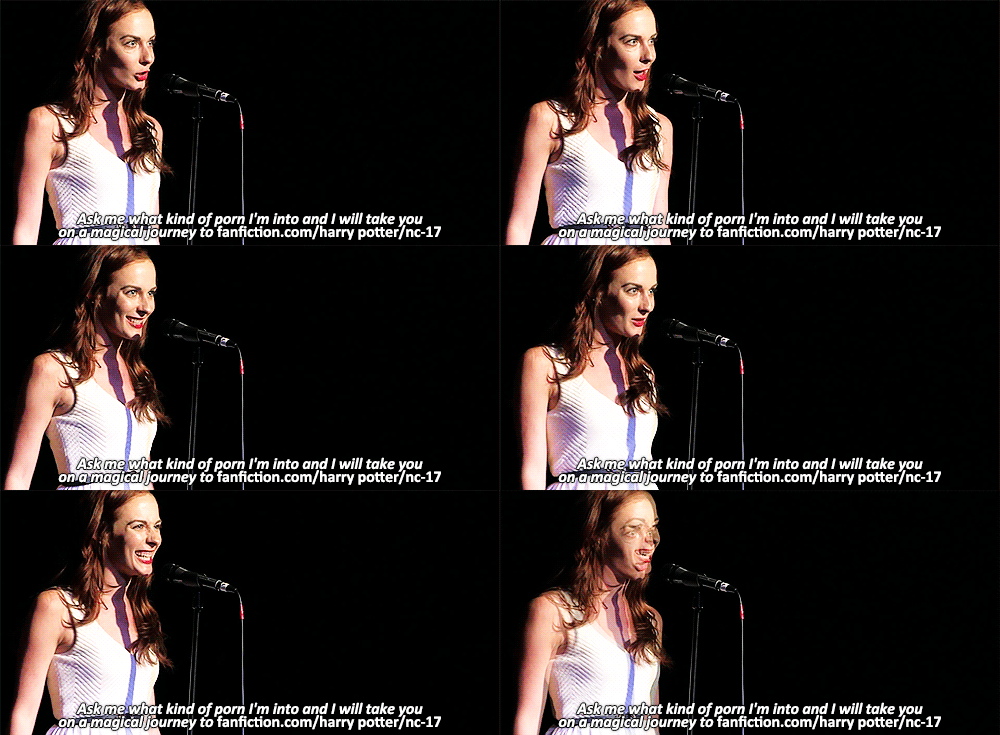
This Button Poetry video from this year’s National Poetry Slam caught my attention yesterday:
The title of Brenna Twohy’s spoken-word poem Fantastic Breasts and Where to Find Them is a punnish play on the title of a volume about the Potter-verse, Fantastic Beasts and Where to Find Them (emphasis added), published by J.K. Rowling some years ago as a companion to the 7-book saga of “the boy who lived.”
Twohy articulated the goal of her poem to Buzzfeed thusly:
I wanted to highlight how unrealistic most pornography’s portrayal of sex is, and how that creates really damaging expectations for both men and women.
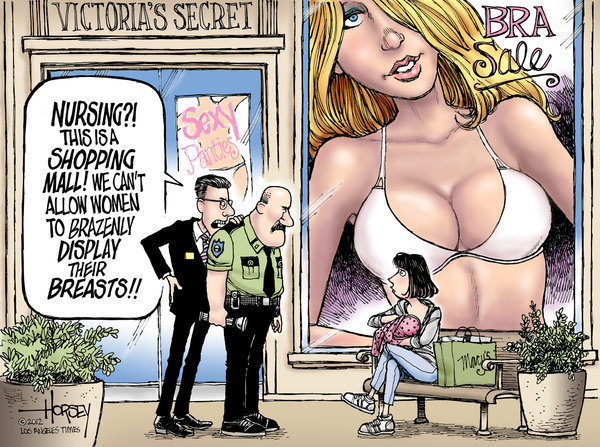
Mission accomplished (at least for the most part) to hilarious and devastating effect. Particularly pointed is Twohy’s observation that a taste for fan-fiction erotica is to be considered “unrealistic” — while mainstream porn is somehow seen as more real. Which is about as laughable a deception as I’ve heard since… well, unfortunately, just since yesterday, when folks were declaring that public breast-feeding is immoral. (Seriously, y’all. The patriarchy just needs to shut up and die in a fire. Now.)
In yesterday’s Independent, Jonathan Owen discusses a recent poll of British teenagers that reveals:
the majority [of poll participants] warn of the “damaging” and “addictive” effect of sexual images and videos readily available online. 80 per cent say it is too easy for young people to stumble across it and most recall “accessing pornography was seen as typical” while they were at school.
At least 70 per cent agree that “pornography leads to unrealistic attitudes to sex” and “can have a damaging impact” on views of sex or relationships.
A quick visit to Professor Google turned up a wealth of other articles unpacking the sexual myths and unrealistic expectations fostered by the mainstream porn industry. For example:
The gist of all these different articles is perhaps most entertainingly summarized by Noah Brand and Ozy Frantz in Alternet:
The problem is, learning about sex from porn is like learning about firearms from action movies. Action movies sacrifice realism for the sake of storyline or a really cool explosion. Action movies don’t teach you gun safety. Action movies don’t talk about alternatives to violence. And action movies use some tropes—such as the infinite ammo supply—that may move the story along but don’t reflect reality. That’s not a problem, as long as everyone treats them as entertaining fantasies.
Unfortunately, for many young people becoming sexually active today, the entertaining fantasies of mainstream porn are the teacher they’ve spent the most time with, and mainstream porn is a terrible teacher.
Even more than the general unrealistic nature of mainstream pornography, Twohy chooses to highlight a particular strain of misogyny and violence against women that runs through so many adult films.
[SIDEBAR] I will admit to having some level of discomfort over a piece that lambastes porn culture for allowing men to fantasize about sex with barely-legal teens while offering — however ironically — the “more empowering” alternative of a book series where the main characters are under-18 for a majority of the time. Also, having quickly perused some of the titles and advertised pairings in the “mature” section of the Harry Potter stories on fanfiction.net, I see the potential for a lot of uncomfortable power dynamics (Snape & Hermione) and Stockholm syndrome (Draco & oh, everybody).** Blurred lines of consent all over the place… [/SIDEBAR]
Nonetheless, the general thrust*** of Twohy’s piece feels really true and honest and on-point about the culture that mainstream porn participates in and which it helps perpetuate. To quote HuffPo (who also quotes part of Twohy’s poem):
a 2010 Violence Against Women study found that 90 percent of porn video content online and off included verbal or physical aggression towards women.
“I know a slaughterhouse when I see one,” Twohy says of the porn industry. “It looks like 24/7 live streaming, reminding me that men are going to fuck me whether I like it or not, that there is one use for my mouth and it is not speaking, that a man is his most powerful when he’s got a woman by the hair.”
Twohy suggests that the “slaughterhouse,” an uneasy analogy where the slicing instruments aren’t knives but part of a video editing suite, does more than just provide shots of women’s segmented body parts. It also creates a culture where domestic violence isn’t only expected, but accepted.
And more than that, Twohy steps — for an uncomfortable, searingly honest moment — into the ways that we all internalize these messages about how men and women are expected to perform in romantic and sexual situations — men, rough, cruel, aggressive; women, compliant and sex kittenish.
The first time a man I loved held me by the wrists and called me a whore, I did not think “Run.” I thought, “This is just like the movies.”
I have seen that training, on film and in real life.
It everybody fucks over, the patriarchy does.
* Yes, I dare say it has.
** You know how yesterday I took a bullet and read the comments sections on things so you wouldn’t have to? That favor-doing stops tonight — I was not going down that particular rabbit hole. Not for anything.
So, as someone who is child-free by choice, I’ve had an informal policy of staying as far away from the “mommy wars” as it is possible for me to stay. Breast-feeding vs. formula, maintaining external employment vs. becoming a stay-at-home-mom, “mainstream” product choices vs. natural/organic ones — every choice has its costs and benefits, and every mother has her own unique circumstance that leads to a particular set of choices (some of which may even be forced-choices determined by economic or other constraints).
Since I have never faced these choices and I am never walking a mile in these particular stirrups, my general approach has been to hold an attitude of respect for each mother and her parenting choices,* on the belief that each mom is doing the best she can in any given moment.
But then there’s that moment when the mommy wars play out very personally in the life of someone in my circle of acquaintance:
Ingrid Wiese-Hesson was shopping at an Anthropologie store in Beverly Hills when her 6-week-old son, Xavier, began crying because he was hungry.
Wiese-Hesson then sat down in the store to breastfeed the infant, and that was when the store’s manager reportedly intervened.
“The exact words to me were ‘I’m here to escort you to the ladies room so that you can finish breastfeeding’,” Wiese-Hesson said. “She opened up the bathroom, and she said ‘sorry, there’s no chair’, and of course the only thing in the bathroom was the toilet seat.” (CBS Los Angeles)
Ingrid posted her experience on Facebook and it blew up and went viral almost instantly (as one might guess from seeing the clip from last night’s 11’o’clock news). More details and slices of analysis are available at a number of places online, including information about a “nurse-in” that took place today in the store (LAist); an AdWeek post that connects the uncomfortable dots between this real-life incident and a recent student-designed public awareness campaign aimed at preventing exactly this sort of harassment; and a CBS Money Watch post that gives really good snark:
At high-end retailer Anthropologie, shoppers can select from body-baring items like its $118 see-through Gladiolus Sheer Silk Blouse. But when it comes to breastfeeding, one store location deemed a woman was showing just too much of her body.
Assuming AdWeek’s excerpt from and analysis of CA state law is on-point —
The Anthropologie manager’s actions were not just unwise, they were also in violation of Hesson’s legal rights. From the California Civil Code: “Notwithstanding any other provision of law, a mother may breastfeed her child in any location, public or private, except the private home or residence of another, where the mother and the child are otherwise authorized to be present.”
— then there’s a certain open-and-shut nature to the legal question here. Ingrid was absolutely, 100% within her rights to breastfeed her son in the Anthropologie store, and the store manager broke the damn law by interrupting her and escorting her to the bathroom.
So I’m going to set the legal question aside from now and just let my mind boggle from the fucking insanity of this all. What rational and reasonable objection would anyone have to a woman breast-feeding her six-week-old baby?
Answer: objections a-plenty, but nothing rational or reasonable, as far as I can tell. I know the first rule of following feminist stories in mass-market media sites is “don’t read the comments!” — well, I did, so you don’t have to. (Taking one for the team.) There were a few different rhetorical tactics, but objections pretty much all fell into being one flavor or another of this: breastfeeding should be done in private because it’s immoral/unseemly/inappropriate for it to be seen in public.
And here’s where I go into a sputtering place of incoherent rage and puzzlement. Because, to paraphrase Henry Rollins when talking about racism: these folks are tripping over an entry-level concept, a curb about 6 inches high. It’s inappropriate to publicly use your boobs to feed an infant? Feeding babies is actually the main purpose for which women’s breasts were invented! How can it be deemed immoral for babies to be fed in public?
[T]he subtext of the public breast-feeding battle is the inability to make a distinction between what is female and what is sexual, what is indecent and what is utilitarian. And maybe it’s epitomized in a letter that The Albany Times-Union got from an irate citizen who asked whether women who nursed in public would be having sex on the streets as well, as though the connection between nursing and fornication was self-evident.
(Yes, 1994. Twenty years ago. The more things change, the more they fucking don’t.)
After all, I bet no one would object to a baby being bottle fed in public, and I bet the same judgmental asshats complaining so voraciously about Ingrid’s choice to publicly breastfeed would also be giving her the judgmental side-eye if she had chosen to delay her son’s feeding and “subjected” the other customers to hearing the sounds of an unhappy, hungry, crying baby. It’s only because someone’s mammary glands are involved that this has become such A Thing.
I know that the policing and sexualizing of women’s bodies is pretty stupidly crazy even on the best of days. But still. What is it about breasts? How did these secondary-sex characteristics become so thoroughly fetishized and sexualized in the culture? Why is Anthropologie okay selling see-through shirts for the sake of showing off in the attractiveness/sexuality game, but not okay with a woman discreetly using her breasts for their actual, original biological purpose?
I know, I know: it’s the damn patriarchy again. After all, no one’s having a fit about all those exposed Adam’s apples…
* Aside from those that are obviously neglectful and/or abusive.
———-
Image credit: http://articles.latimes.com/2012/jul/12/nation/la-na-tt-breastfeeding-moms-20120705 (David Horsey at the LA Times.)
Back during JALC’s first lifespan, I took some small enjoyment from watching my WordPress dashboard to see what sorts of google searches brought readers to my posts. (I even used that as an excuse for a quick one-liner-type post way back when.) Google has since redone its programming, so there’s much less of that possible on JALC’s current life cycle.
Nowadays, most everything is hidden behind an “unknown search terms” privacy curtain. I haven’t the slightest level of understanding as to why certain terms making it out from behind the curtain to appear on my dashboard, but since I know the dashboard list is a mysteriously reduced and redacted version of the “real” list, I just haven’t really paid that dashboard feature much attention this time around.
Until I got back form my trip Sunday night and saw a new phrase in that screen field:
we hate ragen chastain
In case you don’t know, Ragen Chastain is a fat activist, someone I would say is out helping lead the movement. She has a book, an active speaking calendar and is currently co-organizing an online Fat Activism Conference that will take place from August 22-24. And she has a blog, a blog that is one of my go-to sources to continue expanding my awareness and evolving my thinking around fat acceptance and health at every size.
I would wager that Chastain and I wouldn’t see eye to eye on everything. For example, my guess is that she would consider my recent HCG journey simply to be a capitulation to diet culture, even though I contextualized it for myself as a detox experience. And, you know what? If she did have some questions about my motivations, and how mixed they might have been, I can respect that. ‘Cos Gaia knows, I had to do a lot of my own inner discernment to keep unwinding my old weight loss programming so that I could keep the goals of my HCG journey distinct from losing weight. And the uncomfortable reality is that no matter how hard I worked to keep my own focus in the detox lens, my decision to do HCG meant that I financially supported a company that makes its living off of diet culture, women’s insecurity, and size policing. (Ugh.)
So yeah, I can respect how Chastain and I might have differing opinions on some things. But the level of puzzlement and shock I felt about that search term being used to find this blog is largely driven by the great level of respect I feel for Chastain, her work, her voice. (My best guess, looking back at my old posts, is that the phrase must have made contact with one of my own FA/HAES rants where I quoted one of Chastain’s posts and then talked about “hating” some fat-shaming shenanigan-or-other.)
The other piece of my upset about having been, even ever-so-peripherally, connected to that phrase is the general sense of despair and discouragement I feel about the ugly way that people treat each other, out here on the Interweb.
Every time, the people with whom I share this experience express shock. It is always, always, a surprise that a woman who does public advocacy is subjected to this sort of abuse.
And it shouldn’t be. Because every single woman I know who does public advocacy is subjected to it. . . .
And then we are told not to talk about it. We are told that we empower the people who do this to us. No. NO. Victims do not empower abusers. People who refuse to acknowledge that abuse do. People who tell victims to be silent do.
I am not going to be silent. I am tired of people being surprised. I am tired of hearing “I’m sorry this happens to you.” I don’t want shock and I don’t want pity.
I want your fucking awareness and I want your fucking anger.
I want us to talk about the real costs of being a woman who does public advocacy. I want us to acknowledge how the costs of providing a safe space is that we stand on the line and absorb massive amounts of abuse. I want us to make noise about the people who create an atmosphere in which women are discouraged from participation.
And I want people to stop telling me to be quiet about it.
In addition to the politicized, misogynist harassment, there’s the general garden-variety flavors of awfulness.
Actress Zelda Williams, daughter of comedy great Robin Williams who died Monday from an apparent suicide, has quit social media after receiving taunts from Internet trolls.
Williams abandoned her Twitter and Instagram accounts Tuesday after saying at least two people were sending her Photoshopped images of her father’s dead body and other disturbing messages.
“I’m sorry. I should’ve risen above,” she wrote in her final tweet. “Deleting this from my devices for a good long time, maybe forever. Time will tell. Goodbye.”
The episode proves that, with the anonymity of the Internet, some people will be horrible no matter the situation. (CNN)
Though I don’t know enough of the facts to say this for sure, I can’t help wondering whether Williams’s daughter was receiving more online harassment than his two sons, and whether she was targeted for that higher level of harassment because — well, because we live in a fucking kyriarchy, that’s because. And if my vague suspicions are true, well then there’s a very fine lineindeed between “garden-variety” Internet awfulness and the misogynist endeavor to silence women’s voices.
I don’t often use the word “hate” to describe my feelings for people. Cultural trends, political positions, social patterns, even individual actions — those I’ll use the term for often enough, but not so much for referencing an individual person, in their entirety. So suffice it to say that I’m really kinda hating the way that JALC was connected (however temporarily, however peripherally) to someone on just that sort of hate-filled trip.
* PS– Am I the only one who found it odd that the WaPo’s main angle was to talk about how online harassment was viewed by or affecting the female writer’s male partner? I’m not saying, I’m just saying…
———–
Image credits:
South Park: http://designaterobertson.blogspot.com/2012/05/your-south-park-tigers.html
Although it was all over my Facebook wall a month or so ago, I never forwarded the Always #LikeAGirl ad before today, nor did I choose to say anything on JALC about it.
My hesitation was similar* to that when Pantene urged women “Don’t let labels hold you back” several months ago, in an ad Sheryl Sandberg helped take epically viral, or when the Dove “Real Beauty Sketches” ad went epically viral some months before that:
My feelings about these female empowerment campaignsad campaigns are always pretty similar, one to the next. Basically, I feel conflicted. On the one hand, these ads do bring up aspects of my own lived experience, whether it’s the double standards I’ve faced around being “bossy” or “bitchy,” or my habit of being hyper-self-critical, around my physical appearance and, sometimes, pretty much everything else about me.
On the other hand, it’s a little bit galling — okay, a lot galling — to have these quasi-empowering “accept yourself” messages come from companies for whom a significant percentage of the profit margin is based on the proposition that women will feel bad enough about themselves to buy your product so that we can be groomed, tweezed, moisturized or shampooed in such a way as to overcome our innate debased female-ness and become more socially acceptable.
Quite frankly, my conflicted feelings about this trend have reached a high enough level that I never even bothered to watch the Always ad above, or Pantene’s went-viral-one-month-ago “Sorry Not Sorry” ad before tonight when I was preparing this post for JALC.
So, yeah, I’ve never been in the corner of Dr. Bernice Ledbetter, who writes over on HuffPo that these ads are “truly a banner in the battleground of the feminist movement.”
I actually find that perspective quite sincerely and incredibly baffling. Do you not see how the women in the Dove ad are mostly, white, thin, not-too-old, and conventionally attractive to such a degree that the deeper message of the piece can easily function as little more than “The hearts of conventionally beautiful women can grow a little warmer today”? Can you explain to me how women getting shinier, bouncier hair is a viable solution for misogynist attitudes and prejudices against female intelligence, agency and ambition? As Emily Shire observes about the #LikeAGirl ad:
Yes, it’s far more appealing on the surface to have pads and tampons promoted as somehow part of a larger goal to change the meaning of “like a girl.” But the campaign is shamelessly emotionally exploitative. It demonstrates real problems—femaleness as a derogatory statement, decrease in self-confidence as women mature—in a beautiful and clear way, but then pretends a corporate manufacturer of panty liners meant to “help you feel fresh ever day” can solve them.
(And again, notice here how problems that are deeply-rooted and systemic, based in cultural norms, problems that are perpetuated and policed as much by external messages as by internalized ones — the very nature of what I call “the miasma of misogyny” — are presented as something to be solved by women’s policing of their femaleness and their female bodies.)
And yet, however much I’m able to see the problematics in these “short films,” their innate and even troubling limitations, I still admit I kind of like them. My affection hasn’t been strong enough for me to join in amplifying their viral distribution, or perhaps my awareness of the flaws has been too strong to allow me to join in the fun. But I don’t have it in me to work up the same kind of feminist outrage about these ads as I’ve displayed here on other occasions.
Which is why I so appreciate Natalie Baker over at Bitch Magazine for reminding me today that it’s possible to live in a yes/and rather than an either/or place.**
So here we are, once again, stuck in another good vs. not good enough debate: either these ads are radically tackling sexism through a historically appalling medium or it doesn’t matter what these ads say because corporations don’t actually care and will say anything to make a buck.
What if it’s both? That is to say, what if these companies are forwarding feminist messaging despite not actually caring about it? And what if that still helps us?
Like Jezebel said back when the Always ad was first released:
While all ad companies are bullshit liars to a point, willing to do or say whatever it takes to get your money, I would rather have empowerment cheese over shame-based guilt, which seems to be the two usual suspects in a capitalist economy.
That’s a sentiment Ican get on board with, especially when I think back to Super Bowl Sunday’s usual dreck. To return to Baker:***
For those of us who surround ourselves with intersectional anti-oppressive ideology, what’s considered progress in the mainstream can feel like a joke. But that’s our piece of the jigsaw—to be progressive is by definition to be ahead of the curve. While we don’t need to be naively over-celebratory about billion-dollar conglomerates pandering to female consumers, I do get immense enjoyment from the fact that such companies are doing so, not because they want to, but because they have to. . . . I can get down with those messages, even when they’re being generated out of corporations’ self-interest.
In fact, I like that they’re doing it out of self-interest. I don’t want feminism to be charity. I want companies to consider supporting feminism to be necessary for their survival.
(Emphasis added.)
Yeah, it’s all advertising, so at some core level it’s all inherently corporatized and bullshit on account of that perspective. On the other hand, if the growing prevalence of these ads indicates (and even encourages) movement towards the tipping point when the patriarchy/kyriarchy transmutes? I can get on board with that.
So, maybe less of a banner moment (sorry, Dr. Ledbetter!) and perhaps more of a weathervane. Showing the shifts in the cultural currents, a change in the wind of how people think and talk and feel.
* Okay, my hesitation was a little different because I hadn’t yet revived JALC, so I didn’t have to make the “blog or not to blog” call on it. Just the (arguably more public) “to Facebook or not to Facebook” call.
** Yes, this was posted 3 days ago, but I read it today. As such, she reminded me today. And I am grateful for that.
*** In case I haven’t said so clearly enough, please go read the entire post in its entirety. All of it.
I was on the search for something quick and whimsical today, and I think I may have found it:
Australian retailer BlackMilk just launched its Princess & Villains collection inspired by the ladies of Disney. To be clear, this is a line for adults. As in, adult humans are encouraged to wear this clothing on their bodies. (h/t Jezebel)
I’m pretty much in agreement with Jezebel’s Kara Brown about the ugly/tacky quotient on these. Seriously. This is a line of clothing I am not particularly upset doesn’t run into plus sizes. (I know: from a general fat activism perspective, it’s troubling when any high fashion line perpetuates thin-ness as the only body type worth draping in fashionable clothing. But speaking only for my own personal taste in clothing? I’m not real upset to have this particular line barred from me on account of the sizing and sourcing choices.)
But if nothing else, it’s a good excuse for a bit of a link-fest. (That turned into something more substantive than I originally expected. I quite literally cannot stop myself from pontificating, sometimes…)
———-
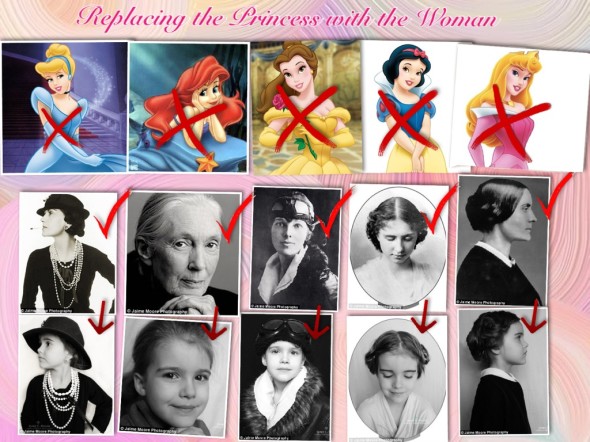
First off, some things I learned existed while Googling for this post: Disney wedding dresses. And haute coutureadaptations of Disney Princess gowns. (Who knew?)
And then there’s this gallery on DeviantArt that presents Disney Princesses/Heroines garbed in “their” Princes’ outfits. True confession: There’s a number of these folks I don’t recognize at all. I used to keep up with Disney releases, but clearly I stopped doing so longer ago than I thought I had…
Anyhow. This Princess-to-Prince gallery I remember seeing back when it went viral last fall, but this one, which presents more historically accurate gowns for the characters, was new to me today.
———-
“Princess Culture” is a bit of a tricky, problematic thing.
In one corner of the debate are those who point to its influence as another source for the misogynist miasma that helps reinforce the ways girls/women should be primarily focused on their attractiveness and marriageability. For example, Peggy Orenstein, author of Cinderella At My Daughter:
It’s part of this culture that encourages girls to define themselves through beauty and play-sexiness—and eventually, real sexiness—and I don’t think that’s the yardstick we want our daughters measuring themselves by.
Experts say femininity, identity and sexuality have become a performance for girls. Girls perform sexual confidence but they don’t connect it to erotic desire. It’s not about their own desire, their own self-determination.
As a parent, I didn’t realize how much of my job was going to be protecting my kid’s childhood from being a marketer’s land grab—companies telling her who she should be.
Disney’s redesign of the character tamed her unruly hair, expanded her breasts, shrank her waist, enlarged her eyes, plastered on makeup, pulled her (now-glittering) dress off her shoulders, and morphed her defiant posture into a come-hither pose. The bow-wielding Merida of Brave — a character who explicitlyfought against the princess world her mother tried to push her into in the film — was becoming what she hated, and inadvertently revealing the enormously problematic nature of Disney’s Princess line.
And yet, there are also those who see Disney Princesses in a different light. Possibly as a mild expression of societal — I would say “patriarchal” — values already embedded in the culture. Values more strongly caused and propagated by other sources:
It’s true that princess culture is complicit in keeping in place many of the troubling stressors women and girls suffer. But when you talk to me about impossible beauty standards and eating disorders, I’d point to Photoshop and the “obesity epidemic” before I’d point to stylized animation. When you talk to me about early sexualization of children, consider the retailers selling padded inch-thick push-up bras in the kid’s department before looking at Disney’s chaste kisses between adults. (Unless you think a kid shouldn’t see their parents kissing, in which case… I don’t think we’ll ever be on the same page.)
These are problems, sure, but they’re not problems Disney created, and Disney isn’t the primary villain here. At least not while my seven-year-old is walking by billboards for Victoria’s Secret the size of a school bus.
And then there’s even a more pointed critique of those wishing to critique Princess Culture:
Some say “Princess Culture” promotes materialism, patriarchy, and a sadistic need for long, shiny hair. Many moms worry a Snow White doll will turn their pre-K Amazons into simpering ninnies more concerned with looks than grades and goals. But they’re wrong—and I speak from personal experience. The truth is, Princess Culture helped me become more confident, more adventurous, and more okay with being different. It also helped me understand and embrace the concept of feminism at a very early age. Seriously. (Elle.)
I have enough passing nostalgia for my years loving Disney animation that I can definitely feel the pull to defend what may have been treasured bits of childhood. Still, I’m more on the side of those who remain troubled by Princess Culture. To quote Orenstein’s book (as excerpted here at NPR):
It is tempting, as a parent, to give the new pink-and-pretty a pass. There is already so much to be vigilant about, and the limits of our tolerance, along with our energy, slip a little with each child we have. So if a spa birthday party would make your six-year-old happy (and get her to leave you alone), really, what is the big deal? After all, girls will be girls, right? I agree, they will — and that is exactly why we need to pay more, rather than less, attention to what is happening in their world. According to the American Psychological Association, the girlie-girl culture’s emphasis on beauty and play-sexiness can increase girls’ vulnerability to the pitfalls that most concern parents: depression, eating disorders, distorted body image, risky sexual behavior. In one study of eighth-grade girls, for instance, self-objectification — judging your body by how you think it looks to others — accounted for half the differential in girls’ reports of depression and more than two-thirds of the variance in their self-esteem. Another linked the focus on appearance among girls that age to heightened shame and anxiety about their bodies. Even brief exposure to the typical, idealized images of women that we all see every day has been shown to lower girls’ opinion of themselves, both physically and academically. Nor, as they get older, does the new sexiness lead to greater sexual entitlement. According to Deborah Tolman, a professor at Hunter College who studies teenage girls’ desire, “They respond to questions about how their bodies feel — questions about sexuality or arousal — by describing how they think they look. I have to remind them that looking good is nota feeling.”
As such, I’m very glad to see signs of the Princess Counter-Culture. Like Orenstein’s media and activity suggestions for interested parents — including a Hiyao Miyazaki shout-out!! Or Supreme Court Justice Sonia Sotomayor giving career advice on Sesame Street:
In addition to lots of laundry and lots of sleep, one other thing I’ve been doing since getting back home from The Trip is catching up on the video lectures and quizzes for the Coursera course I’m taking about the Beatles.*
In a lot of ways this is a “gimme” course: I’ve watched, listened and read enough about the band and its members to be reasonably well-informed from the get-go. Still, it’s fun to hear this professor’s take on things, and I have learned a new thing or two along the way.
Like the full story embedded in the lyrics to Norwegian Wood.
In the song, a young mad is “had” — i.e., fooled — by a comely lass when he accompanies her to her (pretentiously under-furnished) apartment expecting sexytimes, only to be rebuffed when she says she needs to get a good night’s sleep prior to the next workday.
That much I’d understood. But this next part was the part I’d missed: when he wakes up the next morning alone, the song’s narrator sets the girl’s apartment on fire in revenge for the (so-called) cock-blocking.
To quote Paul McCartney (the co-lyricist), looking back at many years’ distance:
[A] lot of people were decorating their places in wood. Norwegian wood. It was pine really, cheap pine. But it’s not as good a title, Cheap Pine, baby…
So she makes him sleep in the bath and then finally in the last verse I had this idea to set the Norwegian wood on fire as revenge, so we did it very tongue in cheek. She led him on, then said, ‘You’d better sleep in the bath’. In our world the guy had to have some sort of revenge. It could have meant I lit a fire to keep myself warm, and wasn’t the decor of her house wonderful? But it didn’t, it meant I burned the fucking place down as an act of revenge, and then we left it there and went into the instrumental.
He sets her apartment on fucking fire. (Who knew? Okay, bad question: evidently everyone in the world knew but me.)
Talk about a disproportional response to sexual rejection. In his discussion of this song and the story its lyrics tell, the professor said something mild about how the song could be seen as “sort of misogynistic,” and I found myself spluttering at the computer screen, “you think?!?”
I kind of get why the professor chose not to open up the topic for much further exploration. Although some elements of historical and cultural context are inevitably coming into the discussion, his chosen approach is primarily to be taking a musicological quasi-close-reading approach to the stylistic features of the songs and albums — melody, harmonics, orchestration, lyrical complexity, etc. At some level, I suppose I could be thankful he at least called out the misogyny of the scenario, rather than allowing the song’s portrayal of sexual entitlement to remain normalized.
Still, I am so wishing I had magic access to Paul McCartney right now to ask some follow up questions. When you decided that in the song’s world, this guy deserved his revenge, did you mean to portray that as a reasonable response, or an UNreasonable one? You were about 23 when you wrote the song — do you think you’d want to tell a similar or different sort of story if you were writing about sexual miscommunication and rejection today? What acts of friendliness are permitted between two individuals before one is seen as “leading the other on”?
Alas, my press pass is expired (on account of me never having one), and I still haven’t made an appointment with Mr. Ollivander to collect my magic wand. So my curiosity will have to remain unsatisfied.
By the way? Check here for a handy-dandy chart that’s been making the rounds to let you know when a woman owes her partner sex. And despite the geneder-specificity of the graphic, it really cuts both (all?) ways: no individual (gender-inclusive) ever owes another individual (again, gender-inclusive) sex.
(Trigger warning: rape, murder, talking about violent images though not using them.)
One of the things so powerful to me about the #YesAllWomen conversation that has been taking place in the weeks since the Isla Vista killings, is the ways that there seems to be a wider acknowledgement growing about the layers and levels of misogyny that are operating in US culture, as well as around the world.
The international nature of the problem has been very much on my mind since I saw the shocking image of two Dalit girls, aged 14 and 16, hanging from nooses, after having been (allegedly) gang-raped and (definitively) murdered.
You won’t be seeing that image here, nor will I be knowingly linking to any articles that use it. Manasi Gopalakrishnan reports:
The girls’ family alleged that the two teenagers were raped and tortured before finally being hanged from a mango tree in a nearby orchard. Incensed by alleged police inaction, the families refused to take down the bodies from the tree for several hours. Finally the local police registered a case of rape only after several members of the girls’ community protested in front of the police station. [Emphasis added.]
In that sense, the parents’ initial gesture reminds me very much of Mamie Till’s choice to have an open-casket funeral for her son, Emmet, and her subsequent decision to allow funereal photos of her son to be published in Jet magazine. “I wanted the world to see what they did to my baby,” Mrs. Till is reported to have said. And yet in this day and age when images can travel the globe so quickly, I am not at all clear as to whether these parents in Uttar Pradesh would want their daughters’ postmortem image propagated in so widespread a fashion, and so I will not be aiding in that process. (Quite frankly, I even wonder if Mamie Till might have made a different choice in the Internet age. Or maybe her courage would have found identical expression. I simply don’t know.)
As with Eliot Rodger’s actions and their intersections with US issues such as (definitely) gun control and (allegedly) mental illness, there are multiple factors at stake in this horrifying crime. The caste system. Lack of toilets in poverty-affected regions. There’s even a new report that a state official investigating the case has stated one of the two murder victims may not have been raped.
(I don’t know enough yet to suss out if I think this last one is the first step of a government cover-up — at least two of the arrested suspects are policemen — or the first step at bringing careful investigative work to uncover the truth what the official has suggested might have been an honor killing or one motivated by a property dispute.)
Even with those other factors, it is undeniable that misogyny is a huge part of the cultural foundation for these crimes to occur. Mallika Dutt reports in Time that “In the context of past rapes, Mulayam Singh Yadav, head of Uttar Pradesh’s governing party, the Samajwadi Party, has said, ‘Boys will be boys. They make mistakes.’” A different Indian State Minister, Babulal Gaur, has recently said “Sometimes [rape] is right, sometimes it is wrong.”
As we continue to examine the negative effects of misogyny and cultures that impose toxic definitions of masculinity, it’s important not to be blind to privileges of race, sexual orientation, gender identity, classism, or cultural myopia. A lot of feminist discourse I see on the web is very stuck in these blinders, and in the same way that cultural evolution will require men to become aware to the privileges they carry in a misogynist society, it also requires those of us carrying privilege on other nexuses to wake up to that.
Hear in your head every mansplaining nice guy or even every well intentioned usually great dude you know starting a statement with these words-
“but not all men…”
Now stop.
Okay White ladies let me explain you a thing. I’m gonna blow your mind.
That anger and frustration giving you bubble guts right now is how I feel when White women won’t listen to me.
Sit with that for a minute. Understand that how you feel when the response to your pain, your words, your experiences in regard to sexism and misogyny is not all men, but I’m a nice guy etc is the same feeling I have when White women run to interrupt, or otherwise stomp over my experiences, pain and words.
It’s an important reminder — and considering that the Facebook page where I first saw this essay then erupted into an argument about the “unnecessary hosility” of the essay saying something as cruel and abusive as “shut up for five minutes” (gasp!) — it’s a reminder we really need to be hearing.
One week later and I’m still reading and link-collecting and doing a lotof thinking about the Isla Vista murders. Part of me feels apologetic about this, even self-indulgent. After all, I wasn’t even remotelyaffected directly by these events. I have no six-degrees-of-separation ties to any of the individuals involved or to the locations where the events occurred. (I mean, yes, I was born in the same state, but we moved away from CA before I turned two, and I have zero sense of myself as a west coaster.* I don’t even know where Santa Barbara is in geographic relation to my birthplace.)
So there’s lots of ways that I’m privileged to have some distance from these events: a fact for which I am extremely grateful, and one which also makes me somewhat embarrassed to be giving it such brain-space and blog-space. I even felt the temptation to title “Yet Another Post” from me about these events with some variant on the plea “Stop me, before I post again!”
But then I read this post from the Standing on the Side of Love blog.** In it, the author juxtaposes the legacy of Elliot Rodger’s misogynist writings and videos with the passing of Maya Angelou and her legacy of speaking out about the existence and effects of sexual violence. Then both of these events were further counterpointed against the simultaneously bombshell and matter-of-fact observation that in the week prior to writing her post, the blogger herself had been sexually assaulted.
These milestones all occurring this week make it so clear to me that patriarchy still rules our society, that sexual assault and misogyny are not limited to one incident but are a ubiquitous threat, in varying levels, to all of us. The humanity of every person is threatened by this reality. I wanted to share my story both to help me heal personally, and to provide information that yes, all women, and all people of all gender identities might find useful.
And then, in following the links from that post and my Facebook feed, I came across two other sites. First, a report on a study which reveals the way adolescent and tween girls understand (and wildlyunder-report) sexual harassment “as ‘normal stuff’ that ‘just happens’ because it’s what ‘guys do.'” Then there’s the tumblr analogue of the #YesAllWomen twitter movement: When Women Refuse, a collection of stories about domestic and sexual violence that is intended to demonstrate “that Rodger’s mass murder was not an anomaly, but instead part of a larger cultural pattern of violence against women.”
And I thought about my own checkered history of experiencing sexual violence, street harassment and misogyny. The rape in college. Years in Philly which were verymild, all things considered, but still contained a few catcall/honking incidents, the occasional groping, and a couple drunken “encounters” where I wasn’t entirely sure in my (inebriated) head that it’d be a good idea to “back out now.” And all of that happened soaked in the cultural miasma of a patriarchal system. For example: the many incidents throughout my schooling where the message from peers (and some teachers/administrators) was that I was too smart, too ambitious, too opinionated for a girl to be. And so part of the lessons I took from my childhood were about learning to live small, stay quiet, conceal the truth of my mind’s intelligence and my heart’s wisdom.
I am not sharing this in hopes of earning my own “victim cred,” nor to make a simplistic point about how my past experiences make it “okay” for me to be as deeply affected by last weekend’s events as I have been. Well, maybe it’s a bit of yes andno on that last point. Yes, it’s likely my resonance with these events and the ensuing discourse has been deepened by my own past traumas. But no, I don’t need any sort of excuse to be thinking or feeling deeply about this — or about anything else, for that matter.
It’s a messy tangle, rather than a straight line trajectory (this is why the metaphor to miasma is so present with me right now), but I am certain there’s a web of connections between the cultural expectations of women’s silence,docility, and availability; the patterns of sexual violence, harassment, and patriarchal retribution that have come so harshly to light this past week; and my own instincts towards self-silencing as I considered writing “Yet Another Post” touching on these issues.
But it’s a knot that needs untangling. And so I keep writing — even if sometimes all I’m writing about is about the right towrite.
Every hard-fought sentence, every awkward phrase, every word a prayer. May we release this. May we be healed.
* Nope. I’m a New Englander, through and through, no matter what my birth certificate says.

 There’s times when I feel as if, when writing my “flagrantly feminist” posts, that I’m veering uncomfortably close to dividing the world into two teams: men as the “black hats,” the villains, the aggressors, the colonizers; and women as the “white hats,” the heroes, speaking truth to power and conscientiously standing up for what’s Right and True and Good.




 Self-Love: It's Just Another Lifestyle Change