Peeping Thomas

Tucked in the back of the Philadelphia Art Museum‘s modern galleries is a peculiar, enigmatic piece by Marcel Duchamp. Etant donnes was the artist’s final work*: he spent the final two decades of his life working on the piece after telling the world that he had retired from art-making. Upon his death, the work was discovered and, as per the stipulations of Duchamp’s will, installed at the PMA never to be moved or lent out to other sites.

Continue reading “Peeping Thomas”

Valhalla was Co-Ed

QUICK HIT: The choir season starts up again tonight, which means my Wednesday posts for the foreseeable future will have to be:

  1. Pre-written and scheduled
  2. Quick and somewhat insubtantial
  3. Non-existent in a “night off” kind of way)

Obviously, today I’ve chosen option 2. Well, not entirely obviously, since I could have pre-written and scheduled this post. But trust me: I didn’t do that. Because my life and to-do list are not currently at such a level of organization and under-controlness. I’d love to tell you otherwise, but I don’t have it in my to maintain that level of facade.

Where was I? Oh yeah: QUICK HIT tonight. In more ways than one. (Go below the fold to see what I mean…)

Continue reading “Valhalla was Co-Ed”

Letting the Genie Out of the Bottle

Some days I think I’m such a bad feminist that someone’s going to knock on the door and ask me to turn in my membership card.*
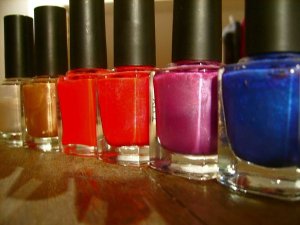
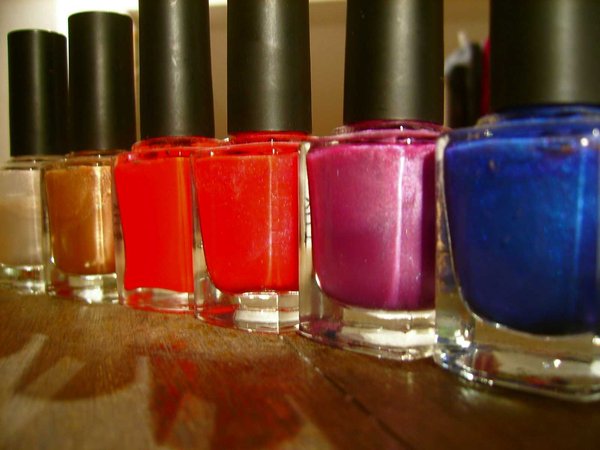
nailpolish_by_rainbow_colourToday is definitely one of those days, because I am rather out of step with the wave of outrage against the new roofie-detecting nail polish that’s been all over the news.

Before I prove all the ways I am limited as a feminist, I do want to acknowledge the ways that I share many of the concerns I’ve seen expressed in the media blitz about “Undercover Colors.” ThinkProgress quotes Tracey Vitchers of Students Active For Ending Rape (SAFER): “I think we need to think critically about why we keep placing the responsibility for preventing sexual assault on young women.” Damn straight. Some day soon I might just tell the story about the time I nearly lost my shit at Elizabeth Vargas and tried to take exactly that ideological stand (alas, in a woefully inarticulate, limited, and ultimately ineffective, way).

The ThinkProgress article goes on to talk about the kinds of efforts they (and their interviewees) would recommend be publicly highlighted:

So, rather than targeting efforts at helping women identify roofies in their drinks, it would likely be more effective to focus on larger efforts to tackle the cultural assumptions at the root of the campus sexual assault crisis, like the idea that it’s okay to take advantage of people when they’re drunk. There’s a lot of student-led activism on college campuses around these themes, as well as some college administrations agreeing to implement more comprehensive consent education and bystander intervention training programs. The advocates who spoke to ThinkProgress said they wish more of those campaigns would start making headlines.

Again, I’m in agreement. I even think Jessica Valenti of The Guardian (or her editors) pretty much hit the nail on the head when she/they titled her article on this topic: Why is it easier to invent anti-rape nail polish than to find a way to stop rapists?

So I agree that there are huge problematics with rape culture — the victim-blaming, the way women are expected to carry the responsibility for “rape prevention,” the way those two things fuel a world in which women’s freedoms are endlessly constrained. And I think the media firestorm around this “life-saving nail polish”** is hugely symptomatic of rape culture, and adds to the ongoing perpetuation of same.

And yet. (Here’s where I’m about to lose my feminist credentials.)***

I don’t really have that much of a problem with the product itself. Because when I think about the primary objections I’ve seen voiced against the product as its own thing, they don’t entirely ring true for my understanding of the world.

1. This product will create more victim-blaming. Is that even possible? When I look around me, it seems like victim-blaming is already up to 11. Yeah, I’m sure that this nail polish will be added as a new flavor to the victim-blaming soup but it doesn’t sense to me like it would actually, objectively increase the quantity of victim-blaming or the likelihood that victim-blaming will occur. ‘Cos, as far as I can tell, the unfortunate truth is that you’ll be blamed for whatever you do or don’t do — if you didn’t wear this nail polish, you’ll be blamed for that, but if you were to wear it, you’d still be blamed just as strongly, only for some other bullshit excuse.

2. It’s wrong for a team of college men to be profiting (or trying to profit) off a crime predominantly commuted against women. I’m not really loving the fact that the R&D team for this is all guys. Still, this line of reasoning feels uncomfortably reductive to me: casting all men into the mold of sexual predator — which is similarly problematic to the societal mythology that casts all women into the mold of sexual object.

Besides, the company founders are hitting a lot of good notes in their public statements. From the Facebook page:

We are taking just one angle among many to combat this problem. Organizations across the country need your support in raising awareness, fundraising, and education. Among the ones we recommend are:

RAINN
Men Can Stop Rape
InterAct (locally in Raleigh)

Please consider following these campaigns and finding new ways to fight this crime in your communities around the world.

And, yes, it’s possible these words are insincere and manipulative. It’s also possible they’re completely sincere, and I want to give these guys the benefit of the doubt until I see more definitive evidence that they’re being unethically opportunistic.

3. This product will create a false sense of security (in this big unsafe predator-filled world), and also at the same time Women shouldn’t have to police their behavior or work so hard to protect themselves (the world should be a safer place). I’ve grouped these last two together, because I’ve been so deeply fascinated by the ways they’re often invoked together despite their contradictory undertones.

Part of the “false sense of security” narrative is based in the statistical reality that only about 2.4% of  campus rapes are suspected to be linked to roofies or other such substances. As such, someone electing to use that product may feel like they’re protecting themselves from danger when in actuality they might have made themselves less aware and more careless about all the real dangers that are out there in the world.

[SIDEBAR] I am very curious to see if that statistical fact — only 2.4% of sexual assaults involve roofies — is the thing that finally tanks the business model for Undercover Colors. I’m not convinced there’s that much of a market here. But I still don’t think it’s wrong for anyone to be exploring that question. It’s the circle of product development: prototype something to see if it can be created, then do further market research to see if there’s enough of a desire for that newly-created thing to warrant further development and scaling up. [/SIDEBAR]

And, somehow, simultaneous with the reasoning that this product is a Bad Thing because it won’t guard against the real dangers out there, stands also the reasoning that it is a Bad Thing because it’s not fair that women need to put in the extra effort to negotiate an unsafe world. Which brings me back to Valenti:

As former Israeli prime minister Golda Meir said after a cabinet member suggested that women be given a curfew to curb a spate of sexual assaults: “But it’s the men who are attacking the women. If there’s to be a curfew, let the men stay home, not the women.”

And to ThinkProgress, quoting Rebecca Nagle, co-director of the activist group FORCE: Upsetting Rape Culture:

“The problem isn’t that women don’t know when there are roofies in their drink; the problem is people putting roofies in their drink in the first place.”

And, quite honestly, this brings me back to a place of partial agreement. Because, yes, I believe — I know — that the ultimate necessity here is to dismantle rape culture, to stop rapists from raping, all of that. I’ve said it before and I’ll say it again: the patriarchy needs to die in a fire, like now.

Except “like now” isn’t really how it’s gonna go. Cultural transformation takes time, and until we’re on the other side of that transition, I can’t help but have empathy and compassion for anyone choosing to use whatever techniques they choose to feel a little bit safer and (in a statistical “playing the odds” kind of way) maybe even to be a little bit safer.

And yes, it sucks that those sorts of calculations can so strongly restrict women’s freedom. And we should live in a world where freedoms aren’t restricted like that. But we’re not there yet.

I kept an army knife in my bedroom for a number of years in Philly. Would it have been potentially useful if I’d been attacked? Perhaps. Was it a foolproof method of self-defense? No way. Would I have been “to blame” for being attacked if that knife wasn’t effective self-defense? No fucking way. Was it symptomatic of our fucked-up rape culture that I felt the need to have this knife? Absolutely. Was it an expression of personal weakness that I wanted that object to help me feel/be safer? I’m betting yes.

Do I blame myself, current and past, for making that adaptive choice to help myself get through the days, and to achieve some level of freedom from hyper-vigilant insomnia during the nights? Not on your life.

And as with my old army knife, so with someone else’s chemically reactive nail polish.

* I’m not giving back my free toaster, though…

** Don’t you just love marketing hyperbole?!?

*** Though, hey! I’m still thinking through all these different threads of meaning and feeling. It’s possible I’m onto some level of personal truth. It’s possible I’m talking out of my ass. I’ma just keeping on writing and watching, and I’ll see if I refine this line of thinking or if my ongoing study leads me to a different place, when all is said and done.

———-

Image credit: “nailpolish” by rainbow-colour, shareable via a Creative Commons License (retrieved from http://rainbow-colour.deviantart.com/art/nailpolish-73597318 )
Learning as We Go

When I mentioned yesterday that I’d been doing affair piece of thinking recently about the tricky ground of enjoying problematic bits of artistic/cultural expression, it actually wasn’t because I’m a particularly huge fan of Miley Cyrus, Nicki Minaj, or Taylor Swift. Yes, I have a single or two in the iTunes library, but that’s about as far as it goes. The timeliness of yesterday’s VMAs provided an irresistible springboard to broach the subject in a post, but that was an after-the-fact exploration of the topic, not the inspiration for this line of internal study.

One piece that has the topic on my mind is that I purchased Roxane Gay’s book of essays Bad Feminist, and am eagerly waiting for the day I clear my reading decks enough to start seeing an absorbing what she has to say about these matters.

Henry_Rollins_TA_2More pressingly, I’ve been trying to figure out since last Thursday what to say about Henry Rollins.

Rollins writes a regular blog for the LA Weekly, and last Thursday, he wrote a provocatively titled essay* where he expressed his anger and confusion about Robin Williams’ suicide. The post is actually a fascinating exercise in internal contradiction, because Rollins acknowledges the impossibility of understanding another person’s pain in the grips of depression — speaking explicitly of friends and roommates who have struggled with the same, but also, to my perception, with a strong undercurrent of Rollins having had his own personal experiences with depression. And yet, for all that evident level of understanding — and even for the explicit admission that “I get it, but maybe I don’t,” Rollin’s essay lands on this position:

I simply cannot understand how any parent could kill themselves.

How in the hell could you possibly do that to your children? . . . I think as soon as you have children, you waive your right to take your own life.

[. . . ] Almost 40,000 people a year kill themselves in America, according to the Centers for Disease Control and Prevention. In my opinion, that is 40,000 people who blew it.

Now, whatever my level of benign mostly-indifference is for Miley, Nicki and Taylor, I am unabashedly a fan of Henry Rollins — especially his spoken-word performances. (Stand-up? Storytelling? I never quite know what to call it.) In all my years in Philly, the only time I ever went down to Atlantic City was one night when Mr. Mezzo and I got tickets to see a Rollins spoken-word show there.**

Yet, however much I enjoy his spoken-word stuff, the level of impatience and humorously channeled rage those spoken-word pieces often reveal have always had me wondering about the level of Rollins’ impatience with human fallibility and weakness. I know “weakness” is such a charged word, but that’s really how it always played to my system.

Rollins would speak with such disdain about the mental/ethical weaknesses of prejudice, and would talk in such detail about the ind of discipline he used in his own life — the whole ascetic “straight-edge” thing, eschewing drugs and alcohol, dedicated to weights and fitness, and minimizing his possessions. I enjoyed going to his shows and listening to the recordings, but I always assumed if I were ever to meet Rollins, he’d have little but disdain for my life, with my weight, my occasional drinking, and my addictions to shopping and hoarding and physical possessions.

So I was disappointed to see last Thursday’s column, but I won’t say I was especially surprised. With the sorts of bright-line divisions I imagined him drawing between “strength” and “weakness,” I could imagine how his thought process would have led him to classifying suicide as an act of weakness. (Just so we’re clear: not at all a perspective I agree with. But I could halfway imagine the thought chain that took him there.)

Thus began a more intense meditation on “being a fan of problematic things.” For there I was, caught between the place of deeply — DEEPLY — disagreeing with Rollins’ essay, and yet knowing the equally deep affection I have for his past work.

And then things took a turn.*** Saturday morning, I got word that a brief apology had been posted on Rollins’ own website:

The article I wrote in the LA Weekly about suicide caused a lot of hurt. This is perhaps one of the bigger understatements of all time. I read all the letters. Some of them were very long and the disappointment, resentment and ringing clarity was jarring.

That I hurt anyone by what I said, and I did hurt many, disgusts me. It was not at all my intent but it most certainly was the result.

I have had a life of depression. Some days are excruciating. Knowing what I know and having been through what I have, I should have known better but I obviously did not.

In this post, Rollins promised a longer follow-up essay in the LA Weekly today. In it, he does a damn solid apology. Doesn’t take the “that’s not what I intended!”  road, or any of the derailment bingo plays that so often crop up in these hard conversations.

After reading carefully and responding as best I could, it was obvious that I had some work to do in order to educate myself further on this very complex and painful issue. I am quite thick-headed, but not so much that things don’t occasionally permeate.

In the piece, I said there are some things I obviously don’t get. So I would like to thank you for taking the time to let me know where you’re coming from. None of it was lost upon me. [. . .]

I understand it is my task to learn about this. It might take a while, but I will get on it. It is my belief about an ingrained sense of duty that will make this challenging, but I am always up for improvement.

What I most appreciated here — especially in the light of the ways I am in ongoing study of my own limitations (limitations of perspective, of compassion, of blind privilege…) — is Rollins’ acknowledgement that he has a lot to learn, and that he’s still struggling with his conflicting feelings about this issue. He doesn’t offer defensive justifications, but he doesn’t pretend to have it all magically worked out in the distance between Thursday and Monday.

Instead, there’s self-reflection, self-awareness, an owning of the rigid beliefs that led to the initial conclusions. And a commitment to continued learning, continued study, continued growth.

I’m up for that.

* Call me censor, call me chicken-shit, but here’s where I draw my own small moral line in the sand. I’ll include the accurate title in the hyperlink, and you can go read the essay for yourself, but I am not reproducing that particular sentiment here in my own digital living room.

** Train down, played the slots enough to pay for dinner, watched the show, then took the train back home. Do we know how to party, or do we know how to party?

*** Every now and then, my limited capacity to only do one post a day actually helps rather than hinders.

———-

Image credit: Jonathan Klinger, shareable via a Creative Commons License (retrieved from http://commons.wikimedia.org/wiki/File:Henry_Rollins_TA_2.jpg )

Shake Your Booty

The MTV VMAs are tonight. (Actually, for all I know, the online streaming red carpet/pre-show thing is probably happening even as I type.)

I won’t be watching them live (True Blood finale!), but in some perverse attempt to pretend I’m still in touch with current entertainment trends, I will be DVRing it to watch in bits and pieces over the next few nights.

From one perspective, I’m not quite sure why I even continue this yearly VMA ritual. As I age further and further out of the MTV/culturally  relevant demographic, there’s more people I don’t recognize at all, more songs and bits I fast forward through, and more jokes and references that I just don’t get (and some, as I sometimes say, that I may get, but I don’t want — if you catch my drift).

But I keep watching, I guess for those moments when I do find a new artist or song to appreciate, and also because I’m naturally interested in seeing cultural trends unfold “live” before me on the TV screen. Assuming a high likelihood of at least one water cooler moment emerging from the brouhaha, I like being able to form my own opinion of that moment from having seen it and reflected upon it — rather than just basing my opinion on someone else’s condemnation.

Though it’s worth admitting that sometimes my view of that “water cooler” moment is based both on my own personal viewing and also on input from other cultural commentary. For example, during last year’s Mileygate, I was able to come up with plenty of opinions about the sexual politics of the performance, but it took a lunchtime conversation with some fresh-out-of-college co-workers to raise my awareness about the troubling elements of cultural appropriation that were embedded in the performance.

I’d never heard of twerking before, you see. And after that conversation, I did some research. Hadley Freeman in The Guardian helped me more clearly see the minstrel show undertone of the production:

a young wealthy woman from the south doing a garish imitation of black music and reducing black dancers to background fodder and black women to exaggerated sex objects.

Meanwhile, Anne Theriault (writing in HuffPo Canada, but who I also follow avidly on her own blog, The Belle Jar) expressed her outrage at white feminists silence over things I should have seen when watching the performance — the crass objectification of women of color in the stage show’s choreography and in Cyrus’ performance.

Even worse, in her performance last night Miley used black women as props — like,literal props — and barely anyone said anything. I saw very few people displaying any outrage over the fact that Miley was, at one point, slapping a faceless black woman on the ass as if she was nothing more than a thing for Miley to dominate and humiliate. I saw barely anyone discussing the fact that Miley’s sexual empowerment, or whatever you want to call it, should not come at the cost of degrading black women.

All in all, it’s a small object lesson in the value I hold in seeing something with my own eyes before condemning or opining upon it, but also in the ways I need to keep listening and learning. I mean, seriously, looking back one year later at my level of blindness around the racist undertones (overtones, through-tones) there… I mean, it’s like, Hello, white privilege! There you are again!

gotham_twerk_by_arzeno-d6l2vl1And why am I rehashing all this one year later? Because we now have two twerking videos freshly released, sitting at the flashpoint of controversy, and with both performers scheduled to sing at tonight’s awards show.

In one corner, Taylor Swift, whose new video Shake It Off is earning critique for its own cultural appropriation of hip-hop culture and the sexualization/objectification of twerking and women of color — most especially the moment where, to quote Hillary Crosley in Jezebel, “she celebrates her true self by crawling through a bridge of brown and black women’s butts.”

In the other, there’s Nicki Minaj, whose Anaconda video is a hyper-sexualized invocation (celebration?) of tweaking and black women’s booties.

So how does one rate which is most troubling? Does Swift get a pass because her video is tamer in its sexual content, or because she now asserts that she’s coming at her work and life from a feminist perspective? Or is Minaj’s video the less offensive one because Minaj is speaking from within her own culture and cultural experience, and because the video, as Lindsay Zoladz suggests in Vulture, is not about pandering to the male gaze:

One thing I find striking about the video is the complete lack of men in its surreal, bubblegum-Amazon world (except, of course, for Drake, who I’ll get to in a minute). The song itself describes — and, arguably, objectifies — a series of male characters, but we don’t see them in the video. Instead, it’s just Nicki and her dancers, going about their day — you know, just making some fruit salad, doing some cardio — in this hallucinatory all-female universe. At one point she eyes the camera seductively like she’s about to eat a banana, but instead chops it in half and chucks the peel away away with a diabolical smirk. . . . The staying power of “Anaconda” might not outlast its viral moment, but while it’s trending let’s at least acknowledge its slyly confrontational power.

I’m far from the only one making this triangle of comparison between Cyrus, Swift and Minaj. It all comes up in this Washington Post point-counterpoint that’s ostensibly focused just on the Taylor Swift single/video.Instead, the conversation weaves among all three singers and their twerking, as well as name-checking a bunch of other current artists whose cultural appropriation is, shall we say, a bit suspect.

But rather than playing the competition game — choosing to raise one singer in my estimation at the cost of the other — and rather than giving either woman a pass for the troubling elements of their discourse, I’m instead going to use this moment to bring in something I’ve been thinking about a lot lately: how to both enjoy and critique artistic and cultural expression.

Liking problematic things doesn’t make you an asshole. In fact, you can like really problematic things and still be not only a good person, but a good social justice activist (TM)! After all, most texts have some problematic elements in them, because they’re produced by humans, who are well-known to be imperfect. But it can be surprisingly difficult to own up to the problematic things in the media you like, particularly when you feel strongly about it, as many fans do. We need to find a way to enjoy the media we like without hurting other people and marginalised groups. (Social Justice League)

And then, on the flip side of my own flip side is my desire not to blame either woman too harshly for the problematic pieces of their discourse. Because we all live in this kyriarchic, misogynist miasma. It infects our lives, our thought patterns — how could it not infect our artistic and creative expressions, too?

So ultimately — at least in these last pre-show minutes — I’m with Michelle Lhooq in The Guardian, seeing these various performances as more a symptom of our diseased culture than a root cause:

Slapping a parental advisory warning on Nicki Minaj’s bum will not change the way black women are exoticised. Banning videos by Robin Thicke, DJ Snake, and Calvin Harris, who use female bodies as trophies hard won of their overpowering masculinity, will not deflect the male gaze. Calling out Miley Cyrus’ career-advancing performance of racial drag, or Lily Allen’s casual racism is important, but what we really need is a broader spectrum of depictions of female sexuality – especially when it comes to women of colour – in mainstream culture. . . . Because the real problem is not that women of colour are over-sexualised in music videos, but rather how absent they usually are in the dominant culture as well as in discussions of cultural issues. Music videos shouldn’t be the only ways that mainstream society gets a glimpse of “otherness” but all too often, they are.

We’ll see if I’ve changed my mind after watching the DVR recording from tonight. Because if one or the other performance turns out to spectacularly offensive, culturally tone-deaf, or otherwise problematic, well then that’s new data. And new data sometimes changes the equation.

———-

Image credit: “Gotham Twerk” by Arzeno, shareable via a Creative Commons License (retrieved from http://arzeno.deviantart.com/art/Gotham-Twerk-398203237 )

Raising My Hand

Last night when I was writing about the ALS Ice Bucket Challenge, I toyed with the notion of posting links to some of my favorite videos of celebrities doing the challenge. I decided against it for a number of reasons — my favorite celebrity may not be yours, and besides, anyone interested in looking up their own favorite celeb’s enactment of the challenge can do so with their own visit to Professor Google’s office hours (24/7, don’tcha know!).

But there was one video that stopped me in my tracks and that I had to share.

Orlando Jones explains in more detail on his Tumblr page:

I am, of course, talking about the disease of apathy.  If (and hopefully when) Michael Brown’s killer is brought to justice and convicted of 1st degree murder, it still won’t prevent this from happening again. We cannot accept this as the status quo. We MUST continue the fight at the ballot box, in the media and by working to create systemic change. I’m not naive to the dirty politics (redistricting, voter ID requirements, etc) that will try to prevent us from our goal. But I refuse to give up hope. My “bullet bucket challenge” is not about pointing fingers and it’s not about being angry. Every shell casing in that bucket represents the life of someone who fought and died in the goal for civil rights and human dignity. As a member of law enforcement (yes I really am a reserve sheriff) I will not stand idly by while others violate civil and human rights under the cover of authority and I will insist that other good cops rise to the same standard as well. As a black man I will demand more from myself and my community. I will not allow outsiders to co-opt our struggle in order to commit violence in our name. I’m channeling my outrage into action so I no longer feel powerless. It’s not about black or white. It’s not about rich or poor. It’s about us vs. them. There are more of us — from all races, genders and identities — then there will ever be of them. And we will be victorious.

“The hottest places in hell are reserved for those who, in times of great moral crisis, maintain their neutrality”

And no, I’m not so entirely vapid that it took one of the stars of Sleepy Hollow to get me thinking about events in Ferguson, MO.  I even made a small post about the topic, a week or so ago.  However, I very much focused on one Pollyanna bright spot in the midst of everything — and events have certainly moved on apace since that moment of hope.

And I stayed silent. Not because I was completely oblivious to the unfolding events. Since multiple news sources — including Digiday, TechTimes and the Washington Post — have explored why there is such a sharp differential between what shows up on Facebook (ice buckets) and Twitter (police violence in Ferguson), and since I am about 20,000 times more active on Facebook than I am on Twitter, you might think that my silence was caused by obliviousness.

But no. Whether it’s the political progressiveness of most of my Facebook friends, or my own habit of posting/liking/commenting on politically progressive content and articles, or some combination of the two, Ferguson has never been entirely off my Facebook feed. And since I am also one of those old geezers who still uses traditional news channels (TV news, magazines, etc.), there’s been that avenue for continued awareness, too.

But I stayed silent. I didn’t know what I had to say that would be insightful or of value. I was painfully aware of the depth of my white privilege, and deeply afraid that I might say something ignorant, embarrassingly naive, or just generally bone-headed in its/my privilege-blinders. And so I stayed silent.

ferguson-or-baghdadBut I cannot be silent any more.

I can’t tell you exactly what pushed me over the line. Orlando Jones’ challenge/invitation. The infuriating news that, at least as of the time this article was published, the amount of donations for Officer Darren Wilson surpass those for the Michael Brown Memorial Fund. Perhaps it was the stark reminders of how appalling strong the strands of racism run in society: a society where people will misattribute the fraternity handshake of a uniformed officer (none other than the same Capt. Ron Johnson I wrote about last week) as “gang signs,” and where a CNN anchor wonders, on-screen and completely unironically, why police aren’t using “water cannons” to subdue protesters in Ferguson. (Because that was so appropriate and worked so well back in the 60’s.)

Perhaps most tragic and infuriating of all was Tuesday’s shooting of Kajieme Powell, as well as the release of cell-phone video documenting the event. As cogently analyzed by Ezra Klein for Vox:

But there is still something wrong with that video. There is something wrong that the video seems obviously exculpatory to the police and obviously damning to so many who watch it. The dispute over the facts in the Michael Brown case offers the hope that there is a right answer — that Wilson either did clearly the right thing or clearly the wrong thing. The video of the Powell case delivers a harder reality: what the police believe to be the right thing and what the people they serve believe to be the right thing may be very different.

So: I cannot be silent any more. This much I take freely from Orlando Jones. #WeAreAllFerguson, and a core piece of standing up is (as he says both in the video and the accompanying Buzzfeed interview) to “listen without prejudice, love without limits, and reverse the hate.”

However, I know that I stand in the midst of my privilege, in the luxury of being able to “turn on” and “turn off” my awareness of systemic racism as it suits me. Ultimately, these are not my stories to tell. I am not the expert, and my voice should not be the loudest in this conversation.

But here, on JALC, my (white, female, privileged) voice is the only one. And I haven’t quite worked out how to speak authentically from my shoes without then going to that place where it’s all about me and not about the systemic evils of racism and militarization.

So for tonight, I’ll wrap up with a few last resources.

First, a detailed timeline from Josh Voorhees at Slate that presents

a day-by-day accounting of the specific law enforcement actions that exacerbated that pre-existing tension. . . . Here is our best attempt at a Ferguson timeline, with law enforcement behavior that ranges from the rational to the possibly justified to the highly questionable to the downright unconstitutional.

The timeline has links to other articles that drill into specific events or connected issues — if the timeline doesn’t bring you to a boil of outrage on its own, then the linked articles should certainly do the trick. (And if they don’t, then you and I see the world through very different lenses.)

Then two quick links — as much as for my own later reading and my own growth as for anyone else’s:

Listen without limits, love without prejudice, reverse the hate.

And speak upStand and be counted.

———-

Image credit: http://memegenerator.net/instance/53544872


Teaching, Trust and Testing

The aspirational arithmetic behind that whole “study an hour a day to become an international expert in your field” thing goes something like this:

  1. Studying/reading an hour a day adds up to you reading/absorbing about a book a week;
  2. Which adds up to about 50 books over the year;
  3. Which adds up to a whole lot of learning.

Now, obviously, by setting more moderate goals about how much “ed-reading” I’m trying to do each day, I have ensured that my own personal arithmetic will be adding up a bit more modestly. Still, I’m pleased to say I’ve finished the first book I started when I set this plan for myself. Two-and-a-half weeks ain’t so bad, all things considered.

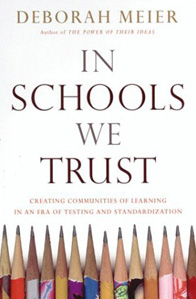
SchoolsWeTrustCoverEven though it’s a complete non-sequiteur, the first thing I noticed about Deborah Meier’s In Schools We Trust was that it was published by Beacon Press. I know of Beacon as the UUA‘s publishing house, but I’d not noticed till today what a vast array of non-UU books is in Beacon’s catalog. Upon reflection, this only makes sense, or else I fear Beacon might have what they call an “unsustainable business model.” Still, I hadn’t even remotely thought of Beacon as publishing education books till I picked this one up. Now I might as well export their entire catalog over to my reading wish list as I continue my ed-reading self-study project.

But on to more substantive matters…

Meier’s book is subtitled Creating Communities of Learning in an Era of Testing and Standardization, and although it was published in 2002, it still senses, to my readerly eyes, as speaking to the current state of schools and schooling. After all, who could read the following passage —

[S]ocial distrust plays itself out in education in the form of draconian attempts to “restore accountability” through standardized schooling and increasing bureaucratization.

The tragedy of this approach is that it undermines what I think is the best way to make schools trustworthy and raise standards. Standardization and bureaucratization fuel the very distrust thy are aimed to cure. Even more tragically, standardization and bureaucratization undermine the possibilities for the kind of education we all claim is sorely lacking. (2)

— and not feel its contemporaneousness?

In case you’re interested, here’s a few other reviews:

Meier arranges her book into three sections. Part One discusses different aspects of building a culture of trust within schools: teacher collaboration, parent engagement, being aware of the powerful impacts and implications of race and class differences within the members of a school community (teachers, children, educators). Meier also discusses the importance of creating an environment where children feel safe taking learning risks:

Learning happens fastest when the novices trust the setting so much that they aren’t afraid to take risks, make mistakes, or do something dumb. Learning works best, in fact, when the very idea that it’s risky hasn’t even occurred to kids. . . . No one is sorting or ranking us. . . . We’re in the company of people who are most firmly on our side, no matter what. (18)

Throughout these chapters, Meier offers concrete suggestions drawn from her own experience founding small, innovative public schools in NYC and Boston. Meier outlines 7 key qualities for such schools on pages 20-22. To paraphrase:

  1. Safety, both physical safety from violence and also safety from ridicule and safety to learn and make mistakes.
  2. A supportive “expert-to-learner” ratio, achieved by understanding that school communities can draw on other adults and older peers to create a more vibrant & effective learning community.
  3. Opportunities for students to show their own expertise and passion for a topic/subject.
  4. Flexibility in how learners can experience, explore and assimilate new content knowledge.
  5. Setting aside rigid timetables to allow “time for ideas to grow” (21).
  6. Learning that is engaging and enjoyable.
  7. A commitment to connecting school/curricular content to students’  authentic, lived experiences.

Part Three of the book addresses some customary fallacies and misconceptions about the small-school movement, arguing against the common belief that small, successful urban schools are so rare, the products of such exceptional circumstances (a superstar principal, a deep-pocketed foundation, etc.) that their  models of success could never be replicated to serve all the U.S. children in need of better, safer, more engaging schools. In fact, Meier argues, the “failures” often seen in attempts to scale up successful small schools are most often caused by city and state bureaucracies making choices that impose standardization at the cost of standards — at the cost of actual success in teaching and learning.

There’s no way to guarantee that any particular system will work, or will work forever, or will not need endless revising. But until we get over the idea that there is a one-size-fits-all solution to schools, above all for schools that are trustworthy enough to do the job well, we won’t allow ourselves to do the difficult long-term work of redesigning the system, not just the schools. What we need is a new kind of system whose central task is to protect the public space needed for innovation. We need a lean, mean system, with a limited but critical accountability function, to be the guardian of our common public interest, but one that respects the fact that schools must be first and foremost responsive to their own constituents — the members of their community — not to the system. That’s the rub. (172-3, emphasis added)

———-

You may have notched I skipped passed Part Two of Meier’s book. I did so because its contents — a devastating critique of standardized testing and its primacy in the U.S. educational system — seemed to me not-entirely connected to the book-ended discussion in Parts One and Three about what successful school models could look like and how to achieve them.

Don’t get me wrong: I think Meier’s critique of big testing is powerfully on point. When I called it a “devastating critique,” up above, that was not empty praise on my part.

Quite frankly, I’m afraid to start a more detailed summary with pull-quotes, for fear I will instead try to type out all 70 pages of this verbatim. And I just don’t have that kind of time.* Suffice to say, for the moment, that Meier has added immensely to the depth of my understanding of standardized testing, as well as to the depth of my contempt for its current use in schools. Even if you’re not interested in Meier’s thoughts about school design, Part Two of her book is eminently worth reading as its own little “capsule volume.”

So, a valuable first book in my new Earl-Nightengale-inspired ed-reading project. With any luck, I’ll finish book #2 at a similar fortnightly pace and circle back here.

Now all I need to do is figure out if there’s any sort of note-taking system I want to use to capture what I’m learning and any connections I start to make. Are these “21st century book reports” enough for that purpose, or is there something else that’s worth the doing?

* Or that level of disregard for copyright and the limits of “fair use” conventions.

———-

Image credit: http://en.wikipedia.org/wiki/In_Schools_We_Trust

A Little of that Human Touch

Ain’t no mercy on the streets of this town
Ain’t no bread from heavenly skies
Ain’t nobody drawin’ wine from this blood
It’s just you and me tonight

Tell me in a world without pity
Do you think what I’m askin’s too much ?
I just want something to hold on to
And a little of that human touch
Just a little of that human touch

~ Bruce Springsteen, Human Touch

While I’ve been under the weather* having a very individual-sort of challenging week, the rest of the country has been having its own sort of shitty week, what with the floods and the plagues and human decency going all to shit in Ferguson Missouri.

Because I’m still a bit ailing, I’m going to make this more of a link-fest than a work of original commentary — for the most part. Here’s a basic timeline that takes events up to President Obama’s statement Thursday afternoon.

And now a few scattered threads of what’s caught my attention since.

First, some basic pointers from Kate Harding on understanding these events from a lens of racial-cultural privilege.

2. Recognize that Michael Brown’s death was not an isolated incident.

In 2012, more than 300 black people were executed by police, security guards, or vigilantes. In the last month, three other unarmed African-American men—Eric Garner in New York, John Crawford III in Beavercreek, Ohio, and Ezell Ford in Los Angeles—have been killed by police. Those are the ones we know about.

3. Stop saying “This can’t be happening in America.”

I understand the impulse, I really do. But that impulse only comes to those who are insulated and isolated from how America treats poor people and people of color every day. Langston Hughes wrote “America never was America to me” in 1935. If you didn’t quite understand that poem in your junior high or high-school lit classes, read it again, while you think about what’s happening in Ferguson. Let it sink in.

Then, two articles pondering the, um, “selective” ways that many mainstream media outlets choose to portray black victims of violent crime: one from NPR and one from HuffPo. The HuffPo piece particularly illustrates the discomfiting tension that exists between the portrayal of black victims of crime as compared to white (alleged) perpetrators of crimes. Yes, Virginia, race privilege is so fucked up that white criminals still get treated better than black crime victims:

This is by no means standard media protocol, but it happens frequently, deliberately or not. News reports often headline claims from police or other officials that appear unsympathetic or dismissive of black victims. Other times, the headlines seem to suggest that black victims are to blame for their own deaths, engaging in what critics sometimes allege is a form of character assassination. When contrasted with media portrayal of white suspects and accused murderers, the differences are more striking. News outlets often choose to run headlines that exhibit an air of disbelief at an alleged white killer’s supposed actions. Sometimes, they appear to go out of their way to boost the suspect’s character, carrying quotes from relatives or acquaintances that often paint even alleged murderers in a positive light.

Amidst the outrage and indignation over Mike Brown’s death, Feministing calls attention to an equally discomfiting tension — one around the way that black male victims of crime receive more media attention, public support, societal outrage/sympathy than do black female crime victims.

How are the deaths and beatings of women — cis and trans — at the hands of the police or with their complicity so much less compelling? I think the obvious answer here is misogyny and transmisogyny, not on one specific occasion or by one specific person, but at the systemic level: what tweets get tweeted and retweeted, what events seem newsworthy, and what bodies are deemed to hold value.

I want to mourn the deaths of Mike Brown and Eric Garner and Trayvon Martin, and I want to question why the deaths of Renisha McBride and Islan Nettles and Kathryn Johnston haven’t gotten similar traction. Why the beating of Marlene Pinnock isn’t on all of our lips. Why the nation is not familiar with the names of Stephanie Maldonado, or of Ersula Ore. And how many women’s names do we not know because they don’t dare come forward? Because the violence they experience at the hands of the police is sexual, and the shame and stigma around sexual violence silences them?

The truth is that, in the predominantly male-led civil rights organizations who lead efforts to respond to police brutality, in the male-dominated media that covers them, and in the hearts and minds of many people in this country, women who are of color, who are sex workers, undocumented immigrants, transgender (or, god forbid, more than one of those at once) are rarely candidates for “innocence,” and are often blamed for their own deaths, forgotten, or hardly counted at all.

But finally, the piece that gives me small glimmer of hope is the contrast between Wednesday’s protest — and the militarized police response to them (text and images from Slate), and last night.

The man at the front of the march, was Missouri Highway Patrol Capt. Ronald S. Johnson, a Ferguson native.

“I’m not afraid to be in this crowd,” Johnson declared to reporters.

Johnson, a towering African American man who wiped sweat from his brow as he pointed out neighborhood hangouts and restaurants he used to frequent, was put in charge of crowd control earlier in the day, replacing the St. Louis County police who had been overseeing the police response to the protests. . . .

Protesters said they were still angry, demanding justice for Brown and answers from local police about why he was shot and who the offending officer was.

But, they said, Johnson’s willingness to physically interact with them, rid the streets of heavy police equipment, and help them coordinate protests was a welcome change in tone.

“Thank you so much for being here,” said Karen Wood, who fought back tears as she held both of Johnson’s hands imploring him to bring answers to residents and maintain calm in the streets.

“This is about human rights, about human beings,” she cried. (Washington Post)

It’s about human rights. Human beings. Meeting one another in an open-hearted way, with that human touch.

ari-hug-it-outAnd no, it’s not a magic wand to make all the troubles and tensions magically go away. There’s still hard work to be done, hard conversations to be had.

But ain’t it something to see how that human touch at least makes the hard work possible?

* It’s been a lovely stomach bug/depression cocktail — I don’t recommend it.

———-

Image credit: http://giphy.com/gifs/pzl20V6IWOjK

Step by Step, Across the Galaxy

norman-rockwell-facebookOne or two days ago, I did that thing you’re never supposed to do: I shared an infographic on my Facebook wall without actually double-checking the sources and the veracity of the information.

You can read all about it here. About the infographic, I mean, not the Facebook part of things. The Facebook faux pas is a tale as old as time, as the sages say.

At the very bottom of the post is a copy of the original infographic with what turned out to be incorrect (or at least, unverifiable) stats about the cultural decline of reading. Once he found that the original stats — which were really super shocking (80% of households haven’t bought a book in the last year, stuff like that) — were unverified, the infographic creator did a v.2 that brought in some different statistics that could be verified.

The funny-ironic thing, as far as I was concerned, is the way I would have been equally happy to post the v.2 “corrected” info graphic rather than the more dramatic/problematic v.1. Because what had most caught my eye was a quote that stayed intact between v.1 and v.2, in large part because it was so obviously aspirational rather than scientific: “If you read one hour per day in your chosen field, you will be an international expert in 7 years.”

The concept is attributed to motivational speaker Earl Nightingale on personal development/coaching to success sites like here, or most clearly presented by author and success coach Brian Tracy here:

Earl Nightingale said many years ago that one hour per day of study in your chosen field was all it takes. One hour per day of study will put you at the top of your field within three years. Within five years you’ll be a national authority. In seven years, you can be one of the best people in the world at what you do.

I’ve been chewing over that notion ever since I saw the quote.

I talk now and again about the fields of public education and educational reform. It’s the field I’ve been working in for a few years now, but I still only feel as if I know the tiniest bit about it. So the quote on the infographic started me thinking: what could I accomplish if I followed through on my often-stated desire to become more of an expert in my field? If I made a more serious commitment to reading/learning more about education? Could I make the time for regular self-study, and, if so, how might that benefit my work and my life?

Now, the truth is that I already have lots of daily practices going on. The morning journal-writing. Blogging here on JALC. Coursera classes. Regular commitment to ongoing household responsibilities like dishes and laundry and such. So I found myself of two minds as I considered this new daily practice. On the one hand, I found it a little bit intimidating. Can I really take another thing on?

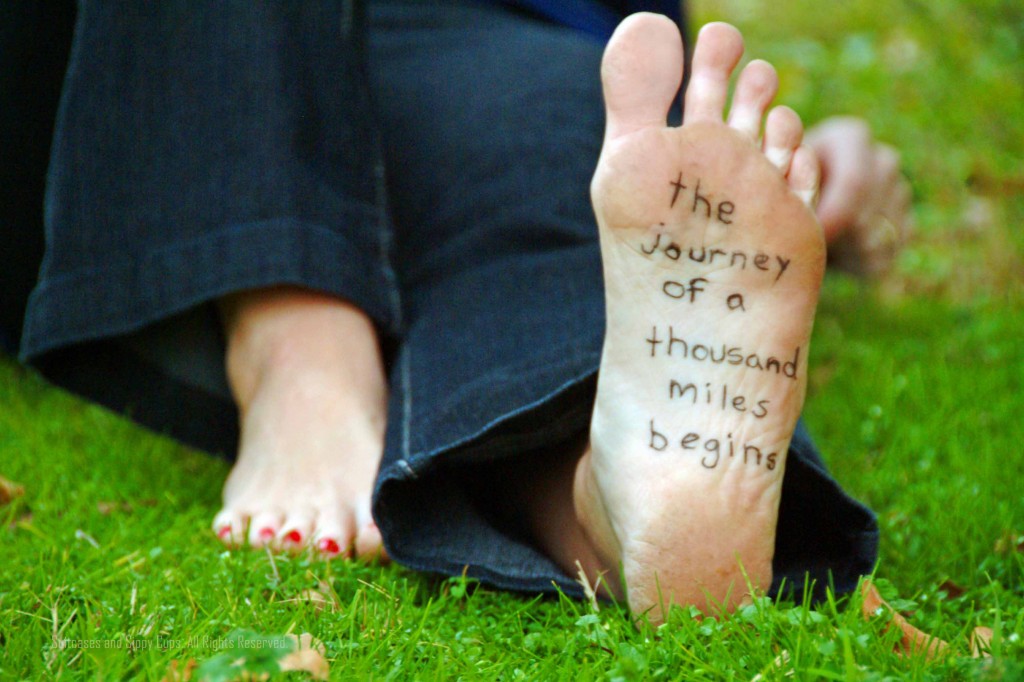
journey-beginsOn the other hand, I find Nightingale’s concept really inspiring in its reminder that small, sustained effort can add up in really significant ways. Yes, in many ways, this is a familiar and often-stated concept. After all, isn’t there a proverb about the thousand-mile journey beginning with one small step? But sometimes it is really impactful for me when a new phrasing or formulation allows me to see a familiar-ish concept in a new way. Like when I read a book, some years ago, spring-boarding off the proverb to point out that the author’s small steps had, without her really noticing, carried her across the universe.* The Nightingale quote now, like de Grandis some years ago, helps shift my attention away from the sense of a slow, endless slog — 1,000 miles times 5,280 feet/mile, divided by 2.5 feet/step** — towards the reminder of what can be accomplished with sustained effort.

And yeah, I have a fair number of daily practices already. But I also spend enough time doing the TV/Facebook zombie thing that the hours could almost add up to being their own part-time job. Besides, the activities in question here (reading and thinking) are things that come to me as naturally as breathing. And even if an hour each day feels a bit like a stretch, I know that smaller pieces of effort can also add up:

As I’ve said before, we overestimate what we can do in a week, and underestimate what we can do in a year. But if you spend 15 minutes a week reading your industry journal and it takes you four weeks to read it, is that a bad thing? Of course not- it probably only comes once a month anyway!

So, in concert with this fellow, I’ve started spending 15 minutes each night reading a bit about education, starting with another book I borrowed from the company “library.”

As with so much else in my life, I imagine this to be a “progress, not perfection” kind of movement. I imagine there will be times when my daily practices need to be triaged and weighed against one another. Last night, for example, after our drive up to the lake, I found myself prioritizing education reading and early bedtime over JALC post. (Heck, we have baseball tickets and I won’t be able to post tonight, either, so a midday Saturday post kinda works better anyhow.)

Some nights I can imagine prioritizing JALC over ed-reading,and some nights I can imagine prioritizing both of those activities over sleep. Day by day, I’ll work it out. Heck, I wasn’t entirely sure I’d be able to stick with JALC when I resurrected it, and yet here we are 5 months later. (Which is, by the way, 4 months longer than JALC’s first-phase lifespan. Go figure.)

Step by enjoyable step, around the world and back again.

* The book in question is currently not available to me, so I can’t confirm the precise quote. (After the Facebook error, I feel as if I should be extra-aware about such things as the accuracy of my citations and the credibility of those sources I quote.)

** Why doesn’t my keyboard have a division sign? Ah, the indignities of aging, when one’s native symbol set slowly gets displaced by the new generation’s symbology…

———-

Image credits:

Norman Rockwell: http://mote-historie.tumblr.com/post/76317464830/now-son-do-you-know-what-you-did-wrong-yes-sir

The journey begins: http://www.suitcasesandsippycups.com/2012/01/a-journey-of-a-thousand-miles-blah-blah-blah.html