
Be Still, My Weeping Heart

Hulk-YAWPMr. Mezzo and I watched Ryan Murphy’s HBO adaptation of The Normal Heart this evening. I’d not seen the original play performed, although I had read it numerous times as part of my teaching and dissertation work. So I was really interested to see what differences there might be between Kramer’s play and Murphy’s film.*

The play debuted off-Broadway in 1985. And its initial impetus and power is summarized by Mary McNamara in the LA Times thusly:

In the early 1980s several things were obvious to writer Larry Kramer. Gay men were literally dropping dead and neither the government nor the medical establishment seemed to be doing much to stop it. Moreover, no one, outside of other — increasingly terrified — gay men, seemed to care.

So Kramer wrote “The Normal Heart,” a blunt instrument of a play debuting in 1985 in which his thinly disguised avatar, a New York writer called Ned Weeks, watches friends die, helps form the Gay Men’s Health Crisis center and does a lot of yelling. About homophobia and the Holocaust, about the perils of the closet, about society’s unforgivable hypocrisy and gay men’s own self-destructiveness.

“The Normal Heart” was a howling call to action, designed to push people out of their ignorance, complacency and seats to demand justice, and funding, for all.

Almost 30 years have passed since the play’s debut, and more than 30 years since the CDC first reported mysterious cases of kaposi’s sarcoma. With the unfolding of so much time (and the waves of cultural change wrapped in these decades), I’ll admit I was among the many individuals wondering a little bit about whether the movie would be meaningful, or effective.

It was. In a different way, but yes: deeply effective. To quote Tim Goodman in The Hollywood Reporter:

The movie is a way to remember. It takes something revered in theater circles and give it a wide release with a cache of bright stars. It will get seen, and the message about the horrible history of the beginning of the AIDS epidemic won’t be forgotten. . . . For those people who didn’t see the play or, more importantly, weren’t there to witness or read about the onset of what was first described as “gay cancer,” The Normal Heart works best as modern history. Knowing what we do now, it’s hard to fathom that so many people looked the other way.

It’s a bit hard for me to judge the film’s effectiveness as “modern history” because of the peculiarity of my knowledge around the early years of the HIV/AIDS epidemic. I’ll unpack that story in full some other day.**

Suffice for the moment to say that much in my adolescence — socioeconomic privilege, suburban home, mainstream media diet — worked to keep the spread of HIV/AIDS completely off of my threshold of awareness. However, since I chose to write my (ultimately unfinished) dissertation about artistic responses to the AIDS epidemic, I made up for my early years of sheltered ignorance with a lot of research and study.

Still, it’s one thing to research a topic, and it’s quite another to bear witness. And it is in bearing witness to those first years where I am was most profoundly moved by Murphy’s film. To my ears, Kramer’s play had always functioned better as a piece of agitprop than anything else. A howl of outrage, a wake-up call — a piece that condemned inaction but perhaps not one that opened the heart to sympathy or empathy.

And don’t get me wrong: I don’t intend this observation to suggest I have any less respect for Kramer’s play. I am not a member of the tone police, and I know that yawps of outrage and agitprop are vitally necessary. I also believe that acts of witness and stories that inspire empathy are necessary, too. Which is why it’s such an amazing thing for the seed of Kramer’s work and activism to have offered me both of those gifts.

Back in the day, Kramer’s play was one of the things that woke me up to AIDS, to its early spread, and especially to the devastating effects of prejudice and homophobia. The play opened my eyes; it made me angry.

And tonight, Murphy’s film helped re-ignite my empathy for what it might have been like to live through the early years of HIV/AIDS. It bore witness to a time when a community felt such sorrow and loss and — because of cultural disdain and indifference — it faced those losses alone. The film opened my heart; it made me cry.

Both gifts of awareness. Both gifts to be grateful for.

* For lack of a better coinage, I’m going to talk about these two different adaptations as “Kramer’s play” and “Murphy’s film.” I haven’t yet done a textual comparison, but the screenplay sure senses different enough from the original script that I think there’s some validity to addressing these as distinct — though related — artworks, rather than talking about them as two interpretations of a core text.

** I wrote a damn novella last night, so I’m trying to be a bit less loquacious tonight. Especially since I have to get up early tomorrow for work.

———-

Image credit: http://poetry.rapgenius.com/Tom-schulman-dead-poets-society-yawp-freestyle-scene-annotated#note-1685661

 

What We Measure Matters

I don’t usually write about the details of my 9-to-5 work (0r 8-to-6, or whatever) here in the Wild West of the blogosphere. Besides my general level of caution about being “inappropriate” or “indiscreet,” I also know someone in my circle of acquaintance who was quite literally Dooced, some years ago. So yeah: I consider discretion to be very much the better part of valor.

Marshallville-One-room-Schoolhouse-300x225What I do feel comfortable saying is that I do advancement work for an educational non-profit — which is the field and non-profit sector I’ve been working in for 11 years now. And, because it’s helpful to my work AND because I have a genuine interest in the topic, I regularly make the time to read books, articles, blogposts, etc. that help me expand my understanding of the challenges, trends, concerns, and opportunities that exist in schools and in the educational field writ large. Sometimes I even borrow books from the office “library” to help me stay plugged in.

And today, in that spirit — between the truly massive amount of sleeping I did last night, the tiny bit of laundry-folding/house-puttering that occurred, and then the lengthy nap that was required ‘cos I hadn’t slept enough last night* — I finished reading Mike Rose’s collection of essays Why School?

Rose’s subtitle, Reclaiming Education for All of Us, is suggestive of his desire to refocus the lens of educational discourse away from the usual obsessive focus on knowledge and workforce preparation as signaled by the results of high-stakes standardized testing. This desire is summarized by Rose in this HuffPo post about the book:

There’s not much public discussion of achievement that includes curiosity, reflectiveness, imagination, or a willingness to take a chance, to blunder. Consider how little we hear about intellect, aesthetics, joy, courage, creativity, civility, understanding. For that matter, think of how rarely we hear of commitment to public education as the center of a free society. . . . My hope is that “Why School?” contributes to a more humane and imaginative discussion of schooling in America.

The book is an engaging and thought-provoking read, and I definitely recommend it for folks interested in education. Be aware going in that the book is about asking big questions and providing answers that rest at the level of ideals, values, and visions. Not so many concrete implementable suggestions, but that’s okay by me.

Rose lays out a cogent analysis of how current educational trends are the inevitable flowering of a flawed set of values. I found some of the middle essays in the collection most persuasive and illuminating on this score.

For example, “Business Goes to School”  highlights the self-serving contradictions of a corporate culture that demands the education system prepare critically reflective problem-solving workers-of-the-future while also selling an easy economy of glitz and glamour and anti-intellectualism:

So many of the commercially driven verbal and imagistic messages that surround our young people work against the development of the very qualities of mind the business community tells the schools it wants. (61)

“Reflections on Intelligence in the Workplace and the Schoolhouse” calls out the intellectual laziness of intellectual snobbery around defining “intelligence” as solely located in the institutions of schoolhouse and university:

If we think that whole categories of people–identified by class, by occupation–are not that bright, then we reinforce social separations and cripple our ability to talk across our current cultural divides. . . . To acknowledge our collective capacity is to take the concept of variability seriously. . . . To affirm this conception of mind and work is to be vigilant for the intelligence not only in the boardroom but on the shop floor; in the laboratory and alongside the house frame; in the workshop and in the classroom. This is a model of mind that befits the democratic imagination. (86-87)

And, finally,** “Re-mediating Remediation”  draws on Rose’s own teaching history to argue that the most effective way to increase literacy skills for teen, college and adult learners is to address reading and writing challenges in the context of challenging, engaging, age-appropriate metrical, rather than through the usual menu of “dumbed down” workbook assignments:

[W]riting filled with grammatical error does not preclude engagement with sophisticated intellectual material, and that error can be addressed effectively as one is engaging such material. (130, emphasis added)

I am inclined to agree with Rose’s analysis that a lot of the flaws and misguided obsessions in the U.S. educational system are rooted in these flawed values and prejudices. Given that reality, I would suggest that an essential first step in effectively rethinking American education would be to plant the seeds of different, more functional values. And I’m grateful to Rose for carrying that task forward so persuasively.

* D’you think last weekend’s work finally caught up with me? I think so, too.

** “Finally” insofar as it’s the final essay I’m going to specifically highlight — not that this is the final insightful thing Rose has to say…

———-

Image credit: http://www.hcsv.org/visit/tour-the-village/marshallville-school/

Completion

Celebrating a Finish Line

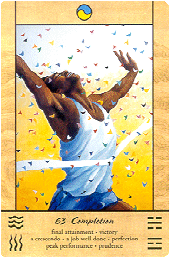
I’ve talked before about how I’m not thinking of the end of my HCG journey as some sort of arrival at a mythical “I never need to think about detoxing again” kind of place. Nonetheless, a former co-worker of mine always talked about how necessary it is to celebrate the finish lines you achieve. Yes, there’s always a next thing, next task, next project right around the corner, and that deserves attention and energy. But it’s also essential to honor the tasks/things/projects you’re able to complete, and honor yourself for being able to complete them.

Completion
http://www.learntarot.com/todesc.htm

And tonight is a moment where I may not have reached the finish line on my detox journey, but it certainly have reached a finish line. Because today was my last day under the post-HCG dietary restrictions, meaning that I have successfully navigated through and to the end of this nine-week experience.

So: yay.

Though no exclamation point on that, because I am decidedly of mixed feelings.

I am truly proud to have accomplished this, to have found the self-care and discipline to live within the rules of the protocol. I am also looking forward to releasing the strictness of these rules — to being able to start weaving grains, legumes, and carbohydrates back into my diet. (In fact, I think there may be a batch of my famous three-bean “chili” to cook up some time soon…)

I am grateful for the opportunity to get a clearer sense of the distinction between physical and emotional hungers, though there’s another post to write about how I don’t actually think “emotional hunger” or “emotional eating” are necessarily a bad thing. Even though I’d sort of known about this already, it was truly shocking for me to really see and understand the quantity of foods that have added sugar in them, and I’m going to try and limit my intake of added sugars as I move forward.

From an energetic perspective, I am also glad to have taken this HCG journey. Obviously, as last night’s post revealed, I still have many ways in which I am limited and lots of places to keep learning and growing. But it does sense as if the nurturance in this experience — the role of HCG as a sort of “mother vitamin,” allowing myself to be supported by the center and my coaches, practicing maturity and self-care — has really helped take my victim identity off-line. Some significant piece of chronic resentment and suppressed rage that I’ve been carrying with me for rather a while seems to have resolved itself.

Ultimately, though, I also feel slightly embarrassed at the notion of being too proud about this “accomplishment.” Because, honestly, it wasn’t that difficult an experience to go through for these months.

Still: there were some moments of difficulty here and there, and I did manage to weather them. So, honor the finish line, honor myself for getting there, and much honor to Spirit and to my teachers for aiding my way on the path.

Farmville Cash Cow

The Sequined Threat

Farmville Cash Cow
http://blog.games.com/2011/02/20/farmville-scam-no-free-cash-cows-are-being-given-away/

I knew from yesterday’s exercises that this morning’s concluding movements for the retreat were going to be physical ones. So when I got dressed, I said a small prayer of thanks that I had one T-shirt to wear for the work and a fresh shirt to change into before heading off to the airport and my travels home.

In retrospect, it might have been wiser to switch the order of how I wore these two items of clothing. In my own way of mixing vanity and propriety when I travel, I saved the “dressier” T-shirt for my travels: darker and more subdued colors as well as a subtler design. Dark blue flowers, grey leaves on a dark cocoa background, with a small smattering of sequins across the torso.

It seemed like a good idea at the time. But as it turns out, the security body scanning machine isn’t a fan of sequins, so wearing them may result in you getting sorta-kinda felt up by the lady TSA agent.

———-

Nota bene: As much as I love comic hyperbole, let me be really clear right now about the professionalism shown by the TSA agent in question. She told me what the scanner procedure required, and that she would be using only the back of her hands for this “pat-down.” She made it very clear this was not an enjoyable happening for her, either, and she gave me the option of stepping to a more private location before this extra-level search happened. She also warned me before every body contact within the pat-down, and was as quick as she could be within what was required.

All in all, she did the best she could within the structure to make an invasive and dehumanizing moment as painless as she could. So: honor to her.

———-

Nevertheless, the structure itself was incredibly dehumanizing — something I didn’t really get till I was in the middle of the happening. Foolishly, naively, defiantly, I had chosen not to step to a more private location for the “pat-down.” Naively, because I didn’t quite get how thorough the search was going to be. Foolishly, because I had zero foresight to understand how profoundly shocking this boundary-crossing was going to feel in my system. Defiantly, because even with my limited ahead-of-time understanding about the structure, I knew enough to want it to be out in the open.

Let them see what this system is like. Do not let this be swept over and hidden in the shadows.

No, I don’t really know who the “them” is I want to wake up to this structure. But even now that I know how thorough the search is, and how it really feels to stand and experience that, I have no regrets for staying out in the open for it. Let them see, indeed.

And although today’s happening was an especially charged case study, the principle of how dehumanizing air travel can be holds true in so many other expressions.

Yes, I’ve seen that Louis C.K. bit before. I know how miraculous it is that air travel is available to us at all, and I have profound gratitude at being able to use this miracle in order to attend these retreats, to study, to grow my awareness, and to move my life forward.

But still.

So many elements of airport design and airline systems reduce people to one or all of these things: cargo, cash cows and potential threats. Seats that keep getting more cramped and compressed to increase the profit capacity of each individual flight, and the endless up-charges to try and increase the profit potential from each individual passenger. The continued ridiculousness of taking your shoes off at the security checkpoint. The price mark-up on the Dunkin’ iced coffee bought in the airport as compared to the one a mile down the road from Logan, paired with the regulations that forbid you from bringing the more reasonably-priced caffeinated beverage along on your travels.

I am by no means a road warrior. But I travel enough to have some chances to study these dynamics. And I do see individuals — staff and travelers alike — taking what steps they can to maintain their humanity and bring it into the travel machine in whatever ways they can.

I’ve started making my own conscious efforts in this direction. Saying my “thank you” to someone with attention and sincerity rather than just by rote. Helping someone place a computer cord so he can use the extra plug at the charging station where I’m sitting and feeding my Apple gadgets. Holding my shit together when a TSA agent needs to pat me down rather than exploding any of my triggeredness on her.

But I can’t help but wonder. What would it be like if humanity were intrinsically woven into the travel structure? What would it be like if moments of humanity and connection were part of the design rather than operating as a sub rosa counter-narrative?

After all: how many other structures are similarly ripe for transformation?

Gone Fishin

Gone Fishin’

Gone Fishin
http://ticktickdynamite.blogspot.com/2011/08/gone-fishin.html

Off on an early morning flight to the retreat tomorrow.

Last night and tonight I was/am deep in packing, preparation, and managing domestic tasks to compensate for the abbreviated week. And once I’m at the retreat center, I’m completely off-the-grid till I emerge Sunday evening.

So: no blogging for Sherri this week.

I’m excited. And nervous. And a little stirred up — some of the forces I expect I’ll be processing tomorrow-and-onward have erupted a tiny bit early.* The retreat will be hard work, but it’ll be good work, and work well-worth the doing.

———-

* Which is how it usually goes for me.

The Value of a Wasted Day

Yesterday was somewhat rich with errands — Mr. Mezzo has a quick trip for family business today and tomorrow, so we were trying to get a full weekend’s amount of usefulness crammed into the single day. Then in the evening, I went into the final, most intense steps for the gall bladder flush, which consist of a couple of doses of Epsom salts to help “clear out” the system (as it were), and then a grapefruit juice/olive oil cocktail to encourage the gall bladder to release any accumulated stones in there.*

I had a fair amount of discomfort during the overnight hours, and thus far, there hasn’t been much in the way of internal “movement,” if you get my drift. (I had kinda hoped this particular issue would complete itself once I finished the damn HCG shots, but oh well.) So that’s been my excuse to take it kind of easy today.

There’s certainly things I could (should) be doing. I have a retreat weekend coming up starting early morning Thursday, and supposed appointments Tuesday and Wednesday nights, so I could very well be packing and getting organized. Alternately, I could be doing some UNpacking down in the basement, since I’ve lost some momentum there with last weekend’s concert and next weekend’s out-of-townness. And then there’s always the usual rounds of grocery shopping, cleaning and decluttering, checkbook-balancing, and so on and so forth.

I dare say those laundry lists of things are remaining undone. After all, if at 7 PM the most ambitious things you’ve managed with your day is to take a shower and start a load of laundry, there’s not a whole lot else that can happen at this point.**

Make-A-Deal-Doors
http://mathfest.blogspot.com/2008/04/monty-hall-probability-problem-in-news.html

I’ve had wasted days like this before. More than I’d like to admit. But tonight, rather than sliding into my usual funk of self-flagellation, I’m trying to be more at peace with my inaction. My choices at the moment seem to be either (1) stew in guilt and self-castigation for the next few hours, making my evening pretty darn miserable and undoing whatever self-care has been accomplished by such a relaxing day; OR (2) show myself some self-acceptance, trust in the rightness of my system needing/wanting rest today, and enjoying what few hours of awake time I have remaining for my Sunday.

So, as a change of pace, I’m going to try for Door #2. Perhaps I’ll get a little bit more done. Perhaps — probably — I won’t. Either way, that’s going to be okay.

(There’s also a whole side conversation that could be had about the types of hard work I am doing these days — between the HCG journey and this gall-stones cleanse, I’ve been putting a lot of time and energy into detoxing and that level of growth. Never mind the preparations going on for this upcoming retreat weekend. Perhaps it’s okay that some more “traditional” modes of self-care are being underplayed while I put my energy towards some things that are less readily observed but nonetheless crucially important.)

* No, it wasn’t quite as disgusting as you’d imagine. Close, but not quite.

** Especially if one is a Game of Thrones watcher and needs to be ready for that come 9’o’clock.

organ pipes, close-up

Respect or Complicity?

organ pipes, close-upThe concert went well. My packing tape hem didn’t deconstruct itself, the choir kept itself together and stayed attentive to our conductor, the soloists were fantastic, and we all muddled through some, er, “imperfections” in how the organist handled her duties.

After we were done singing and we’re listening to the Widor Toccatta that closed out today’s program,* I found myself reflecting on the many ways that involvement with classical choral music so often creates some tight interweaves with the Christian church tradition. After all, so much of the repertory, even up into the 20th century, was written to be a part of the church music tradition. And then there’s all the times community choirs use churches and cathedrals as concert locations.

This was all very present to me as I sat in a pew after singing an oratorio depicting the crucifixion of Jesus Christ, standing on a choral riser right next to a big wooden cross adorned with a crown of thorns and a white linen cloth.**

I am not a Christian. If I had to name my spirituality, I think the closest I could come right now would be to call myself a “UU Buddhist witch.” And yet, here I am, reclaiming my place as part of a musical tradition that is very much Christian.

Not all of it, of course. This particular choir I chose to join caught my eye because they’d programmed a setting of Mary Oliver’s poems by a composer whose e.e. cummings settings I have performed and deeply admired in the past. That greater breadth in programming is one of the things I look for in a choir. But even in a group that looks to widen its programming choices, there’s no escaping a heavy dose of Christianity in the music programming.

And I am so of mixed feelings about it.

On the one hand, much of this repertory is what I “cut my teeth” on since I began training my voice at the age of 9. There’s memory and affection tied up in here. And a lot of it is legitimately beautiful and moving — showing once again how something rooted in authentic creativity can often cross boundaries of historical, national or ideological separation.

And yet. I remain deeply concerned at the ways the narrative of Christianity is still so predominant in the USA. Just a couple of days ago, Alabama’s Supreme Court Chief Justice declared that the First Amendment of the Constitution only protects Christians, because “Buddha didn’t create us, Mohammed didn’t create us, it was the God of the Holy Scriptures.” Now, this is, obviously, both a legal and a historical fallacy, but I find it rather terrifying that a state supreme court justice (chief justice, no less!) would take such an ignorant and narrow-minded position publicly. (And without any negative repercussions, so far. That detail alone should be enough to show the ongoing cultural hegemony of Christianity in the states, today.)

So, in re-engaging with the classical choral tradition, to what degree am I re-opening to my own creativity and expression? To what degree am I showing respect to past composers and their creations, understanding the historical moments and context in which they worked?

And to what degree am I simply complicit in reinforcing the suppressive nature of dominant cultural structures, rather than engaging in resistance or offering counter-narratives?

I don’t know the answer to these questions. But I think I’ll be studying them for some time now. There’ll be another choral season starting in September, and in the meantime, I’m considering trying out for a local music theater production next month.

If I choose to do that (and if I were to get a part), there will be the chance for a whole new study around cultural narratives of gender, love and marriage.

* This organ piece went fine. The bitchy Mezzo in me wonders if the organist spent more time preparing her “spotlight” piece than her accompaniment for our oratorio.

** The crown of thorns I get, but I gotta admit, I’m rather clueless about why the white cloth gets draped there. The shroud he left behind in the tomb?

———-

Image credit: http://www.transformingeveryguest.com/2012/09/sermon-work-in-progress.html

hands holding puzzle pieces

Working in Concert

hands holding puzzle piecesThis evening, I am hemming my chorus dress with packing tape. It arrived too late for me to be able to find a seamstress and get it done the right way, but the concert is tomorrow and something has to be done so I don’t trip myself (or anyone else).

It’s been a long time since I was involved in a choir or concert where we were striving for the level of artistry and polish we’re attempting here.

The last couple rehearsals have been hard ones as we try to get all the pieces to come into place together. Today’s dress rehearsal was especially high on the stress factor.

New location with entirely different acoustics, the first time all the players — us, pianist, soloists, organist — were all together. Lots of logistical challenges: figuring out where the soloists will be, trying to get visual communication between the conductor and all the limbs of this messy musical octopus. And never mind the whole rigmarole of transitioning the church from worship space to concert formation back to worship space again under very tight time pressure.

This is nothing new. There’s a reason there’s so many cliches and truisms about rocky dress rehearsals. I have had similar experiences before, and if I continue this re-engagement with music and performing, I am sure I will have similar experiences in the future.

But it’s an interesting exploration to watch myself in this setting now and reflect on the ways I used to internalize the stress and perfectionism of these endeavors. Now it’s kind of as if I’m holding it a bit more loosely.

And by that I don’t mean at all to suggest I’m slacking off. As in years and choirs past, I am still doing everything in my considerable power and training to model exceptional attention to the conductor and strong musicality, especially with the dynamics and diction that are so needed in this particular concert locale.

But where in the past, I would feel a certain level of pressure and superiority in that — feeling as if I needed to be extra “on point” to make up for my peers’ inattention — now there’s a softer feeling to it.

For better or worse, I’d be lying if I denied having some ongoing awareness of ways in which I am often more “on point” than some of my peers with the technical details. (After the years of choral experience and formal training I’ve had, that’s kind of inevitable.) However, there’s not the same tone of judgement that I used to hold with that. Instead, the focus is more towards being the best piece of the texture I can be, trusting that my little contribution will organically aid the whole.

It’s good to be singing in a group again.

But now I need to finish “hemming” that dress.

———-

Image credit: http://www.icare4autism.org/news/2012/09/medication-study-for-adolescents-with-autism/

Baby Jiu Jitsu

A Dance of Appreciation and Avoidance

Baby Jiu JitsuOne of my other weekend activities was to get a somewhat-overdue haircut (and a color touch-up, though that was more on-time).

I had a haircut scheduled two weeks ago, but my hairdresser got sick, and I just decided to grit my teeth and wait till the Saturday coloring appointment I already had on the books.

The upshot of all this scheduling information is that my last haircut prior to this one was the weekend before I flew down to begin the HCG protocol. So, my hairdresser hadn’t seen me since this whole journey began. And I guess I look different enough now for it to be noticeable.

“You look great! Have you lost weight?”

Welcome to the compliment minefield.

———-

[HAES/FA Basics Break]

Just for clarity, let’s recap some of the reasons why this particular “compliment” is deeply problematic and not very complimentary.

As a start, here’s Regan Chastain at Dances with Fat:

People who undertake weight loss attempts are often encouraged to motivate themselves by hating their current bodies.  When they are successful at short term weight loss, they are encouraged to look back at their “old body” with shame, scorn, and hatred.  And that’s a big problem.

Not just because at some point the person will probably start to think “if everyone is talking about how great I look now, how did they think I looked before?” but also because the vast majority of people gain back their weight in two to five years.  Then they are living in a body that they taught themselves to hate and be ashamed of, remembering all of those compliments. Yikes.

Tracy I at Fit, Feminist, and (almost) Fifty unpacks some of the deeper implications of this compliment, and its collusion within a structure of the Foucauldian panopticon:*

It reinforces the idea that it’s okay to let people know that we are monitoring and judging their bodies. One thing that shocked my friend in the story I opened with was that she really didn’t even know the person who commented on her weight.  And yet the person felt completely entitled to say something. What kind of a twisted world do we live in where the state of our bodies is fair game for comments from whoever feels like making them?

Finally, here’s a meditation from Michelle Parrinello-Cason at Balancing Jane on the question of what exactly we’re praising when we compliment weight loss.

What if I say “Have you lost weight? You’re looking great!” to someone who has been starving himself for weeks. Now I’ve reinforced that behavior.

What if I tell someone she looks great when she’s actually suffering weight loss as a side effect from a deadly disease (as happened to this woman’s friend who was suffering from Lupus).

We don’t know what we’re praising if we’re only praising a result. If our goal is to encourage people to take care of themselves and to be healthy, then shouldn’t we make sure that we’re actually encouraging people to, you know, take care of themselves and be healthy?

If someone gets up an hour early and went for a run, we should praise that. That’s hard work.

If someone cooked healthy meals all week long for themselves and their family, we should praise that. That’s hard work. [. . .]

If we rethink the way that we give praise, we can begin to restructure our norms. If we praise hard work instead of outcomes and acknowledge beauty wherever we see it and the people who are doing that hard work don’t get any thinner, we’re still reinforcing positive, healthy changes. Isn’t that what we really want to value as a culture?

[/Break]

———-

For all that I agree with these multiple analyses about the problems behind my hairdresser’s statement, I also agree with Golda Poretsky at Body Love Wellness about the root cause of these “compliments”:

I think people are, in some ways, nearly literally blinded by weight loss culture. So when they read something or someone as beautiful they make an automatic connection between beauty and weight loss. I really don’t blame people for that. I think that most of us who have woken up from weight loss culture have been truly hurt by it (or have great empathy for someone close to us who has been hurt by it), so people who haven’t had that experience often just see our current weight loss culture as normal.

So the question becomes, what do you do in the moment? Depending on the context and your relationship to that person, you can handle the compliment of “You look great. Did you lose weight?” in many ways.

Among the options Poretsky lists are saying a simple thanks, setting a boundary against public discussion of your weight, or using humor to redirect the conversation. In the moment on Saturday morning, I didn’t select any of those precise options, though I feel as if I kind of rolled them all together, a bit.

I thanked her and said I’d been doing this detox diet for a number of weeks, limiting my food to lean proteins and fresh produce. I was sure some weight loss had occurred as a side effect of the detoxing, but that’s not my focus.

“Do you have an ultimate weight loss goal?”**

“Nope,” I repeated, “that’s not my focus.

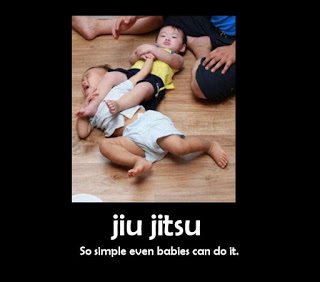
And that’s where we left the topic. Me wanting to acknowledge and appreciate her desire to say something nice and kind, while also jiu-jitsuing my way out of the specific value proposition (thin=beautiful=virtuous; fat=ugly=lazy cow) she was unconsciously peddling.

* I stumbled across this blog tonight looking for good links to use here and I am already head over heels in love with Tracy’s intelligence and insights.

** You see, this bit shows as much as anything how deeply unconscious and blinded we are by the weight loss culture. When an otherwise lovely young woman hears a statement about how weight loss isn’t my focus and then without blinking an eye disregards that assertion to ask me my weight loss goal, there’s nothing else to call that but a symptom of cultural insanity.

———-

Image credit: http://www.groundnevermisses.com/2012/02/striking-grappling-traditional-mma.html


Osho Zen Tarot: Letting Go

Releasing Old Selves

Quick HCG update: my ketosis levels limped through the weekend at “small,” so I made it to today’s final shot, as scheduled. Since I still have a couple more days of transition from this phase to the next, I don’t have a whole lot else I want to say about the topic for now. It’s a little bit like reaching my birthday and searching within myself, expecting to feel different — but I’m not really feeling all that different.

Instead, after skipping out on JALC for the whole weekend, I feel like writing about some of those weekend activities. Call it the “Endless Unpacking Weather Report.”

———-

As is my wont, I got some more boxes unpacked this weekend. The process for each box is slower than you might think, because of all the clutter that got boxed up in random assortments when we in such a hurry to pack up a year ago.

In my effort to make this new start a fresh one, I’m trying to be very deliberate during the UNpacking, assessing every item to feel into whether or not to keep it, and, if I’m keeping it, whether or not I have a sense where it will be living. (If I don’t have a sense if where the item will live, I sometimes invite myself to rethink whether it’s really something to keep.)

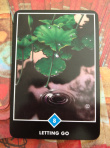
Osho Zen Tarot: Letting GoAnother technique I’ve been using is to pull cards on things to get some guidance about whether an “on the fence” item should be kept or added to the Goodwill pile.*

And for the record, there’s a LOT of “on the fence” items. I read something somewhere about how a tendency towards indecision can actually be a precursor to hoarding behaviors, and I would say that pattern has played out to some degree in my own life. I can definitely tie myself into knots now and again, agonizing about what decision is the “right” one — and I mean that in all sorts of life’s corners, not just with possessions.

With possessions, though, there’s often an extra charge to it. The things speak to me so strongly about different phases of my life when I was involved in particular endeavors or activities. Music studies, theater, my Ph.D. program, studying belly dance, leading an earth-based rituals group at Philly’s UU church. And so on and so forth.

It doesn’t make sense, but it’s hard for me to contemplate letting go of those old selves. There’s part of me that hangs on to the fantasy that I might re-engage with one of these old passions, so the old supplies might be needed, down the line.** And then, even with former paths where I know the door has closed, it still feels like an act of self-betrayal to let go of these talismans. Like somehow, if I release the objects, its as if I’m telling myself that that old path was a waste of time and energy.

So, by turning to card-pulling, I’m practicing my level of trust in Spirit, and reminding myself of the faith — the knowing, really — that every “wrong turn,” “abandoned direction,” or “closed door” has been an essential ingredient in bringing me to the self and place where I am today. As one of my consciousness teachers once reminded me: “You’re never NOT on your life’s path.”

And for the most part, it’s been a successful experiment. There’s still been a weird moment or two, when the cards have guided me to let go of something unexpected. Like when the guidance came through to put my copy of Canterbury Tales on the Goodwill pile. It was deeply puzzling, like becoming slightly unrecognizable to myself: as a Lit major, of course I should have Canterbury Tales on the bookshelf.  So what does it mean to that identity when that book goes away?

I guess it’s time to find out.

* I [heart] my Osho Zen Tarot app.

** I still remember how, when I started graduate study in music history, I purged some of my literature collection, as a sign to myself (and the world?) about how I was dedicating myself to musicology. Two years later, when I transferred out of musicology into a literature Ph.D. program, there were at least four novels I had to buy again. This has scarred me for life.

———-

Image credit: http://sourceofmichael.com/2013/04/19/3123/