Catching up on Writing 101. Day 11, brought to you by the letter “L” for late and the number “18” for the actual day it was posted on.
Today, tell us about the home you lived in when you were twelve. For your twist, pay attention to — and vary — your sentence lengths.
Good heavens, Daily Post people! What is it with your obsession with writing about our homes!?!
First there was that long post about my current home. . . . Oh, wait.
That post could have been about any place anywhere in the world. It was just my own nesting instincts that led it to be home-focused.
But how about this childhood home thing? I was free-writing about that in my pen and paper journal recently. . . . Oh, wait!
That was free writing, which is, indeed, a habit strongly encouraged by the Writing 101 folks. However, the definition of what “free writing” is pretty much mandates that specific topics come from inside of me rather than being externally imposed.
So if there’s any spooky obsessiveness around the topic of home and childhood, that’s all on me, baby.
———-
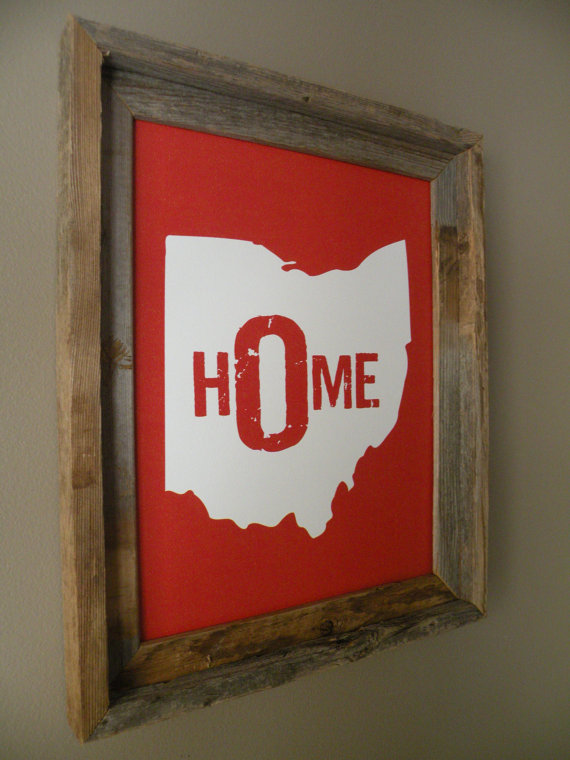
For all of the times we moved during my childhood, we did a pretty good job at scheduling most of those disruptions to take place during summer vacation. That detail, plus my September birthday — meaning that every school grade neatly lines up with a single chronological year for me — makes it super-easy for me to dial up past houses/apartments in my memory. It goes something like this: 12 years old would put me in 7th grade,* which means we’re talking about that second time in Ohio.
I could share the street address with you, but I won’t. The number is burned into my brain but also disconnected from the current paper trail of my existence. So it’s possible that these digits might sometimes get used as the PIN number on my frequent flyer accounts. (Hypothetically speaking, of course.) And I needs to keep my miles.
I’m close to having a picture of the floor plan in my mind. Even though it was in the Midwest, it was another of those “two-story center entrance colonials” I was so glad to avoid in my most recent round of house-hunting. Standing in the front entryway, the staircase was to the right side of the entry hall, with an open doorway at the foot of the stairs leading to the front-to-back living room, with the screened porch jutting even further back off the horse’s perimeter. A waist-high railing separated the back side of the family room from the “breakfast area” and kitchen. Then, continuing the counterclockwise circle, was the dining room and, past that, the formal living room. I never visited there except during Christmastime, when the tree would be placed in the bay window, decorated and lit with bright colors. We’d sit there after dinner and talk — no lights except the tree and the electric candles in the windows.
The master suite was directly to the right at the top of the stairs. Its front-to-back arrangement echoed the family room below. Meanwhile, down the hall to the left was the guest room, a bathroom, maybe even an extra extra bedroom that had been turned into dad’s home office? The end of the hall, I’m sure about: my room in front, my sister’s in back. My carpet and walls were bright yellow, and I had a habit of rethinking and re-arranging the furniture in my room when I was in need of a bit of self-re-invention.
You may notice that I’ve been focusing my attention on the sheer physicality of this house. It’s not like I’m breaking any rules with that decision. After all, the prompt was to talk about the home I lived in back then. So here I am, talking. Or writing.
But I am going to stop here, having written about the house, but without really writing about the living in that house. As I recall it, 7th grade was an especially tough one on the awkward-adolescence and misfit-family-member scale. And there’s some memories that just don’t need reliving right now.
* “Age minus 5” is the formula that holds true for me.
Some days it’s like moving through quicksand. Each step, each motion carries the extra weight of pushing through the muck, knowing that every motion carries its own risk of dragging me deeper into the suffocating, drowning mud.
Some days it’s like being wrapped in fabric. It’s hard to hear things clearly. Lights and colors are dulled. The sharpness of time and recollection fade around the edges. Thoughts and attempts to find voice are all muffled, and not even muffled in nice, soft flannel. More like rough-spun wool, with its scratchy, sharp-edged fibers.
Some days it’s like swimming in the riptide. An immense effort is required to make even the slightest bit of progress, and the risk is high that all one’s energy reserves can be depleted making this insignificant progress. Without vigilant awareness — and the judicious support of a life preserver here and there — the risk is also high of getting pulled under to breathe salt water and seaweed.
Some days it’s like the gravitational pull of a black hole. The forces of weight and gravity are so strong as they could cause a star to collapse in on itself, devouring the light and heat and energy of nature’s expression. The dark spiral of the bed-covers entwine me, holding me still and silent. Sound can’t travel in space, and the same dearth of oxygen bubbles around me, constantly suffocating.
Most days it’s like living with some sort of energetic tapeworm. Whatever nourishment I take in — rest, joy, encouragement — there’s some portion of that soul food that gets siphoned away, devoured by the parasite I carry in my brain chemistry. It seems selfish how much more nourishment I crave and request: you can’t see the hidden passenger thieving my life, thieving your gifts of kindness, love, appreciation.
Every day there is the vigilance. Have I stayed in bed a little too long? Is my resilience a little bit too shaky? Is my energy level a little too low?
I was first treated for depression back around the age of 15. Looking back beyond that, I think that some pieces of that tapestry were woven into the fabric of my life long before then. And I’m well aware that there is a vast chasm of difference between true clinical depression and the kinds of smaller sadnesses and blue moods that so often get referred to by the term.
Yet for me, there is a tonal connection from one to the other. A dotted line that sometimes-but-not-always connects the border of everyday sadness into the terra horribilis of a depressive episode. So I remain ever-watchful at any sign of sadness, energy drop, memory lapse. Analyzing any break in routine, any chink in the psychological structure.
We all have anxieties, worries, and fears. What are you scared of? Address one of your worst fears.
Today’s twist: Write this post in a distinct style from your own.
I don’t usually go so full-out poetical, so this was a dip into the waters of that styling. Can’t decide if I think it’s genuinely evocative, or just too, too precious. It was an experiment worth trying, if nothing else.
Also, full disclosure: the “depression as tapeworm” metaphor is one I first saw a few weeks ago in a post by Mani Cavalieri on Quora. (I can’t figure out how to directly link to his answer, but you’ll find it as part of this thread.) I was very deliberate in not going back to re-read the post tonight, so my own spring-boarding off the metaphor would be solely (mostly?) my own. Still, credit where credit is due: I don’t think that metaphoric thread would have been anywhere on my radar without reading his writing on the subject. And it’s so brilliant and so entirely apt.
[Set-up] It looks like I’m going to continue to need a little flexibility and creativity with Writing 101 . Today’s actual assignment is the completion of a three part series I started back on “Day 4.” Of course, I haven’t actually written part two of this three-part series — because that’s one of the pieces I skipped during last week’s work insanity. So I guess I won’t actually be jumping right into this week’s assignments. Instead, there will be a targeted reach-back to last Wednesday’s assignment, as a precursor to whenever I get around to doing today’s.
So, Day 13, written on what should actually be Day 16 of the sequence:
On day four, you wrote a post about losing something. Today, write about finding something. . . . Today’s twist: if you wrote day four’s post as the first in a series, use this one as the second installment — loosely defined.
You could pick up the action where you stopped, or jump backward or forward in time. You might write about the same topic, but use a different style, or use the same style to tackle a neighboring topic.
[/Set-up]
———-
So, gentle reader, when I last left the abbreviated summary of my life’s career trajectory, I had drifted into both an environment (academia) and a profession (faculty) for which I was profoundly ill-suited. To some degree, the inner rumblings around that ill-suitedness began very early. And yet, I struggled to persevere. Buckled down to overcome the deficiencies of my mass-market, public school background. Shifted graduate programs to one where I had more natural gifts and talents than my first Ph.D. curriculum.
Why was I so damn stubborn? In part because I am really, truly so damn stubborn. But a lot of it was rooted in a basic survival-level fear that there wasn’t anything besides teaching/professor-ing that I could ever make a living at.
I dare say I kinda fell into my career. It’s not like I wandered around elementary school saying “I want to be a fund-raiser when I grow up!” And, really, who would go around saying that? Do the ins-and-outs of non-profit management get any airplay in the Sesame Street/Richard Scarry “People in my Neighborhood” set?
Nowadays there’s definitely more awareness at the college level of non-profit careers. But that’s a big shift from when I went to school, back when dinosaurs roamed the earth.
I actually wrote my first successful grant proposal as a bit of volunteer service for a community choir where I was singing. I’d somehow talked my way onto the choir’s board as a general member-at-large, and was eager to find ways to prove my worth and contribute. So when the Board president asked for someone to help write some grant proposals, I figured it’d be an easy thing to do. I’m a good writer. I even know how to teach writing, don’t I? A grant proposal should be simple!
And here’s the kicker: it kinda was.
This is not to minimize the ways that grant-writing is intensely different from the stylistic and argumentative conventions of academic prose. But where I always found myself struggling and straining against those academic conventions, the general transparency of grant guidelines, and the need to build a tight, compelling argument out of plain language was a genre of writing that made instinctive sense to me.
And then we got the money.
So suddenly, something that both came naturally to me — writing plain, strong prose — and that I had studied intensely — how to analyze genre and build written arguments* — had real, honest-to-goodness street creed and value to it. I had worked for less than a weekend, and my choir now had several thousand dollars to show for that effort.
Now, obviously, that initial grasp of what it took to be a grants professional was, in its own way, appalling naive. I had a lot to learn in the first few years of my career — though the learnings were sufficiently connected to my existing strengths and background knowledge that success was possible.
And I still have moments where I question whether fund-raising is really the “forever career” for me. The division and tension I have seen at every non-profit between those who raise the money and those actually out doing the work is one that troubles me. I know the privileges of being in the fund-raising camp. But I also have never entirely been able to let go of a nagging self-quesitoning about whether I really want to spend the rest of my life being “just a fund-raiser” — after all, the Gospel of Matthew suggests that “you cannot serve both God and mammon” (6:24).
But even with those ongoing questions about whether there is a third career yet to unfold in my life, I remain profoundly grateful that I was able to lose academia and find my way into grants and fund-raising. I have become very good at what I do, I have seen the benefits of my efforts take shape in programs and services and buildings, and I have been able to make a living for myself.
* Or “analyze funder guidelines and build a responsive case for support.”
Okay, so the big super-huge work project got even more intense than I’d anticipated, so I went full-out on it till Thursday night. Then, instead of sleeping and catching up on my rest and my writing, Mr. Mezzo and I have been out of town for the past two days celebrating my niece’s graduation. So, suddenly I missed an entire week’s worth of Writing 101 assignments, and the next crop of assignments is due to start up again tomorrow morning.
Now, one thing I learned in grad school is the strategic folly of always trying to go back and play catch-up.
Let’s say you fall behind on your reading for Week 3 in a particularly dense syllabus — like, say, the kind of syllabus where the professor keeps adding new articles to the reading list year after year, without taking away any of the older, less-academically-relevant ones. (Not that I ever had any grad classes like that back in the day. This is all purely a hypothetical exercise…..)
Anyhow.
One approach to take to this conundrum would be to start Week 4 by going back to the things you missed in Week 3, hoping to address all of the backlog and all the new assignments. But, if each week’s workload is too robust to be handled in a week, the only thing you gain by that approach is to just get farther and farther behind.
So after one or two courses where I tried to do the virtuous “going back and catching up on everything” routine, I developed a new discipline around falling behind on homework.
Step one for me is to jump right back into the stream at this moment. Hit the reset button, start with the new crop of work, do all of it to the best of my ability — and then, if I do end up with some luxurious extra time after that, only then will I try to go back and fill in what I’ve missed, using my own instincts to triage out what’s most important and what’s most able to be let go.
So, tomorrow I’ll be jumping back into the Writing 101 flow with this coming week’s assignments, and I’ll go back and fill in the missed ones in whatever order I choose to do them.
I have some hope that the work week will be a little quieter than the past fortnight has been. If that turns out to be the case, I may get home early enough to manage a double-posting day or two throughout the week, which would help with the backlog. I also could get creative and see if there’s a way I can kill two assignments with one essay, as it were. Or there may just be an assignment or two that I let slide by, water flowing under the bridge of best intentions, never to be seen or recaptured again.
And I’m okay with that. Aside from the specific workflow strategies I am applying here to my bloggy-life, the main thing I learned in grad school was the complete psychic and energetic uselessness of perfectionism and how pointless it is to do that inner ballet of self-flagellation when one shows one’s humanity by doing an imperfect or fallible thing.
Admittedly, that main lesson only partly sunk in. I keep learning and studying and practicing into that one. Step by step, I continue ever onward — following the trajectory away from self-punishing perfectionism and towards maturity and self-acceptance.
Here, now, with Writing 101, is as good a time to practice that as any.
Years and years ago, I saw a Christmas-themed TV commercial where an adorable redhead is running to tell her parents that Santa had arrived! As they walk into the living room to see mountains of gifts piled up, Dad says something about “Those must have been some cookies you left out for Santa last night.” And the adorable redhead says….
Wait, let me do a Youtube check and see if I can embed the punchline for you to see with your own eyes:
(I [heart] the Internet.)
I have remembered this commercial with shocking clarity because it made such a profound impression on me. I, like this fictional Santa, am much more a lover of cheese than of cookies. Y’all may recall that different times throughout my HCG journey I talked about missing cheese, and when I was in that last stage of partial food restriction (fats okay, but still no carbs or grains), the thing I was most happy to bring back into my daily routine was cheese. I’m still having a cheese and egg white omelet for breakfast most mornings,* and there’s plenty of days where my late afternoon protein boost is a cheese stick or two. (Except the days it’s a small container of cashews.)
From childhood into adulthood, when I had toast or an English muffin for breakfast, I would always want to have a slice of melted cheese on top, instead of jelly. And my absolutely favorite food during my childhood was macaroni and cheese. Lest I oversell the contrast between my childhood self and my sage maturity today, let me be really clear: I have not outgrown that love for mac & cheese. (Nor do I ever want to.)
But, even though I feel greatly abashed and embarrassed to say this — especially on a week when there’s been this whole kerfuffle about the FDA’s attempt (thankfully abandoned) to ban the making of artisanal cheeses — I have a confession to make.
I love Velveeta.
Your toxic kisses make my heart race
Faster than a cheetah
I’ve been stapled and spindled
My willpower’s dwindled
You melt resistance down like hot Velveeta!
I know, I know. Velveeta isn’t even really a cheese. The label on the box says “pasteurized recipe cheese food,” and I don’t know exactly what that means, but I do know it means “not really a real cheese.”
And yet, it was a core pillar of my formative cheesy experiences. Something about its peculiar, pasteurized and processed nature gives it that uniquely “liquid gold” melty-ness. So, for many many childhood foods in my memory — the melted sauce for mac & cheese, melting a slice of cheese on top of that English muffin, cheeseburgers on the grill, cheese melted into an omelet for Sunday brunch, or even our cheese fondue on Christmas Eve — Velveeta was part of the recipe.
During those few years when we lived in Brasil, whenever Dad would head stateside for a business trip, we’d send him with an extra-large suitcase. It’d be mostly empty on the flight to the USA, and then would return chock-full of Velveeta cheese blocks and cans of Campbell’s Tomato Soup. Mom would host her own personal Velveeta cooking festival,** and I, hopelessly picky about food and struggling always to adjust to the heat, the flavors and the concrete surfaces of Sao Paolo, would feel, if only for a few dinners, like I was home.
As years have worn on, I have come more and more to replace Velveeta with really real cheeses in my life. So now, the morning omelet is made with colby-cheddar shred, the afternoon cheese sticks are mozzarella or cheddar, and if I’m melting cheese on top of toast it’ll be swiss or provolone. As for that Christmas Eve fondue? My brother-in-law, who is quite a talented cook but who doesn’t get much of a chance to express that with his work schedule, has taken that over and concocts a new and yummy combination every year.
But still. A block of Velveeta has been a perpetual staple in my fridge for my entire adult life, maintaining its prominence for two specific dishes: mac & cheese and queso. There’s even an unopened package in my fridge right now. (Why do you think it was so easy for me to get the precise wording off the box describing how it’s not really a real cheese?)
I bought it on autopilot right before I started the HCG journey, so it’s been sitting there a while. That hasn’t especially worried me — I figure the expiration date is probably 2023 or something. But I haven’t quite figured out whether I’m going to start eating it again, or toss it out unopened. I’m also not sure which imagined outcome of eating it scares me more: the possibility that my reset palate will find the flavor to be not-very-enjoyable and that my nostalgic love for Velveeta will be tarnished, or the possibility that renewed relationship with Velveeta will slide me right down the rabbit-hole of over-processed food all the time….
Until I can figure that out, I guess the package will just sit there on the bottom shelf of the fridge.
Tell us about your favorite childhood meal — the one that was always a treat, that meant “celebration,” or that comforted you and has deep roots in your memory.
Free free to focus on any aspect of the meal, from the food you ate to the people who were there to the event it marked.
Today’s twist: Tell the story in your own distinct voice.
Obviously, rather than following the suggestion to the letter, I ended up following the thread of a beloved food throughout multiple times and events. I also didn’t fret overmuch about “finding my voice.” If there is nothing else I am certain about in writing JALC, I do know that my voice here is authentic and authentically mine.
I can’t remember if I’ve talked about this before, but every time I sit down to write a post, and every time I feel blank or blocked within the process, the same prayer runs through me like a mantra: “Say it plain, say it true.” And yeah, my version of saying things “plain” is a slightly unusual version of the term.*** But that prayer, that compass guides me to true north. Every time. [/Post-script]
* Okay, it’s really one whole egg and a half-cup of egg whites.
** Our family’s separate body of Campbell’s Tomato Soup cuisine will, alas, have to wait for another day.
Back in college, I took one creative writing class. One of the exercises was to create a scene and tell it from two different perspectives. Being very much in a “write what you know” place, I concocted something about one student dropping by another’s dorm room to pick up notes from a missed class.
I created laughingly amateurish levels of contrast between the two characters and a somewhat tense snip of dialogue for this hand-off. Then I presented the exact same dialogue, Rashomon-style, through both POVs, trying to suggest the truth beneath each set of false assumptions. The borrower, who through the eyes of the lender looked prim, overdressed and snobby, was actually tense because she was late meeting her parents for a dinner out. While the lender, who looked through the borrower’s eyes as disorganized and a slob, was…actually, I can’t quite remember what angle I took for her inner life.
I was unaccountably proud of myself for the discipline I’d shown in reproducing the dialogue so precisely within both pieces, and how I’d worked so hard to make sure that neither girl came off entirely the villain. Which is why the most instructive piece for me about the whole experience was the response of one of my classmates — when the conversation turned to my pieces in the weekly portfolio, it became very clear that she’d bought so entirely into the perspective of the notes-lender that she’d disregarded everything I’d tried to show to explain and justify the borrower’s behavior.
———-
The lens of one’s perspective can be incredibly strong in the way it filters our understanding of what we see and experience in the world. Last fall, I saw coverage of a research study by Yale law professor Dan Kahan:
Kahan conducted some ingenious experiments about the impact of political passion on people’s ability to think clearly. His conclusion, in Mooney’s words: partisanship “can even undermine our very basic reasoning skills…. [People] who are otherwise very good at math may totally flunk a problem that they would otherwise probably be able to solve, simply because giving the right answer goes against their political beliefs.”
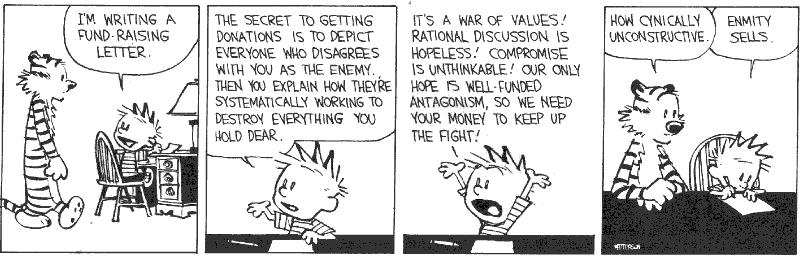
In other words, say goodnight to the dream that education, journalism, scientific evidence, media literacy or reason can provide the tools and information that people need in order to make good decisions. It turns out that in the public realm, a lack of information isn’t the real problem. The hurdle is how our minds work, no matter how smart we think we are. We want to believe we’re rational, but reason turns out to be the ex post facto way we rationalize what our emotions already want to believe.
This study is merely the latest of a healthy line of investigation, much of it done under the umbrella of behavioral economics, into human irrationality, manipulatability and decision-making. My passing interest in this work is one of the reasons I’m so certain that cultural transformation needs to be rooted in both the head (facts) and the heart (emotions).
But the odd offshoot of this is the ways that I’m also a little more suspicious of the notion of “putting myself in someone’s else’s shoes.” I mean, there’s lots and lots of time where the practice of compassion, the striving to understand another person’s perspective is valuable.
Sometimes, though, I wonder if the gulf of perspective is wider than can be crossed in an imagination event. A co-worker of mine back in Philly always talked about the risk of “conversations with disbelievers” — wouldn’t our advocacy energy, she wondered, be better spent speaking to people who shared some (or all) of our core values but didn’t yet see the connection between those values and our work, rather than by trying to “convert” individual holding values drastically different from ours?
I think there’s something to that.
I also worry about the many, many ways that the news media “ideal” of balanced coverage of an issue is actually a subtle way to reinforce the assumptions and lies of the cultural status quo. By now, the slogan “Fair and Balanced” has become self-parody, an eternal punchline:
There’s also the longstanding tradition of stories presenting two talking heads, each on one side of a controversial issue. But what are the cultural prejudices that get reaffirmed by the decision of which topics are controversial and need the point-counterpoint treatment. Remember back when I talked about media response to the book The Obesity Paradox? That story, which dared to suggest that fat prejudice might not be a good idea, required GMA’s medical editor to show up and talk about how we all still need to watch our BMI and monitor our weight. But the 2,600 diet tips and programs that have been profiled on GMA since then? Do you think there’s been any requirement for our sage Dr. to talk about how weight isn’t an accurate measure of health, and the physical harm caused by dieting/weight cycling behaviors? Of course not! (Citations here.)
And then there’s the flip side, when crackpot theories are given far more cultural dominance than they deserve* in the interest on presenting “both sides” of a story. To continue on the thread of climate change:
I’m a week behind on my John Oliver, so it’s possible that he did something so incredibly kick-ass this past Sunday night as to take the top spot on my list. But, barring that possibility, I think this moment from Episode 3 is the best damn thing he’s ever done:
[Post-script] This meditation was prompted by the Day 9 prompt for Writing 101:
A man and a woman walk through the park together, holding hands. They pass an old woman sitting on a bench. The old woman is knitting a small, red sweater. The man begins to cry. Write this scene.
Today’s twist: write the scene from three different points of view: from the perspective of the man, then the woman, and finally the old woman.
It’s another prompt that seems more aptly designed for fiction writers than for the memoirist/cultural gadfly kind of writer such as myself. But no complaints: it was a fun topic to think about, even if I took the assignment a little “slant” once again. [/Post-script]
* Actually, a “crackpot theory getting more cultural dominance that it rightly deserves” is a pretty damn accurate description of fat shaming/fat stigma, too….
What thoughts I have of you tonight, Walt Whitman, for I walked down the
streets under the trees with a headache self-conscious looking at the full moon.
In my hungry fatigue, and shopping for images, I went into the neon fruit
supermarket, dreaming of your enumerations!
What peaches and what penumbras! Whole families shopping at night! Aisles
full of husbands! Wives in the avocados, babies in the tomatoes! — and you,
Garcia Lorca, what were you doing down by the watermelons?
When did I become someone who shops for groceries at 9’o’clock on Wednesday night?
Who am I kidding? I know when it happened — it was when I decided that instead of sacrificing all of my life for my career, I was going to use this fresh, Bostonian start to become a master juggler. Remain dedicated to my nonprofit and reengage with singing and tend to my home life and also have this whole sideline as a feminist blogger.
None of those pursuits erase the body’s need for sustenance. So, the post-choir stop has become a Thing for me. And here I am.
Late-night groceries aren’t the same here as they were in the big city. Not as many college kids and grad students keeping their crazy hours. (I remember those crazy hours. I miss those crazy hours.)
It isn’t exactly like that scene in the post-apocalyptic film where folks find their way into a grocery store and forage for sustenance. But it’s close.
We seem to have an unspoken agreement, the other customers and I. Do not acknowledge one another’s presence. There’s lots of aisles and few shoppers: everyone gets their own territory and no one will get hurt.
I feel like a spy tonight, stretching the boundaries of the unspoken code. Glancing, looking, watching. Wondering and assessing.
A young woman wearing scrubs and tennis shoes: I guess she might be getting off-shift. The fabric is patterned with hearts — red, black, white. Does she work in the children’s ward? There’s an older gentleman, keeping his jacket zipped up to his neck. A mother and her school-age son: isn’t it past his bedtime by now? More professionals like me, decked in their work attire.
Also: a few guys who I’d place as from the one little college that is up the road from here. The casualness that encompasses their wardrobe — baggy shorts, loose tank tops, unshaven faces — makes me wince to think about gender programming and the self-consciousness that persists around what clothes I will allow myself to wear in public. Even when “out in public” is as banal as grocery shopping.
After ringing out, as I take my bags in-hand to depart, there is a break with protocol. A flash of recognition, acknowledgement. She works here, and this Wednesday shift has become a Thing for her, too. With the regularity of our seeing each other, why not take the risk to connect as humans, even if it’s the lightest of touches?
“Have a good night.”
A shy smile and head-nod in return. “You too.”
There’s a saying confettied across Facebook and Pinterest. The wording shifts, and the attributions are fantastical. (Plato? The ever-popular Ms. Anonymous?) But the gist of the message is: “Be kind, for everyone you meet is fighting a battle you know nothing about.”* If I were to hold this knowledge to my heart, rather than pretending knowledge while preserving my separate-ness, how would my heart open?
What connections might I risk to make?
———-
[Post-script] This was a response to the Day 8 prompt for Writing 101: “Go to a public location and make a detailed report of what you see. The twist of the day? Write the post without adverbs.” I haven’t done a super-intense editing pass to make sure that every single adverb was erased. In fact, there’s one adverb I left in on purpose — I tried and tried to write around it, but I couldn’t make the set-up to the Zombieland clip work as elegantly sans adverb as I could by leaving that lone “exactly” in the texture. Sometimes rules were made to be broken, right? [/Post-script]
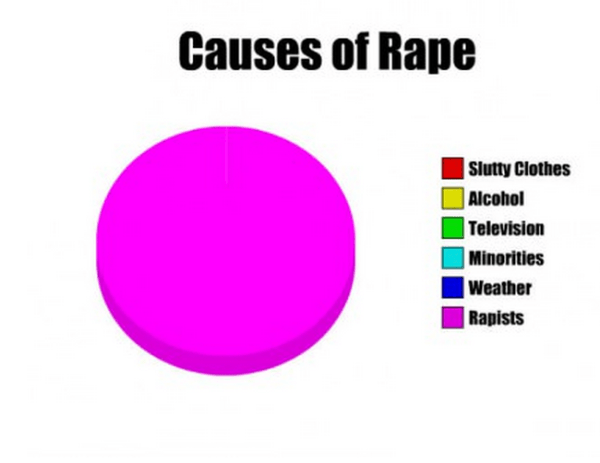
[Trigger warning: discussion of rape and other sexual assaults; quotations that show profound misogyny, slut-shaming and victim-blaming; and rebuttals that share stats and stories about rape and rape culture, and yeah, with a lot of profanity. A LOT of profanity.]
I am totallycheating tonight. The Day 7 prompt for Writing 101 is about creating a sense of contrast: “Focus today’s post on the contrast between two things. The twist? Write the post in the form of a dialogue.”
But I am currently so enraged and stabby-feeling over George Will’s latest exercise in newspaper-subsidized misogyny that it was inevitably going to be my topic tonight, no matter what I had to do to shoe-horn it into the Writing 101 structure. (Honestly, as far as ideological contrast goes, we have that in abundance. As far as dialogueis concerned? That’s more of a stretch.)
———-
Women, Higher Education, and Sexual Assault: a Point-Counterpoint Between George Will and Mezzo Sherri
Colleges and universities are . . . learning that when they say campus victimizations are ubiquitous (“micro-aggressions,” often not discernible to the untutored eye, are everywhere), and that when they make victimhood a coveted status that confers privileges, victims proliferate.
Dude, even though it didn’t exist by the same name, the conceptual underpinning for our current understanding of microaggression has been around since at least 1905, when Freud first theorized about the sublimated violence/victimization cycle in so much of modern humor. And even if your current status as rich, urbane, white male — sort of the royal flush of the privilege poker hands — makes it hard for you to perceive microagressions with “an untutored eye,” here’s a tip from Charles Davis at VICE: “You don’t need a reference manual to not make people feel bad; you just need to listen every once in a while, learn a thing or two, and try to be more considerate, particularly around people you just met. Since when did stopping to think before you open your stupid mouth become such a bad thing?”
And excuse me? Being the target of sexual violence is a “coveted status”? In whose bizarro world is that true? After all, the rest of your column just oozes compassion and acceptance for those individuals who have experienced sexual assault. Oh wait: the rest of your column is actually “contributing to a society that is utterly dismissive of their experiences.” (PolicyMic)
Consider the supposed campus epidemic of rape, a.k.a. “sexual assault.”
1. Here’s some basic set theory for you: all rapes are indeed sexual assaults, but not all sexual assault is rapes. (Or, to break it down even further, here’s how I used to explain that concept to my SAT students back in the day: All of my bracelets are jewelry, but notall of my jewelry is bracelets.) I point this out just because if you’re going to use irony quotes to make fun of a term, it might be best to actually understand the term you’re mocking, and oh, maybe to check in and see if your mockery actually functions as humor or instead just shows your own woeful ignorance about a topic. (Also see above, re: microaggressions.)
2. Supposed epidemic? Really? I know you’re gonna quibble with this statistic later on below the fold, but let me just lay it out there anyhow. The CDC reports that 19% of undergraduate women had experienced “attempted or completed sexual assault” since entering college. Now this is a statistic you’ll see reproduced by lots of advocacy and service organizations (sometimes rounded up to the “1 in 5” phraseology we’ll be discussing soon), but please note I did not go to a partisan or activist source here. I went to the C-D-motherfucking-C. 19% of undergraduate women experience some sort of sexual assault, and 37% of female rape survivors are first raped between the ages of 18-24. And yes, that final age range admittedly extends beyond the usual age window for undergraduate students, but still. How much more of an epidemic do you need?! How many women need to suffer before you can get up a compassion boner for them?!?
Herewith, a Philadelphia magazine report about Swarthmore College, where in 2013 a student “was in her room with a guy with whom she’d been hooking up for three months”
Slut-shaming at its finest. Because of course, once you’ve said yes at one time in one context that means automatic consent for all future times in all future contexts. And by the way, just emphasize how foul your perspective is:
“They’d now decided — mutually, she thought — just to be friends. When he ended up falling asleep on her bed, she changed into pajamas and climbed in next to him. Soon, he was putting his arm around her and taking off her clothes. ‘I basically said, “No, I don’t want to have sex with you.” And then he said, “OK, that’s fine” and stopped.. . . And then he started again a few minutes later, taking off my panties, taking off his boxers. I just kind of laid there and didn’t do anything — I had already said no. I was just tired and wanted to go to bed. I let him finish. I pulled my panties back on and went to sleep.’”
Six weeks later, the woman reported that she had been raped.
Well, she reported having been raped because that’s actually the legal definition applicable to the events as described here. But hey, why should an insignificant thing like factuality matter between friends?
Now you’ve been nice enough not to state the most evil of your assumptions outright, but they’re palpably there, oozed between the lines of suggestion and innuendo.
Why didn’t she fight harder after saying the first “no”? Because we’ve been trained (over and over again) NOT to do so! Even if it’s slightly off the subject, perhaps this video will help explain the level of understood threat that might cause a young woman to decide against “fighting back.”
I had a friend in college who was date-raped sophomore year. (I know: I must be lying about this, and this event couldn’t actually have really occurred because George Will has decreed that college sexual assault is merely a “so-called epidemic.”) She carried some guilt for a while about not having “struggled more” — and I remember her sharing the moment of insight that emerged during a session with her therapist where my friend realized that she had, to the best of her ability in the midst of this awful experience, made a threat assessment and consciously concluded that if she didn’t stop struggling that she would be killed, or at least seriously, seriously wounded. It is perfectly understandable that someone may make a decision to stop resisting, wether because of cultural programming, threat assessment, or some other reason(s). That choice to cease actively fighting back in no way excuses a rapist from the legal and moral responsibility of having committed such a harmful act against another human being.
Why did she wait so long to report this crime?* Maybe because she knew that jerk faces like you would blame her or doubt her. Maybe because even the most “casual look at our criminal justice system, military justice system and the academic disciplinary system under scrutiny right now reveals that each tend to punish survivors, not reward them.” (Salon, emphasis added.)
I could find story after story that demonstrates the ways women reporting sexual assault get interrogated about their clothes, alcohol use, sexual history, and general behavior/decorum, but to save us all some time, here’s a photo gallery that both captures many of these victim-blaming attitudes but also wonderfully eviscerates them.
(I’m skipping ahead a few paragraphs because I only have enough patience to dialogue with one last passage.)
The statistics are: One in five women is sexually assaulted while in college, and only 12 percent of assaults are reported. Simple arithmetic demonstrates that if the 12 percent reporting rate is correct, the 20 percent assault rate is preposterous. Mark Perry of the American Enterprise Institute notes, for example, that in the four years 2009 to 2012 there were 98 reported sexual assaults at Ohio State. That would be 12 percent of 817 total out of a female student population of approximately 28,000, for a sexual assault rate of approximately 2.9 percent — too high but nowhere near 20 percent.
Oh, I see what you did there: it’s like SAT algebra all over again! (98 over x equals 12 over 100; and then once you solve for x put that number over the total population number to get your percentage…)
I’ve said it before, and I’ll say it again: CDC. The 19% assault rate has been confirmed by the C-D-motherfuckin’-C.** So rather than taking the 12% report rate as the hard-and-true fact and using that to invalidate the CDC’s confirmed statistic, why not try this idea on for size: maybe the 12% number is wrong! And that notion is even kind of awfully plausible, since this figure can only ever be “an inferred estimate, because there is no directly measured number of unreported assaults.” (Pharyngula.)
Oh, and by the way? If a 2.9% rate of sexual assault is “too high” by your assertion, and considering the fact that the actual assault rate of 19% has been confirmed by the C-D-motherfuckin’-C, do you want to go back and rethink any of your prior statements about a “so-called” epidemic?
Just wondering.
* I almost put the word crime in those mocking irony quotes (as I assume George would have done), but I just couldn’t do it.
** I swear, if I ever go back to writing anything based on my dissertation research, I am working this phrase in there somehow.
[Set-up] The Day 6 prompt for Writing 101 is a character study, a prose portrait of “the most interesting person you’ve met in 2014.” I know what follows is more an artifact of imagination and projection than anything else, but this individual has been on my mind now and again for the last few weeks, so I’m going to keep trusting my inner guidance in this, as with so many other things, and write the words I have in me to say. [/Set-up]
———-
One of the things we’ve been doing as part of growing roots up here in Boston is to attend services and find other (small) ways to become involved at one of the local UU parishes.
All told, it’s sort of been an odd time to be “dating” this new church. The customary minister has been on sabbatical, so the Sunday services have been a patchwork of experiences, from lay-led services (that so often sound more like academic lectures than actual sermons), to guest ministers, to services led by the congregation’s brand-new ministerial intern.
I know enough about how long it takes to get through divinity school to expect that Jeff is actually in his late 20s. However, he has that indeterminate appearance so many young men have — at least to my aging eyes — where his age could possibly be anything from 12 to 29. His frame is slender, such that he looks just the tiniest bit dwarfed by his minister’s robes. The eyes behind his glasses shine with warmth and brightness, but the glasses themselves, paired with the ministerial accoutrements and the care with which I have seen him perform his duties have created in me the strongest impression of seriousness.
The first time we saw him lead a service, Mr. Mezzo even criticized him for that seriousness. “I just prefer a minister who’s less formal, more able to laugh at themselves,” he said in our car ride home that day.
And I understood that, but I had my own theory. “Imagine being so young,” I said, “and you’ve been tasked with providing spiritual leadership and guidance to an established congregation full of people with decades more life experience than you, with more years of involvement in this congregation than you. A congregation that won’t stop comparing your performance unfavorably with that of their oh-so-beloved minister.*
“I remember how intimidated I was with the responsibility of teaching my first college class as a kid of 24, and that was just a low stakes music appreciation class! I can imagine choosing to act with a certain level of gravitas if I were in his shoes.”
———-
My level of church involvement and attendance is still pretty minimal, so I haven’t have opportunities to get to know Jeff to any particular depth. A couple of conversations during coffee hour, a number of services and sermons. My perception has been that he’s come a bit more fully into a comfort level as his months of service went by. I was glad to see that.
In a weird way, I was also glad to see the announcement that Jeff would be finishing his internship with us at the halfway mark rather than completing two full years of service. He was entirely gracious in his announcement of this news, and shared that he was in a process of discerning whether it sensed best for him to continue the path of UU ordination or if a different faith tradition would be better-suited as his spiritual and ministerial home.
And I get that, I really do. A college friend of mine went through a similar journey as she entered divinity school — leaving the faith of her fathers (Catholicism) to be ordained as a UCC minister, because she knew the call to ministry in her soul was true and deep and not to be denied. I also have my own small degree of resonance, recalling the ways I was brought up an a devoutly atheist household** and remembering my own journey of exploration and discernment towards the understanding and acceptance of Spirit I now possess — however ego-limited, nonetheless true and deep and not to be denied.
I also admit to wondering whether the congregation really gave Jeff a fair shake with this position. Instead of being actively mentored week after week by a sitting minister, he was being used as “substitute teacher” during that minister’s sabbatical. And, what with the number of church members expressing to me how “unfortunate” it was that Mr. Mezzo and I were starting to attend church during this sabbatical:
You’ll see how Reverend ______ is just so much better than this.
Well, if I (minimal participation and all) have gotten such a strong picture of the level of regard these folks have for their sitting minister (and of the attendant, not-so-subtle disdain they have for anyone who isn’t Reverend ______), I kinda think Jeff mighta been able to pick up on it, too.
So between my imagined resonance with his journey, and my soft regret for any discomforts he may have felt during this year, I have been holding Jeff in the light and wishing him all manner of support and guidance and acceptance as he journeys forward. May he find the home that best feeds his soul and where he can most authentically be of service.
I’ve been too chicken-shit to reach out and tell him this. Like I said, he and I barely spoke once or twice. The idea of emailing to share any portion of this just feels awkward and invasive and as if I’d be forcing him into the box of the story I made up about his life, rather than honoring his own knowledge about his own lived experience.
But, however on-point or off-base my understanding of Jeff’s decision may be, even if I never see him or speak to him again: this much I know to be true.
A small prayer, whispered up to the ether. You will always be part of the church’s family tree in my drawing of its branches. Thank you. I wish you well.
———-
* More on that later.
** Yes, that’s a del thing. At least as far as I’ve experienced it, it is.
All week, as I was posting my responses to the Writing 101 prompts, I had the half-beginnings of other posts germinating — ideas and titles rolling around my brain, as well as possible citations/quote-sources accumulating on my Pinterest “bookmarks” board. However, things were also very busy on the work and home front, so there wasn’t time to do anything with those germinating ideas.
Instead, I kept telling myself that I’d find time over the weekend to start catching up. Maybe I’d have a couple double-post days where I responded to the prompt and laid down some independent thought, or at least I could get some drafts started that I could then flesh out and schedule for posting somewhere down the line.
And yet? Yesterday, when as it turns out, there was no Writing 101 prompt even to handle?*
That’s slightly an overstatement. Mom spent part of the day with us. It was her first-ever visit to the house,** so the early-morning pre-arrival hours were spent in those last frantic moments of cleaning,*** and then there was the time spent visiting itself.
Still, she left early afternoon, so there was a good stretch of time where I could have been writing or outlining or something. Instead, I watched lots of things on DVR and did many sudoku.
Call it whatever you will. The energetic crash after a stressful week. A small eruption of the depressive brain chemistry I will be managing until the day I die. A well-served piece of down-time. Laziness.
All of those names are likely true in their own small portion. Beneath those different labels, the feeling-tone was rather like sinking into quicksand for a day. There were moments in it when I was awake enough to ask myself whether the TV zombie thing was really feeding my soul and my sense of enjoyment, and after a certain point, I was awake enough to sense that yes, I’d kinda reached my limit for truly enjoying the TV and no, these extra hours of watching past that point were not feeding my life. But I remained in the inertia and never really pulled myself out of it till the moment I crawled off to bed.
This fear comes from being handed a branch while waist deep in quicksand. While it’s easy and reasonable to be scared of sinking in the quicksand, it’s utterly terrifying to think that once you haul yourself out, you are unwittingly volunteering for the next awful thing to come.
But here’s where the whole inertia concept really starts working. Inertia tells you, “Sink. It’s easy and natural.” [. . .]
Amazingly, what happens next is a true testament. . . . Science be damned, the inevitable motion of life is a stronger force than inertia could ever wish to be.
So, here we are today. Don’t know yet whether there will be a double-post day, or if some rough-drafting will occur to set up future double-post days. Don’t know how many hours I’ll spend doing work for my employer.**** But if nothing else, this post is up and the TV is off.
I’ll take it. Every step forward is a step forward. And every step matters.
Oh, and one last thing, a factoid offered in the spirit of public service. While searching for an image to accompany this post, I have made the unsettling discovery that there is such a thing as a quicksand fetish. Rule 34 strikes again.
* A detail I didn’t notice till yesterday: the folks at Blogging U give us the weekend off. (And themselves, which is only fair. After all, my employer doesn’t usually expect me to be devoting much weekend time to their endeavors.)
** Two prior attempts to schedule things during her time in the northeast — she’s a snowbird and spends half the year way far away below the Mason-Dixon line — had to be cancelled for various act-of-Gaia kinds of reasons. like blizzards and trips out of town to see relatives in the hospital.
*** Have you ever noticed that no matter how much a matter adult one becomes, there’s an almost-universal regression to that teenager-cleaning-your-room feeling when parents are due to visit one’s abode?
**** Alas, this is one of those rare weekends where I am expected to buckle down on their behalf — at least to some degree.

 I could share the street address with you, but I won’t. The number is burned into my brain but also disconnected from the current paper trail of my existence. So it’s possible that these digits might sometimes get used as the PIN number on my frequent flyer accounts. (Hypothetically speaking, of course.) And I needs to keep my miles.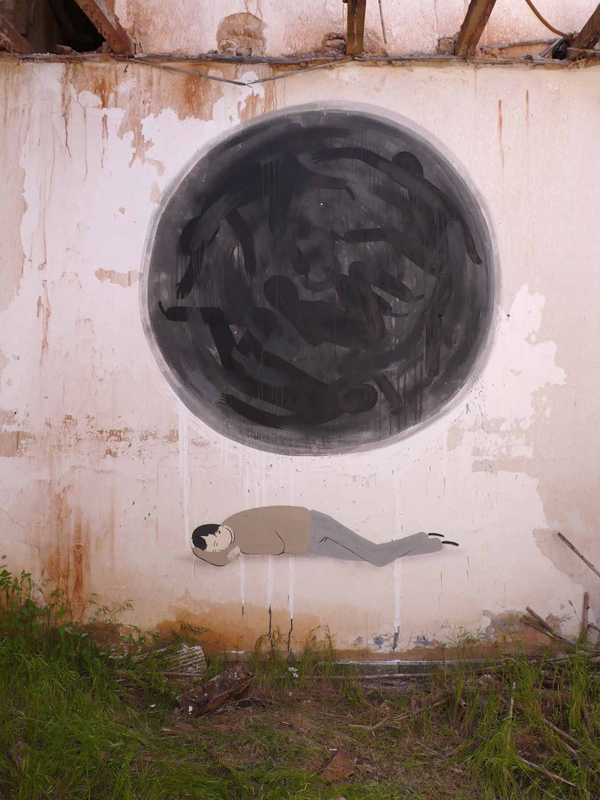










 Self-Love: It's Just Another Lifestyle Change
