25 Songs, Day 2: The Boulevard of Ex-Boyfriends

(Part two of my exploration of the 25 songs in 25 slightly-more days blogging challenge — a way to bank and pre-schedule a few posts for JALC while I’m off a-travelling.)

25-songs-25-days

Day Song 2: A song that reminds you of your most recent ex

Okay, here’s where I think that I am perhaps not really in the planned demographic for this challenge? Mr. Mezzo and I coming up on our fourth wedding anniversary, and we’ve been together for more than a decade. And then, to make things even more interesting hopelessly banal, I might as well cop to the fact that I’d taken myself “off the market” for about 4-5 years prior to meeting my Mr. (Long story not worth the telling: basically I realized around the age of 30 that I really needed to get right with myself before trying the relationship thing again. So, you see? Sometimes that old saying is true: love does come along when you least expect it!)

Anyhow, whichever way you slice it, it’s kind of been a long time since I had any sort of ex, so memorializing some fairly-insignificant romance with a song here just feels kind of — odd.

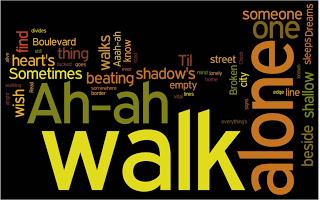
Word Cloud Boulevard of broken dreams

Instead, a brief recollection. When I was in grad school at UPenn, there were two main geographic areas where I and all my social circle lived. There were those of us who had chosen to use the Schuylkill River as symbolic boundary between work life and home and lived in a vaguely Center City/Rittenhouse Square(ish) locale. And then there was everyone living out west of campus and past 44th street.

So, one evening, some few years after I’d left school and started my non-profit career, I was driving up Pine Street, en route to hang out with a friend of mine at her apartment. And this song came on the radio:

Green Day, Boulevard of Broken Dreams. It hit me like a thunderbolt. I was at that precise moment driving along a two-block stretch that had housed the apartments of not one, not two, but three grad school ex-boyfriends. I’d lost touch with all of them by that point, so had no way of knowing if any or all of them had moved on to different addresses (towns? countries?). Didn’t really matter. The energetic signature of that song, playing at that moment, at that specific location, was just richer than rich.

I walk a lonely road
The only one that I have ever known
Don’t know where it goes
But it’s home to me and I walk alone

I walk this empty street
On the Boulevard of broken dreams
Where the city sleeps
And I’m the only one and I walk alone

(Metrolyrics)

For the entire rest of my time in Philadelphia, I thought of that little stretch of west Philadelphia as the “boulevard of ex-boyfriends.”

———-

Image credit: http://cchcamilo.blogspot.com/2010/05/boulevard-of-broken-dreams.html

Peace Out

peace_out_by_wirdoudesigns-d62lrkoSo today’s proposal went in and things got locked down at work, the suitcases are pretty much packed, the house-sitter is keyed up, and the boarding passes are printed. Guess it’s almost time for vacation.

Of course, all of this is being done in my usual human & imperfect fashion. The house is WAY messier than I would have preferred the house-sitter to see, but I ran out of time. There’s a couple tasks at work I wanted to get done before I “handed the baton,” but I ran out of time. (Sense a theme here?) I didn’t get as many posts in the bank as I wanted to, but — sing it with me! — I ran out of time.

Oh well, I do the best I can. And sometimes my best includes packing rather too many clothes so that I have lots of options and therefore (with any luck) can stave off some of the waves of physical and existential insecurity that happen when I’m with my extended family. The luggage scale confirms that I am within airline limit, so I’ll just count my blessings on that score and let my ego-selves have this little piece of comfort. If having the extra clothes options helps me stay in my body, enjoy all the new sights and sounds, and maybe even get deeper insight into my lineal and family patterns? That’s a trade I’m willing to make.

———-

For all the “cut corners” and imperfect execution around different pieces of the pre-trip preparations, there’s one piece of preparation I’m giving its due measure to: taking the time to set an intention for this journey.

I’m not using the term in the way it so often gets public airplay in a manifestation/law of attraction kind of context. Phillip Moffitt, in Yoga Journal, does a good job of defining intention-setting from a Buddhist perspective, a definition much more in harmony with my use of the process:

Setting intention, at least according to Buddhist teachings, is quite different than goal making. It is not oriented toward a future outcome. Instead, it is a path or practice that is focused on how you are “being” in the present moment. Your attention is on the ever-present “now” in the constantly changing flow of life. You set your intentions based on understanding what matters most to you and make a commitment to align your worldly actions with your inner values.

The extra layer in my practice is to use the process as another way of seeking Spirit’s guidance — usually through drawing a card and using the card’s message as a springboard to help shape the intention I create. (See here for a description of someone doing a similar practice as a way to kick into a new year.)

Drawing a card allows me to get out of my own way and get more of a true read on whatever it is I’m going to be studying/transmuting in a particular experience. Instead of fooling myself into thinking I know what I’m going to be studying, in a very assumptive, ego-driven, self-fulfilling prophecy kind of way.

So, my card has been drawn and I will shortly go to do a little writing meditation on the card’s message. Then, if my usual system holds true, I’ll let my unconscious work on the question while I’m sleeping, and I’ll formally put pen to paper to scribe my intention tomorrow morning. Maybe even while I’m at the airport.

Stay safe, y’all. Catch you on the flip side.

———-

Image credit: http://wirdoudesigns.deviantart.com/art/Peace-Out-367171800

On Modulations and Tone

(Quick hit: another proposal due tomorrow, and also much in the way of packing/preparing for the house-sitter. Still, since these grounds will be semi-fallow for a stretch of time, I am compelled to put something up, even if it’s more quotes from others’ writing than words of my own.)

tone_police_sheriffAs I’ve been expressing my outrage over various current issues during the last several weeks, I’ve been aware of a delicate push-pull within my system around the issue of tone: how to speak strongly without “going overboard.” In short, being just a little tiny bit invested in tone policing myself.

Obviously, that investment has only been a few pences’ worth — I know what bullshit tone policing is:

The tone argument is a form of derailment, or a red herring, because the tone of a statement is independent of the content of the statement in question, and calling attention to it distracts from the issue at hand. Drawing attention to the tone rather than content of a statement can allow other parties to avoid engaging with sound arguments presented in that statement, thus undermining the original party’s attempt to communicate and effectively shutting them down.

And, therefore, I don’t do a whole lot of policing myself. But I do a little.

For example, I know I’ve said the phrase “morally repugnant” a few times in the last week as I’ve been responding to SCOTUS’ shenanigans. Plenty strong of a description, I suppose. But a step or two shy of the word I hear in my head to label these decisions and the misogynist world-view they embody: evil. (Yeah, I went there.)

I’ve been lucky thus far not to have anyone outside of myself pull the tone policing card on my writing. If that had occurred, I’d probably have responded with an explanation of the ways that anger is justifiable, appropriate, and even inevitable in situations that reveal the many injustices of the kyriarchy. To quote Do or Die:

Living in a world that reminds you daily of your lesser worth as a human being can make a person very tired and emotional. When someone says something oppressive . . . it feels like being slapped in the face, to the person on the receiving end. The automatic response is emotion and pain. It’s quite exhausting and difficult to restrain the resulting anger. And, frankly, it’s cruel and ridiculous to expect a person to be calm and polite in response to an act of oppression. Marginalized people often do not have the luxury of emotionally distancing themselves from discussions on their rights and experiences. 

[. . .] Now, I’m not saying it’s okay to be abusive, or oppressive in response to a person who fucks up. But anger is valid. Anger is valid, anger is important, anger brings social change, anger makes people listen, anger is threatening, and anger is passion. Anger is NOT counterproductive; being “nice” is counterproductive. Nobody was ever given rights by politely asking for them. Politeness is nothing but a set of behavioral expectations that is enforced upon marginalized people.

And this is all true to my understanding of the world and of human psychology, and of activism and social justice work.

But a day or two ago, I happened across something that puts even another lens on the occasional necessity of outrage and outraged speech.

If you speak about injustice and privileged people get offended, people will condescendingly explain to you that things are easier to hear if you are nice, and that you are more likely to convince people if you speak to them respectfully.

This is true, and often important to keep in mind – but people who say that to you in a conversation about injustice are usually missing the point.

They’re ignoring something fundamentally important about addressing injustice: Sometimes, the goal is not to convince privileged people to treat others better. Sometimes, the goal is to convince marginalized people that the way they are being treated is unjust and that it’s possible to resist.

Now, I’ll admit to the smallest bit of discomfort about the phraseology around “convincing marginalized people . . . that it’s possible to resist.” Something about it rings a bit too close to “white savior” territory for my liking.

Nonetheless, there’s a piece of this that’s really opening my perspective. What are the ways my writing is for the public (it is in a public forum after all), and what are the ways I am the primary beneficiary of my words? How does my writing help me overcome the habits of self-silencing?  Are there times I’m hoping to change minds and hearts, and other times where I have no expectation to “convert” disbelievers but simply need to sound a rallying cry for myself, my friends, my allies? Or sometimes a paradoxical mixture of both those strands?

What my purpose for writing isn’t an either/or but instead is a plurality, a yes/and?

———-

Image credit: http://thetonepolice.tumblr.com

Down the Slippery Slope

Burwell v. Hobby Lobby: the sequel. (Part 1 here.)

Well that didn’t take long:

The day after the Supreme Court’s Hobby Lobby ruling, a group of religious leaders sent a letter to President Barack Obama asking that he exempt them from a forthcoming executive order that would prohibit federal contractors from discriminating against LGBT people.

Full text of the letter is available here on MSNBC.

slope-coverThe network’s post is titled: “Will Hobby Lobby open the religious exemption floodgates?” Considering that it took less than one day to jump the fence from Alito’s definition of the Burwell decision as only relevant to restricting women’s rights to this attempt to use it as precedent to restrict LBGTQ rights, I would suspect the answer to MSNBC’s rhetorical (I hope) question is: Yes, yes, damn it all to hell, yes. Pick your metaphor: floodgates, Pandora’s box, the Protection Grid from Ghostbusters. The damn thing is open for business.

The New York Times opinion page is less disingenuously rhetorical with its title choices (see: “Hobby Lobby is Only the Beginning“). Paul Horwitz writes:

[M]any people view the Hobby Lobby case as concerning not just reproductive rights but also, indirectly, rights for gays and lesbians. Advocates for same-sex marriage have long insisted that their own marriages need not threaten anyone else’s, but citizens with religious objections to same-sex marriage wonder whether that is entirely true: Will a small-business owner be sued, for instance, for declining to provide services to a same-sex couple? Conversely, and understandably, gay and lesbian couples wonder why they do not deserve the same protections from discrimination granted to racial and other minorities. For both sides, Hobby Lobby was merely a prelude to this dawning conflict.

Moving beyond the implications of the decision for any specific marginalized group, Slate provides a brief history of First Amendment case law and the Religious Freedom Restoration Act (RFRA) to demonstrate how, with Burwell v. Hoby Lobby:

The court has eviscerated decades of case law and, having done that, invites a new generation of challenges to federal laws, including those designed to protect civil rights. . . . Justice Samuel Alito claims that RFRA marks “a complete separation from First Amendment case law.” . . . By reading RFRA as creating a total break from decades of First Amendment jurisprudence, the court has freed itself from any precedent that would otherwise have blocked the outcome in Hobby Lobby. . . . Sherbert andYoder—the cases that RFRA was designed to “restore”—are irrelevant. And by implication, so are more than a dozen other precedents that shaped the body of the law governing religious liberty in this country before 1990—the very legal doctrines that Congress intended to re-establish as the law of the land when it passed and later amended RFRA.

Hobby Lobby is unprecedented because it corporatizes religious liberty. It extends to for-profit businesses the rights and privileges that have long been associated only with churches and religious nonprofits. But that change is the result of a more pervasive and deeper upending of the law of religious liberty in America. Ignoring congressional intent, the court reads RFRA as having shed its First Amendment skin.

The more I think on it, the more frustrated I am by the language Alito put into his majority opinion for Burwell v. Hobby Lobby, trying to claim that the decision shouldn’t be read as precedent for much of anything. Obviously, I’m just a reasonably-well-educated citizen — no law degrees, no special legal expertise — so I could be totally wrong about this. But my understanding is that one of the Supreme Court’s main functions is to be creating precedent for the law of the land. So when Alito tries to pretend otherwise with Burwell v. Hobby Lobby, is he being naive or just plain disingenuous?

(And I Can’t Even insofar as the one commentator I saw suggesting that if Burwell v. Hobby Lobby goes on to be used as precedent for further discrimination, the fault will lie with the strong wording of Ginsberg’s dissent rather than the original decision. Forgive me a reductionist moment of complaint: of course it’s the woman’s fault! Grrr.)

Now, as far as I’m concerned, there’s a particular danger in leapfrogging too quickly over the immediate implications of Burwell v. Hobby Lobby to worry about the “slippery slope” of how the decision can be used to justify these further pieces of injustice and prejudice.

Even if it were possible to hold the “Alito fence” around the decision’s relevance so that it impacted nothing besides women’s reproductive freedom…on that measure alone, I consider the decision to be morally reprehensible and worthy of outrage.*

These additional implications of using the decision as legal precedent for a new 21st century theocracy? That’s just the shit-cream frosting on this entire Cake of Suck.

* Which is why I’ll be diving back into that side of things tomorrow. But that will be a loooong writing process, and I can’t find all my words for it tonight.

———-

Image credit: http://travisjarrodsmith.tumblr.com/post/74781355822/cbr6-review-38-the-slippery-slope-by-lemony-snicket

Of Conversation and Community

fremont-troll-bridgeI’ve been thinking about comment policies today. You see, there’s  a comment sitting in the mod-queue for yesterday morning’s post about Burwell v. Hobby Lobby. It’s mildly snarky, not particularly offensive in its content — no slurs, hate speech, or anything like that. But the one-liner is also sufficiently, provocatively disconnected from the facts and the issues at hand that I keep asking myself: “Are you someone trying to have a sincere disagreement, or are you just a troll?

To borrow an operative definition from Hubspot:

Trollers are people who leave comments on posts to try to get a rise out of either the author, or other commenters. The best practice for dealing with trolls comes down to one easy-to-remember phrase: Don’t feed the trolls. This means the more you engage with trolls, the bigger and stronger they become — that’s what they want! To get a rise out of you.

So the distinction I’m trying to spot is whether A) the would-be commenter strongly disagrees with my politics but is wiling to have a substantive discussion, or if B) the sole purpose of the provocative one-liner is to be a shit-stirrer. And of course, with nothing but words on a screen and my regrettable lack of psychic insight to go on, that is a very hard distinction to distinct.

Are you human or troll?

It’s a little bit of a conundrum. Do I delete the would-be-comment and take the chance that I’m silencing someone who’s coming from a real-person rather than a trollish perspective? Or do I approve the comment, respond to its reality-disconnect, and take the risk of getting dragged underneath the troll bridge? It’s a tricky, charged decision. Not because of this one specific comment on its own — again, let me acknowledge that it’s more a snarky one-liner than anything else — but because my choice today carries the weight of creating a precedent for how I may address disagreement, dissension and doucehoundery on JALC in the future.

I’ve been thinking about the aggressively clear commenting policies at two of the feminist communities I’ve long-admired: Shapely Prose (where I participated) and Shakesville (where I’ve not participated but look admiringly from afar). Both of these documents are the result of years of community-building, resulting in a vibrant commentariat and also an astronomically high frequency of trolls and bigots targeting their posts and threads for attention. Obviously, JALC is a baby newborn blog, with a teeny-tiny readership and an even smaller community (if that term can even legitimately be applied.) So a lot of what those policies contain aren’t on-point for me. I do not have or need a group of co-moderators to keep up with the comment traffic, nor do I yet have an establishing commenting culture I need/want to protect.

And yet, there are value statements in those policies that ring true to me.

Whether you can comment at Shakesville is ultimately at our discretion—and plaintive, angry, or accusatory wailing about free speech will be met with yawning indifference. This isn’t a public square. This is a safe space. (Shakesville.)

I am not a representative of the government; when I tell you, directly or indirectly, to shut up, it does not in any way violate your Constitutional rights. If you want to speak freely, the fine folks at WordPress will be happy to provide you with the exact same kind of platform I use. . . . [W]e have probably, on occasion, banned or berated a perfectly decent person who might have eventually blossomed into the kind of commenter we can’t wait to hear from. And you know what? We’re okay with that. We’re not proud of it, and we certainly don’t set out to exclude bright, interesting people from the conversation here. But if it happens every now and again, oh well — because overall, our being hardasses helps keep this blog readable and only rarely crazy making. (Shapely Prose)

All of this is resonant with the sort of community I would want to create, if I am ever so fortunate as to have JALC (or some future endeavor) blossom into becoming an online community. And you know what? Even though I feel an embarrassing level of grandiosity in modeling my choices after these communities that have literally changed my life for the better, there’s another, more immediate lens through which I’ve been contemplating my decision.

If nothing else is certain, I know the would-be comment is an anti-feminist statement. And there are so many other places in the world where the patriarchy and the kyriarchy hold sway as the dominant discourse. (Exhibit A: SCOTUS and Burwell v. Hobby Lobby.*)

Do I really need to give that perspective untrammeled sway in my own digital living room? No, no I do not:

My blog is my living room in my home. I set the rules. I determine the tone. I determine the topic of conversation. When you post a comment on my site, you agree to abide by my rules, you stick to the topics I determined, and you keep the tone I deem OK to be used in my home (imagine reading out loud your comment in front of my wife, mother and kids). I have the right to warn you and to kick you out of my home – it’s my party, after all. You have no right to be here, no right to say anything – it is up to me to welcome you here, and up to you to ensure you are welcomed. (A Blog around the Clock)

So, ultimately, would-be commenter: I’m sorry not-really-all-that-sorry, but your comment will not be getting airplay this week. It’s not as if I’m setting a zero-tolerance policy for anti-feminist speech here on JALC. (Not yet, at least.) But anti-feminist speech that looks a bit more trollish than human?

Just not worth the odds.

* And also McCullen v. Coakley. (But as far as the June 26th decision goes? I can’t even, right now. Not enough spoons.)

———-

Image credit: http://mystrangefamily.wordpress.com/2013/09/04/under-the-bridge-with-the-fremont-troll/


Immoral Hobbies

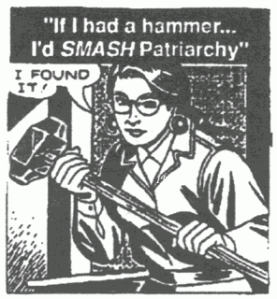
feminist-hammerSometimes I feel as if I am becoming a wind-up doll of feminist outrage: point me in the direction of the newest misogynist disgrace, turn my key a few times, then watch me sputter and rant away. And maybe I’ll break this pattern, one of these years. But how can I do anything but voice my outrage when there are so many legitimately rage-inducing things happening every damn day?!?

Today’s miscarriage of justice is brought to you by the highest court in the land. As summarized by ABC News:

In a deeply divisive case pitting advocates of religious liberty against women’s right’s groups, the Supreme Court said today that two for profit corporations with sincerely held religious beliefs do not have to provide a full range of contraceptives at no cost to their employees pursuant to the Affordable Care Act.

So, in other words:

https://twitter.com/bakerbk/statuses/483642132750553090

(h/t The Advocate)

Never mind the hypocritical contrast, reported by Forbes back in April, between Hobby Lobby’s 401k investments and the “deeply held religious principles” argued before SCOTUS:

In what just may be the most stunning example of hypocrisy in my lifetime, Mother Jones has uncovered numerous investments on the part of Hobby Lobby’s retirement fund in a wide variety of companies producing abortion and contraception related products. . . . In the case of the Hobby Lobby corporation, the company is closely held by the Green family who purport to have strong religious objections to certain types of contraceptive devices and are suing to protect those religious rights.

Remarkably, the contraceptive devices and products that so offend the religious beliefs of this family are manufactured by the very companies in which Hobby Lobby holds a substantial stake via their employee 401(k) plan.

Never mind all the ways this decision is actually deeply out-of-step with public opinion on the matter:

According to a new Reuters/Ipsos poll that surveyed more than 10,600 people earlier this month, the majority of Americans don’t believe that business owners should be able to invoke their religious beliefs in order to avoid offering contraceptive coverage to their workers. (ThinkProgress)

Let’s just look at the decision itself and all of the ways it is appallingly bad.

First is the way this decision supports bad science: Hobby Lobby’s argument against supporting its employees’ access to these particular contraceptives is based in the fervently held and entirely incorrect belief that these contraceptives function as abortifacients:

Had any court subjected the Greens’ claims to evidentiary proof, it surely would have reached the same conclusion shared by the scientific community: None of the mandated contraceptive devices to which the Greens and Hobby Lobby object are “abortion-inducing.” (RH Reality Check)

Which brings me to major terrifying problem number two: the “minefield” of implications opened up by the Court’s ruling “that commercial enterprises, including corporations, along with partnerships and sole proprietorships, can opt out of any law (saving only tax laws) they judge incompatible with their sincerely held religious beliefs” (Justice Ginsberg’s dissent, as quoted by HuffPo). Many other commentators have remarked upon the ruling’s possible implications for business owners to justify a denial of additional modes of care that contradict their deeply-held religious beliefs — even when those beliefs are profoundly controverted by medical evidence and practice. To quote Justice Ginsburg again (this time, by way of Mother Jones):

Would the exemption…extend to employers with religiously grounded objections to blood transfusions (Jehovah’s Witnesses); antidepressants (Scientologists); medications derived from pigs, including anesthesia, intravenous fluids, and pills coated with gelatin (certain Muslims, Jews, and Hindus); and vaccinations[?]

But wait: the decision’s main author, Justice Samuel Alito, has headed that “slippery slope” argument off at the pass by specifically articulating the narrowness of the scope of influence for this legal precedent (via Slate):

This decision concerns only the contraceptive mandate and should not be understood to mean that all insurance mandates, that is for blood transfusions or vaccinations, necessarily fail if they conflict with an employer’s religious beliefs.

So corporations-that-have-been-awarded-legal-personhood don’t get to impose their religious beliefs on employees’ health care? Unless they’re policing women’s sexuality and reproductive cycles, of course.

Why does this not make me feel better?

Enter major terrifying problem number three: the mind-numbing misogyny at play. Again. Yet and always, ever and ever again.

“What we saw today was five male justices essentially rule that discrimination against women is not discrimination at all,” Ilyse Hogue, President of NARAL Pro-Choice America, countered. “They said it’s OK for bosses to make personal decisions about health care which we pay for with our labor.” (CNN)

No matter the legal rhetoric, the message about women and sex remains the same. It seems appropriate that that quote from Ellen Willis is from the essay “Abortion: Is a Woman a Person?” Because what’s at stake in a decision like this – and in a debate like this – is women’s basic humanity, of which sexuality is an integral part. Yes, contraception is about health and women often need birth control for medical reasons – but we also need it for sex, and that’s just fine. (The Guardian)

Oh, SCOTUS. Some days you’re at the vanguard of American growth and progress, sometimes you are just appallingly retrograde.

I have some slim level of hope that the obscenity of this ruling will, in hindsight, turn out to be one of those “winning a battle but losing the war” moments, as Slate suggests it may become:

Ever since the lawsuits began over the HHS contraception coverage mandate, the claim has been that the attacks are not about sex but about religion—which presumably has broader implications than simply resenting women’s sexual liberation. But this decision limits the employer’s religious reach exclusively to judgments about the employee’s personal use of her own vagina, and no further. . . . [I]t’s ultimately not good for the religious right to have one of its own—Alito—limit the scope of legitimate religious grousing to matters of sexuality, as if religion has nothing else going for it. Hobby Lobby may have won this battle. But it won at the price of portraying the Christian right as little more than a movement of sex-obsessed busybodies.

But considering the long-standing tradition (then and now) of policing women’s sexuality, there’s part of me be that wonders if supporters of this decision will actually be thrilled to claim the title of sex-obsessed busybodies. Because they have the way the truth and the light, and they’re saving all us evil feminists from our wantonness! No wait: they don’t actually give much of a shit about us feminists females. It’s all about protecting those poor children. At least until fetal implantation in the uterine wall. Everything after that — pre-natal health care, maternity leave, sane child-care options (both for working mothers, and also an economy where a single middle-class income is capable of supporting someone wanting to be a stay-at-home Mom or Dad)? You’re on your own.

Which is why I remain the wind-up doll of feminist outrage.

———-

At least this all serves as an opportunity to remember what a bad-ass Ruth Bader Ginsberg is. Not only did she write a blistering 35-page dissent (linked in its entirety on Scribd), she took the not-unprecedented-but-still-highly-unusual step of reading her dissent from the bench:

Dissents from the bench are a rare departure from the Court’s carefully choreographed movements. Reserved for cases in which there are heated disputes among the justices, they gave a dissenter the ability to publicly shame the majority for perceived errors. (U.S. News and World Report)

RBG-I-dissentNotorious RBG, I [heart] you!

———-

Image credits:

Feminist hammer: http://youngfeministadventures.blogspot.com/2009/07/feminist-act-of-blogging.html

I dissent: http://abovethelaw.com/2013/07/seeking-submissions-for-our-notorious-r-b-g-competition/
At the Vocational Lost and Found

[Set-up] This is the Day 16 prompt for Writing 101 — the conclusion of a three part series that began with me “losing” academia, continued with the story of how I found my career path as a non-profit fund-raiser, and now…

Today, imagine you work in a place where you manage lost or forgotten items. What might you find in the pile? For those participating in our serial challenge, reflect on the theme of “lost and found,” too.

There’s been a slight re-imagining of the topic to fit my own memoirist approach to blogging. But not as much as I might initially have imagined. [/Set-up]

———-

During my own journey from academia into non-profit management, I was aided greatly by an online community that continues to this day under the moniker Versatile Ph.D.  The community was founded by Paula Chambers, whose own biography on the site reads like its own saga of “lost and found”:

In 1991 at age 29, she left the entertainment industry and returned to school. . . . Midway through her PhD program, she realized that she would probably be happier in a nonacademic career, and founded a listserv called WRK4US (Work For Us) while dissertating, to provide a safe space where humanities PhD students could openly discuss non-academic careers. . . . After graduating in 2000, Dr. Chambers . . . became a successful grant writer and fundraiser. . . . All the while, she continued managing WRK4US in her spare time. Eventually, Paula finally realized that helping academics find non-academic careers was her true calling. She transformed WRK4US the listserv into Versatile PhD, a web-based socially positive business, in 2010. Paula runs The Versatile PhD from her home office in Los Angeles and is an in-demand speaker on the university circuit.*

And, no, I don’t work there, but I do maintain my participation, as best I can: reading the threads of discussion on the user fora, answering questions when I can and when I feel I have something worthwhile to add.

In order to maintain itself as a safe space for people to explore alt-ac careers, VPhD has a strict confidentiality policy — an entirely appropriate move, considering the unfortunate myopia too many tenured professors still have about alt-ac career paths, and the very real trouble that can be caused by such blindness and prejudice when the privileged old guard discovers someone is looking for different career options.

Out of respect for this entirely-appropriate policy, I’m not going to be dishing specifically on anyone’s life story. But even painting in broad brushstrokes, it’s amazing to consider the mixture of variability and commonality that exists within these many post-academic transitions. Everyone’s path is uniquely unique, but there are also threads of intersection, shared losses and common discoveries.

For example, there have been numerous explorations of the grieving process that occurs during the ac-to-post-ac transition. As JC articulates in hir blog From Grad School to Happiness:

You’re not just losing the concrete academic work that you either loved or hated. You’re losing an identity that you’ve had for years or decades. You’re losing a culture, and a prestigious job title, and a career path that you were convinced was going to lead to lifelong happiness. Whether you’re leaving voluntarily or because of circumstances outside of your control, it’s normal to feel some grief and sadness at such a tremendous loss of identity.

At VPhD, we’ve discussed this same loss of identity from all the moments of the journey, from voices deep in the midst of the losing, to those of us who are years-if-not-decades past the initial grieving process and can still remember the pains, the tears, and — thankfully — the coming through into a better place.

On the flip side, there’s the trajectory of self-discovery many of us traverse: finally having the space to figure out what it is we’re good at and what we actually like to do. There are places where that process is terrifying, but it can also be really exciting.

Currer Bell** writes on the site How to Leave Academia: “You do indeed have skills that workplaces value.” And it’s true.

be-more-awesomeBut perhaps more exciting to me than simply tallying up my list of transferable skills was to understand how certain things that were taken for granted at UPenn, or even devalued there, were immensely valuable once I kicked into my non-profit career. In grad school, I was no great shakes for reading and assimilating text quickly, at least not when compared to my grad school peers. Out in my non-profits? I get pretty high marks on that score. And that wacky dedication I felt to making sure student papers were graded quickly and thoroughly, even when it got me in trouble with my dissertation research? That deadline focus and those quick editing skills have been priceless when negotiating a calendar of aggressive grant deadlines.

I think there’s a certain strain of perfectionism that infects most academic settings, and so to immerse yourself in that environment can often lead one to sink deeper and deeper into the self-perception of “not good enough.” So to find out that out in the big wide world, you can indeed be good enough? And not just good enough in a “barely getting by” kind of way, but in a “fulfilled by my life and impacting the world positively” kind of way?

It’s the best thing I ever came across in the vocational lost and found.

* Apologies if my edits cut the bio to ribbons — I’m trying to use briefer quotes and write shorter things, now and again. (At least “shorter” by my own long-winded standards…)

** Love it!

———-

Image credit: https://popforms.com/maximize-your-strengths/


In the Cards

I know there’s been lots of times in my essays about fat acceptance and feminism, and even my references to climate change deniers and anti-vaxxers, that I have very much shown my old grad school habits of citing research and studies and hard science.

So it may come as some surprise to know that a week or so ago, when I was making the final decision about whether or not to audition for that show, I used a technique that is often in my discernment/decision-making repertoire: pulling tarot cards.

science_tarot_thumb[1]I started reading cards (in a very amateurish, glued-to-the-book fashion) back when I was a junior in college. It was one of the first real glimmerings I had of being connected to Source (Spirit, the “Big Good Thing,” what-have-you), and it’s something I still carry in my toolbox — a technique to get out of my own way, step away from whatever ego and mind voices I’ve got running and look for guidance and for signs. (And I’ve already talked about how fervently I do believe in signs.)

I know it may seem a bit contradictory, this combination of research-focus and of the weird woo-woo new age-y stuff. And there are times where I ask myself about that sort of duality in myself — is it a contradiction, or is it just a measure of the complexity of living in a quantum universe? And if I am so airheaded and woo-woo-y, then why do I get my back up so strong and so loud when I argue against the ways that certain cultural programs (like, oh, say fat shaming and obesity panic) are so completely unfounded in factual, objective reality?

And I think for me one of the key points of ethics I hold is marking a strong boundary between what I am willing to use to make my own personal decisions and what I think is appropriate when making larger claims about societal trends or what other people “should” be doing or not.

To distill it to the basics:

I have faith in Spirit and signs and so when I am making a personal decision for me and my life, I will readily turn to those woo-woo-y things in which I have faith. So, when looking at the conundrum of “to audition or not to audition,” a card pull was a perfect choice. It makes no strong difference for anyone else — positive or negative — regardless of which option I were to choose. So live in the faith and trust where my soul resides, pull the cards, and listen to their guidance.

But I know that individuals have different decisions regarding what their faith is — or even if they have a faith or a sense of spirituality. (I am deeply troubled by the assumptions many people hold about how it’s impossible for an atheist to have the capacity to live and ethical or moral life. Of course they can live ethically.) So, I would absolutely not want to impose my spirituality on another person’s choices. Nor do I want someone else’s personal/spiritual/scientifically-ungrounded beliefs to be imposed on me, on my life, on the culture in which I live.

And that’s why I look both to science and to Spirit for my guideposts.

———-

Inspired by the Day 19 prompt for Writing 101Today is a free writing day. Write at least four-hundred words, and once you start typing, don’t stop. No self-editing, no trash-talking, and no second guessing: just go. Bonus points if you tackle an idea you’ve been playing with but think is too silly to post about.

Not sure I think it’s too silly an idea, but it’s certainly something quietly embarrassing enough that I’ve been hesitant to explore it.

———-

Image credit: http://www.biounalm.com/2010/10/tarot-cientifico.html

[I can scarcely find the words to express how happy it makes me to know that such thing as the Science Tarot exists.]

Writing for my Health

More time with the Writing 101 backlog. Tonight’s entry is brought to you by the number 18 — the day whose prompt I should be responding to — and the letter “U” — for how uninspired that Day 18 prompt has me currently feeling. So let’s look at Day 14 instead:

Pick up the nearest book and flip to page 29. What’s the first word that jumps off the page? Use this word as your springboard for inspiration. If you need a boost, Google the word and see what images appear, and then go from there.

Today’s twist: write the post in the form of a letter.

———-

Journaling, the world seems to agree, is a good thing.

~ Janet Conner, Writing Down Your Soul

Dear Spirit,

It’s an interesting coincidence that the Writing 101 prompt asks me to “write in the form of a letter,” when that same approach is a key technique Conner suggests as a way to help “journal-writing” become “soul writing.”  The ritual of addressing the words externally, whether to God or Spirit or Inner Wisdom, serves as reminder that someone is there to listen to what I write and even sometimes to provide an answer. Whether you understand that “external” someone as out in the cosmos or housed in that still, small voice within, I think this reminder of writing’s capacity to be in dialogue and meditation is a potent one. And a reminder well-worth receiving.

During the last crazy stretch at work, I not only fell away from blogging publicly, I also fell away from the daily practice of writing in my pen and paper journal. And let me tell you, Spirit, man oh man, did I ever start to feel the ill effects of that choice.

journal-writingBy halfway through the 9-day break from my morning journaling, I could quite literally feel the bile and the poisons building up in my system — frustration, anxiety, negativity of all shapes and sizes — without release. Without a safety valve. Without giving myself the space to vent off the poison and, by the very nature of that process of writing and voicing and studying, to — often, if not always — create a distance between my core self and the negative ego-state I was venting off. To always be able to write myself to some space of release, and to sometimes be able to write myself to a solution, or at least to a deeper level of insight.

For all that I could see the cost I was paying by last Monday, I wasn’t quite able to manage my time adeptly enough last week to reconnect with journal-writing* during the final crazed days of proposal work.

I finally cracked back into my journal last Friday morning. And the internal space and clarity I feel now that I’ve been back to this morning practice is palpable. It’s like I can almost feel that old-fashioned pen nib drawing the poisons out of me, like it draws ink out of a bottle.

This shift, last week to this, is loud enough for me that I’m going to consider long and hard in future proposal cycles — or other busy times — whether I can really afford to take this resource away from myself.

That particular question will actually be a study to take on sooner than later. We have a big family vacation coming up in July, and my sense is that the travel and excursion schedule may be sufficiently robust that morning journal-writing could be damn hard to accomplish. But on days where the morning routine doesn’t work, could I still commit to 15 minutes’ writing meditation later in the day? Before dinner? Before bedtime?

And once I experiment with the benefit of a daily journaling practice — independent of when in the day the writing occurs — is this something I can bring back home to use during crazy work weeks?

That’s definitely my prayer for tonight.

* I am still avoiding the phrase “soul writing” — I’m only about halfway through Conner’s book, so I don’t yet feel clear on 1) what exactly distinguishes “soul writing” from other forms of journaling; 2) whether my daily writing would “make the cut” to be considered as soul writing; and 3) whether or not I even want to reach that standard. For now, I’m talking about my journaling as “journal-writing” — ‘cos I know that term fits and is something I value.

———-

Image credit: http://yogainmyschool.com/yoga-journal-writing-a-window-to-the-soul/


Quicksand of a Different Sort

Some days it’s like moving through quicksand. Each step, each motion carries the extra weight of pushing through the muck, knowing that every motion carries its own risk of dragging me deeper into the suffocating, drowning mud.

Some days it’s like being wrapped in fabric. It’s hard to hear things clearly. Lights and colors are dulled. The sharpness of time and recollection fade around the edges. Thoughts and attempts to find voice are all muffled, and not even muffled in nice, soft flannel. More like rough-spun wool, with its scratchy, sharp-edged fibers.

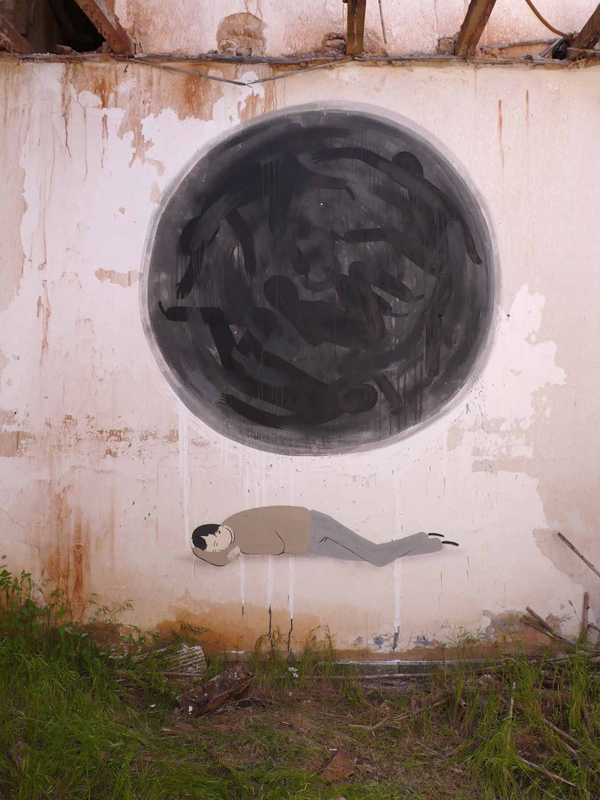
escif_May10_2_uSome days it’s like swimming in the riptide. An immense effort is required to make even the slightest bit of progress, and the risk is high that all one’s energy reserves can be depleted making this insignificant progress. Without vigilant awareness — and the judicious support of a life preserver here and there — the risk is also high of getting pulled under to breathe salt water and seaweed.

Some days it’s like the gravitational pull of a black hole. The forces of weight and gravity are so strong as they could cause a star to collapse in on itself, devouring the light and heat and energy of nature’s expression. The dark spiral of the bed-covers entwine me, holding me still and silent. Sound can’t travel in space, and the same dearth of oxygen bubbles around me, constantly suffocating.

Most days it’s like living with some sort of energetic tapeworm. Whatever nourishment I take in — rest, joy, encouragement — there’s some portion of that soul food that gets siphoned away, devoured by the parasite I carry in my brain chemistry. It seems selfish how much more nourishment I crave and request: you can’t see the hidden passenger thieving my life, thieving your gifts of kindness, love, appreciation.

Every day there is the vigilance. Have I stayed in bed a little too long? Is my resilience a little bit too shaky? Is my energy level a little too low?

I was first treated for depression back around the age of 15. Looking back beyond that, I think that some pieces of that tapestry were woven into the fabric of my life long before then. And I’m well aware that there is a vast chasm of difference between true clinical depression and the kinds of smaller sadnesses and blue moods that so often get referred to by the term.

Yet for me, there is a tonal connection from one to the other. A dotted line that sometimes-but-not-always connects the border of everyday sadness into the terra horribilis of a depressive episode. So I remain ever-watchful at any sign of sadness, energy drop, memory lapse. Analyzing any break in routine, any chink in the psychological structure.

Is today the day the beast starts crawling back?

———-

Post in response to the Day 17 prompt for Writing 101:

We all have anxieties, worries, and fears. What are you scared of? Address one of your worst fears.

Today’s twist: Write this post in a distinct style from your own.

I don’t usually go so full-out poetical, so this was a dip into the waters of that styling. Can’t decide if I think it’s genuinely evocative, or just too, too precious. It was an experiment worth trying, if nothing else.

Also, full disclosure: the “depression as tapeworm” metaphor is one I first saw a few weeks ago in a post by Mani Cavalieri on Quora. (I can’t figure out how to directly link to his answer, but you’ll find it as part of this thread.) I was very deliberate in not going back to re-read the post tonight, so my own spring-boarding off the metaphor would be solely (mostly?) my own. Still, credit where credit is due: I don’t think that metaphoric thread would have been anywhere on my radar without reading his writing on the subject. And it’s so brilliant and so entirely apt.

———-

Image credit: http://www.unurth.com/Escif-In-The-Mountains-Spain