At War with Stephen Covey

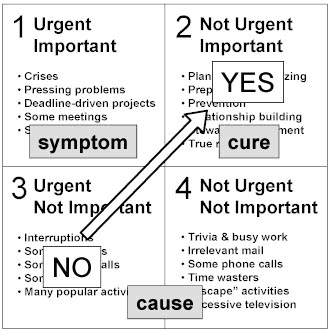
Have you ever seen Stephen Covey’s Four Quadrants of time management? I wouldn’t be surprised if you had: Gaia knows they’re everywhere across the Internet, and they’re also featured as a core component of many many management and success seminars.
covey_quadrants

I’ve cherry-picked a reproduction of the quadrants that makes the point I want. The trick, according to this structure, is to maximize your investment in the “Important but Not Urgent” quadrant, so that important things don’t elevate to “Urgent and Important” (i.e., crisis level). In the meantime, be very wary of the “Urgent but Not Important” category, because this is where the majority of the time sucks and distractors are likely to be housed. (The expectation here is that “Not Urgent/Not Important” things are fairly easy to jettison, while the urgent unimportant things can sometimes be harder to let go of. Fair enough.)

But what if it’s pretty much all urgent and important?

I feel as if I live much of my life by what I have come to call the “bonfire method of project management.”  Which conflagration is burning hottest and brightest, most likely to take down the homestead? Well, throw a little water (effort, time attention) in that direction so it dies down a touch. Now re-assess: which fire is hottest now?

Lather, rinse, repeat. (Yes, I know: I’m mixing my elements along with my metaphors. Bad witch!)

This pattern may be nothing more than an ongoing demonstration at the way I suck at self-motivation and planning ahead. Regardless, I am living a week where pretty much everything feels legitimately Important. And the tension I’m feeling is that the most urgent (time-sensitive) of these important things are all the items driven by external responsibilities — hitting the next work deadline, doing my homework for the retreat weekend, packing for the trip — while the items on the list that are arguably less urgent (i.e., most readily postpone-able) are the tasks and practices I have chosen for myself — journal-writing, ed-reading, JALC.
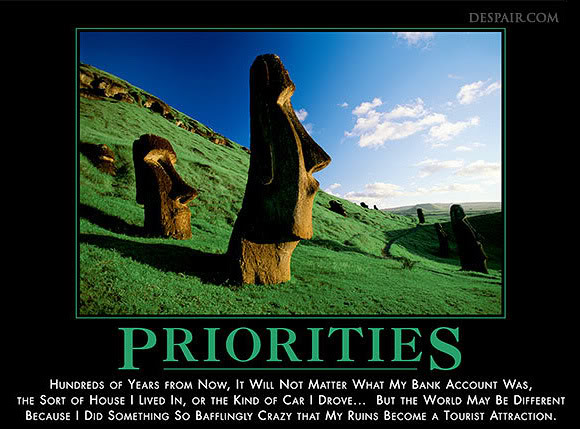
priorities_despairYes, this is, admittedly, an oversimplification. After all, no one forced me into my wacky non-profit career, and even though the retreat homework and travel is a function of me following someone else’s  direction, the retreat is also an investment in my soul’s growth.

Still, this is another pattern that often runs in my life: putting a higher priority on my responsibilities to others as compared to my responsibility to myself. After all, one of the trickiest parts of Covey’s whole structure is figuring out an answer to this key question: Important to whom?

I was listening to The Jayhawks recently, and there’s a snatch of song lyric that captures this for me:

I don’t expect you to see
But she’s important to me, babe
I guess it’s just one man’s problem

(MetroLyrics)

After all, I bet those “Urgent but Not Important” things you’re supposed to be so wary of in your ruthless Covey-an self-management structure are things that are actually legitimately important to someone, if not to you. So that ruthlessly efficient choice setting you up for success could also be the kind of choice that’s screwing some other poor sap over.

Maybe blogging or journal-writing or reading about education all seem like stupid priorities compared to Huge Essential Work projects and Elevated Cutting-Edge Soul Development work. Or, at least, maybe they would seem that way to someone outside my skin, outside my system, outside my soul and aura.

But they feel vitally important to me, babe. One woman’s priorities.

Which is why I continue cheating my sleep these past few days, trying to sprinkle some water on every last one of these important bonfires.

I don’t exactly know how I’m gonna make it to the plane intact at this pace, or, after that, how I’ll have enough gas in the tank to survive the weekend. But I’m just gonna have to figure that out step by step and minute by minute.

Because every bit of this matters.

———-

Image credits:

Covey’s quadrants: http://www.myrkothum.com/a-beginners-guide-to-time-management/

Priorities: http://s205.photobucket.com/user/johanan_rakkav/media/Parody%20Posters/poster_priorities.jpg.html


In Need of Eyebrow Pencil

You ever heard of trichotillomania? It’s a disorder where someone pulls out their own hair — sometimes a little, sometimes a lot, sometimes just eyebrows & eyelashes, sometimes from the scalp or other areas of the body.

The Trichotillomania Learning Center defines the disorder thusly:

Trichotillomania (trick-o-til-o-MAY-nee-ah) is a disorder that causes people to pull out the hair from their scalp, eyelashes, eyebrows, pubic area, underarms, beard, chest, legs or other parts of the body, resulting in noticeable bald patches. Hair pulling varies greatly in its severity, location on the body, and response to treatment. For some people, at some times, trichotillomania is mild and can be quelled with a bit of extra awareness and concentration. For others, at times the urge may be so strong that it makes thinking of anything else nearly impossible.

Trichotillomania (also referred to as TTM or “trich”) is currently defined as an impulse control disorder but there are still questions about how it should be classified. It may seem to resemble a habit, an addiction, a tic disorder or obsessive-compulsive disorder. Most recently, it is being conceptualized as part of a family of “body-focused repetitive behaviors” (BFRBs) along with skin picking and nail biting.

I’m bringing this up on account of the fact that my eyebrows are currently half-gone. Seriously. At this point, I’m trying to figure out whether it’s better to just pluck the rest of things out and draw my “eyebrows” on with a makeup pencil until they have a chance to grow back, or continue muddling forward with my patchy half-torn-out eyebrows as-is. (At least the frames of my glasses and the cut of my bangs provide some level of camouflage, whichever approach I choose.)

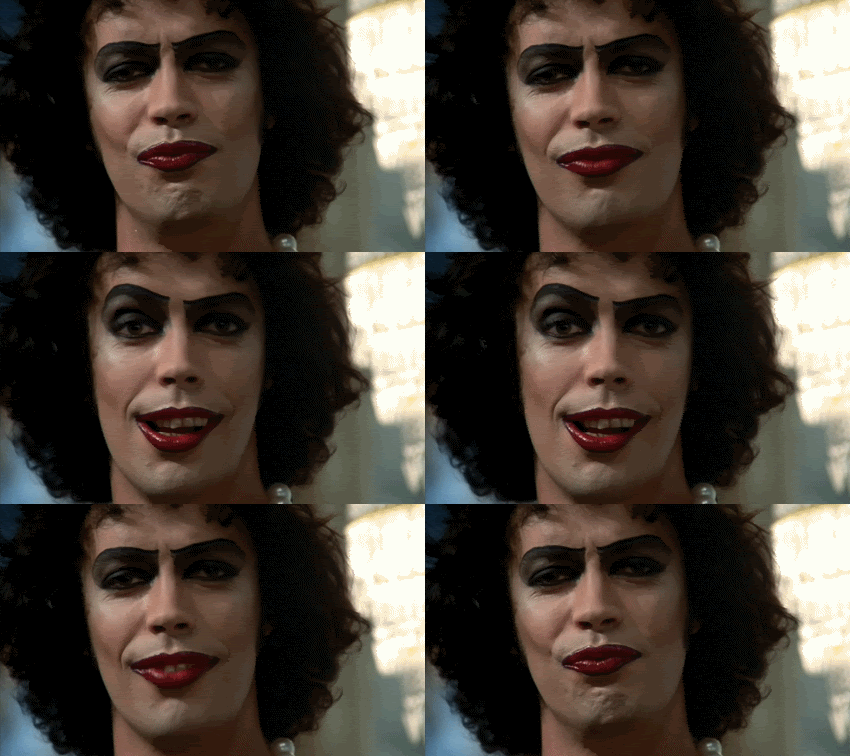
FrankenfurterEyebrowNow, I’ve never been sure as to whether the term “trichotillomania” officially applies to me — I don’t have any sort of formal diagnosis, nor have I bothered to have a doctor’s consultation about the topic. And I feel some level of concern around the possibility of taking a condition that is a very real source of struggle for folks (see: ABC News, Psych Central, Psychology Today and U.S. News & World Report) and co-opting it as a description for my own unconscious stress-behaviors.

And yet, half of my eyebrows are gone, and I don’t see any of the rest of my co-workers with strangely patchy brows. I was also particularly fascinated to see the connection drawn by the TLC between hair-pulling and other repetitive behaviors like nail-biting. Because after sternly self-discplining myself to cease that habit for a month so I could be well-manicured for The Cruise, I am fully off-the-wagon on that score, and my nails have all been bit to shreds.

So I guess it’s safe to say I’m not handling my stress as well as one might hope.

Oh well. At some level, it’s hard to get myself worked up over this particular limitation in my ability to handle the stresses of life. Maybe the the term trichotillomania would fit, if I ever chose to talk to a diagnostician about it. Even if that’s true, I’m fortunate enough to have a very mild expression of this behavior: now-and-again patchy eyebrows and occasionally a pulled-outeyelash or two. I’ve had this habit for decades, and it’s never escalated beyond that.

So all things considered and as odd as this may sound: I remain profoundly grateful for the plain dumb luck that has allowed me to have such (relatively) good fortune in my life. Even if I will be combing my bangs a little bit low for a few weeks….

———-

Image credit: http://globalgrind.com/2013/08/06/guide-steps-to-perfect-eyebrows-photos/


“Showing Up” In Virtual Space

Okay, I’ll admit: I am not feeling flush with inspiration tonight. I’ve looked at some of the go-to feminist sources on my Facebook feed for something to pontificate about. I’ve been thinking about what’s going on in my life to see if there’s something insightful or reflective that I want to say. And I got nuthin’.

However, I’m quite aware that I skipped posting Friday and Saturday night (though I did try and compensate with a split-the-difference Saturday afternoon post), so I’d like to turn that trajectory around by getting something up.

secret-to-bestseller

Especially since I’ll be off-the-grid at the end of this coming week and through the weekend — meaning, inevitably, more silence — and it’s another crazy deadlines week starting tomorrow — which may mean yet still more silence.

So what’s a young girl middle-aged blogger to do?

———-

I’m sure we’ve all heard, at one time or another, the notion that the most important ingredient to any learning/mastery/creative process is to “just show up!”

For example, this quote from an interview with Isabel Allende:

What’s the most important thing you’ve learned about writing?

Show up. Show up in front of the computer or the typewriter. And if I show up long enough – it happens.

Or this post from a blogger who cautions against advice that makes writing seem too “difficult” — an excuse for us to continue procrastinating, he says — and who insists on the simple necessity of the “just show up” message:

I am not about to tell you that writing is easy. Writing is hard. Writers never stop fearing that what they write isn’t good enough. They can’t come up with good ideas. They come up with brilliant ideas that don’t work. They write terrible things and good things. And they try to make sure that people never see the terrible things, and that as many as possible see the good things.

No writer I know thinks writing is easy.

But no writer I know thinks writing is complicated.

If you’ve been waiting to write because you think that one day someone will give you the advice that makes writing easy, stop waiting. No one can make it easy.

All we can do is make it simple.

Show up. Write.

Or there’s any number of similar sentiments in this collection of bits of writing advice from actual real writers.*

And I get this approach. I do. I believe in this approach. Even though I eventually decided not to finish my dissertation or my Ph.D., I will tell you that my most productive months on that project were once I was able to shift from a place of full-on “frozen by depression and writer’s block” to embracing the idea of daily writing on the project. Every day, putting my inner critic into her lockbox for at least a tiny little bit and putting fresh words on the page. (I know the recommendation of a Ph.D. dropout may not mean much in this context, but this was one of my productivity bibles. I can’t speak highly enough for how it benefitted my life and my work.)

So, yes, I’m a believer in “just” showing up at the page.** It’s why I strive for a daily journal-writing practice. It’s why I am often the one at work most willing to send out that “sacrificial first draft” to get a project moving. (‘Cos this much I know for sure: if we don’t get started, we ain’t never getting to the finish line.)

Mucha-MuseIn short: I am not the kind of writer who sits waiting for my muse to waft in looking like an Alphonse Mucha engraving, with her artful Art Nouveau tresses and dresses wafting on an unseen breeze. But I’m not yet sure I’ve figured out the finer points of bringing this insight into my blogging practice.

Because everything I know about “showing up at the page” is predicated on the notion of there being a first draft — whether you call it “sacrificial” or, following Anne Lamott, “shitty” — and then an editing process by which the first draft becomes something more polished, worthy of publication. But when the draft-to-publish cycle is as truncated as it is in the blogosphere, what does it look like to have the practice of showing up at the (web)page? Does it mean publishing things that are half-formed, rougher? (In short, publishing shittier things?) Does it mean cultivating more of a practice of drafting, revising, and editing for blogposts? (Which, I’ll admit, feels a touch daunting for my life’s schedule. Maybe I should cut back on even more TV…)

I don’t have this conundrum worked out yet. But, with the willingness to navel-gaze and write about the writing process, I at least found something to reflect on that justifies a post for tonight.

I’ll take care of tomorrow’s post — if there is one — tomorrow.

* ‘Scuse the snark — the post’s title, although clear as clear could be just hit a nerve tonight. D’you think maybe we’d be expecting writing advice form fry-cooks or makeup artists?

** Had to use the scare quote, ‘cos the word “just” in “just show up” kind of cheapens how essential showing up at the page is. It obscures the raw, radical courage of showing up.

———-

Image credits:

Secret to a bestseller: http://elizparker.wordpress.com/2014/04/30/writers-show-up-by-getting-a-writing-buddy/

Mucha, “Muse”: http://www.alfonsmucha.org/Muse.html

Cruise Control

So one of the things that cruises are notorious for —

Wait, did I ever mention that The Trip was a cruise? I can’t recall and I’m too damn lazy to go look it up. In case this is new news, and just to get this down on the record: The Trip was a cruise.

Display on the first cruise day, in the Windjammer (the buffet restaurant)So anyhow, one of the things that cruises are notorious for is the quantity and quality of the food you’re served. Actually, I’m not enough of a hard-cross cruise traveler to know whether all cruises are known for having good food, or if it’s more like the same rep an all-you-can-eat Vegas buffet has: food that’s notable  more for the available amount than for the flavor profile. (Even if most cruise ships have food that’s more adequate than exceptional, the ship we were on is on this list of the “best cruise ships for foodies,” so trust me when I say that not only was there tons of food available, it was tasty, tasty stuff.)

Now, there’s a whole lot of rhetoric out there about how it’s inevitable to gain weight on a cruise, with various fat-panic/fat-shaming suggestions on how to approach that “problem.” For example:

  1. controlling your on-ship behavior to minimize weight gain
  2. doing a little prophylactic weight loss ahead of time to build your “buffer zone”
  3. going on x, y, or z post-vacation diet plan
  4. deliberately infecting yourself with a parasite or the norovirus in order to stay skinny

(Okay, maybe I made that last one up. And, for once, no, I won’t be providing links to sources. I don’t feel like actively participating in Diest Culture, and you can find this kind of shit so easily with the simplest of google searches.)

It was an interesting comparison across the years, thinking back to the first-ever cruise Mr. Mezzo and I took back in 2007, right when I was at the verge of learning about fat acceptance and adopting that perspective for myself and my worldview. That first cruise also had lots of good food. I indulged, and I know I gained weight — though at this distance, I can’t recall what the number was. And I felt so ashamed for all of it. For my lack of dietary discipline, for my laziness in not becoming a cruise-ship gym-rat, and then for my inability to diet and lose the weight after I got back on land.

martinisThis time around, I decided adamantly against imbibing a guilt-and-shame chaser with any of the meals, martinis, or desserts I had while vacationing. I have no idea if my food was any less rich or sugar-laden this time around as in ’07. (I’d guess not much appreciable difference, then and now.) But I do know I’m feeling lots better than I did 7 years ago — if for no other reason than the fact that I’m not mired deep in a self-shaming and self-punishment cycle. ‘Cos honestly, when I let those voices loose in my head, it’s never to my benefit. Spiritually, emotionally, or physically.

Having said that, I am feeling a bit logy after-the-fact. I’m guessing, based on my HCG experience from the spring, that I’m mostly feeling the after-effects of the dramatic uptick in added sugar during those two weeks (read: desserts, martinis and Belgian chocolate). And I’m kind of fascinated by the way, as far as I can tell, that my spring detox journey helped me more attuned to my body so I could notice this change, but my history of fat acceptance work and my ongoing growth around overall self-acceptance has in a place where I’m not upset or blaming myself about it.

belgian-chocolateInstead, I’m just quietly moving back to some of the cooking routines and rituals I used during the spring, adopting something that’s closer to “clean eating” than I was doing recently. Now, don’t get me wrong. I am not on some extreme ascetic kick. Beyond my own natural sense of fullness, I am setting zero limits on the quantity of food I’m eating.  I’m even having a little taste of “added sugar” each night after dinner (I say again: Belgian chocolate. You don’t think we were coming home without a small stash of that to enjoy, did you?)

I’m just trying to listen to my body. And if my body is craving greens and chicken rather than my cruise staples of pasta and red meat, I’ma good with that.

Plus a little of that Belgian chocolate. Yummy and absolutely guilt-free.

———-

Image credits:

Fruit buffet: http://forsythfamily.com/caribbeancruise.htm

Martinis: http://zynkah.hubpages.com/hub/10-Best-Flavored-Martini-Recipies

Chocolate: http://www.moonlight-mile.com/belgian-chocolate/


Validation and Valediction

I chose not to give a valedictory address when I graduated high school.

This was less of a break with tradition than it might initially seem: unlike most high schools, my school didn’t automatically tap the class valedictorian to give a commencement address. Instead, individuals wanting to give a speech at this event were asked to submit an application in hopes of being selected for the honor.

Obviously, there were many years where the speaking line-up demonstrated how the sort of go-getter likely to become class valedictorian was also the same sort of go-getter likely to want to make a graduation speech.

But not every year. And not my graduation year.

———-

When I tell the story now, I jokingly say that by the time I got to high school graduation, the only message I would have wanted to share with my classmates was something pithy like Fuck off, all of you. And, as I have rehearsed the explanation nowadays, however brassy and outspoken my parents were, I thought that level of candor might have gone beyond their comfort level and thus decided that silence would be the better part of courtesy.

It’s not as if that narrative is too far off the truth.

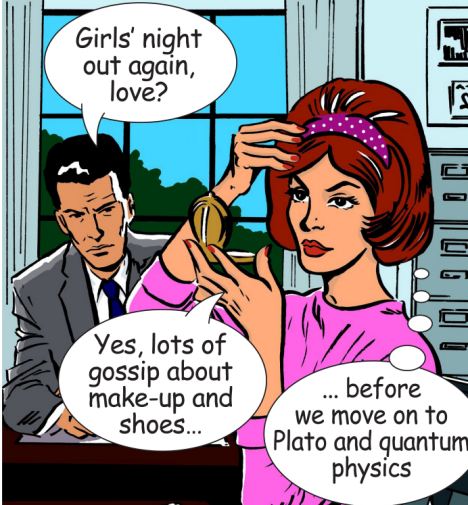
girls-night-out-quantum-physicsI recall my high school years as miserable ones. My teachers were good, and I’m not going to be so hyper-dramatic as to claim I was entirely friendless or outcast. But the prevailing tone I recall from those years is the unceasing, oppressive  cultural message from my peers that I was too smart for a girl, too ambitious for a girl, and definitely too outspoken for a girl. And despite all my “inappropriate” displays of intelligence throughout my high school career, I think a good number of my peers were shocked to have a girl come out with the #1 class rank, simply on account of my gender.

So yeah, by the time graduation rolled around, I was in no mood to say a fond good-bye to my high school class. Instead, I was ready to close that door and get on to the next stage of my life, in hopes that my intelligence wouldn’t be so scorned and devalued in my college career.*

And yet I know that underneath all the teenage bluster, all the self-protective layers of scorn and judgement I held for my BMW-driving, Reagan-loving classmates, was also a part of me that didn’t want to risk making a speech from a place of fear and exhaustion.  Fear of becoming a target again, of being snickered and whispered at. The exhaustion of feeling as if I was swimming against the tide during so many minutes and hours of my existence. Yeah, I was ready to close the door and move on, but I still can’t tell you how much of that feeling was rooted in a sense of victory and how much in defeat.

———-

My recollections are prompted by a post today on Everyday Feminism titled 5 Ways Girls are Taught to Avoid ‘Smart.’ The author, Kelsey Lueptow, begins by stating “I started censoring myself in the seventh grade.” She then goes on to outline the cultural mores and messages that help encourage her, and me, and however-many bright, ambitious girls besides, into the habits of self-betrayal and self-suppression.

The list hits some of the highlights you might anticipate: the cultural value placed on female attractiveness, the primacy of the marriage plot as a goal for women’s lives, and the social enforcement of passivity — both through the positive reinforcement of “ladylike” behavior, but also through the negative responses to female displays of intelligence (everything from the infamous “bossy” label to more overt verbal/physical aggression).

It all reminds me of this recent PSA by Verizon that got some airplay a couple months ago:

As Amanda Marcotte analyzes in Slate:

This ad gets a couple of things right. The first thing is that the ad focuses on the parents and not the girls themselves. So much of our efforts in trying to encourage girls end up treating them like they’re the ones who are screwing up, either with too much “body talk” or being lame for playing with certain toys. This ad shifts the focus, arguing that girls are born fine and it’s the rest of us who screw them up.

Just as importantly, despite the punch line of lipstick over science, most of the ad is not reductively focused on body issues and beauty. It’s all too easy to fall back on the notion that the focus on looks alone is what’s holding girls back, in no small part because it allows liberals to hand-wring about the “beauty myth” while simultaneously allowing conservatives to scold about the evils of female vanity and sexuality. But this video tackles a much more insidious force holding girls back: the general pressure on them to be, for lack of a better term, more ladylike. It points out how we not only value beauty, but also prioritize neatness, quiet, and safety in girls while encouraging risk-taking and confidence in boys.

I don’t regret skipping out on the notion of giving a valedictory address. We all make the best choices we can at any given moment in life, and I don’t have the kind of time and energy it would take to start second-guessing this decision and all the other human, possibly-flawed things I have done in my 45 years on this earth.

But I do find myself wondering about the level of self-silencing that existed within that choice, and wondering, as well, how these cultural messages against female intelligence cause me still, even today, to silence myself.

* A hope that, fortunately enough, came to pass. Yay for women’s colleges.

———-

Image credit: http://www.dailymail.co.uk/femail/article-1357755/Why-DO-smart-girls-dumb-men.html

J is for Jetlag

Okay, so there have been a few glitches here in JALC-land.

First off was a certain irregularity in the pace of scheduled posts. This has nothing to do with WordPress and was purely operator error: I had time before we left for the airport to tag and schedule the first 4 of the 6 posts I had “in the bank.” I chose an every-other-day pace, because I assumed it’d be easy to find little bits of time during travel and evenings to quickly tag & schedule the remaining 2 posts, and also to take my Game of Thrones idea and lay some quick text down.

Except then I got swept up in vacation mode, and the pace of travel and excursions was so intense, that the blog pretty much completely left my head until I sat down on our last at-sea day (21 July) to lay down that Game of Thrones text and realized — much to my chagrin — that nothing new had ben posted since the 16th. ‘Cos I’d never actually tagged and scheduled songs number 5 and 6, you see. Whoops.

jet-lag-is-comingSecondly, I know I’ve been a touch delayed in getting back to writing since returning home. Chalk this up, as well, to a touch of over-optimism on my part about my available time and energy. We landed early evening Wednesday, and although I was wise enough to know I wouldn’t have any writing in me that night, I did expect to be ready to type something quick come Thursday. Friday, at the latest.

Reality check. I am not as young as I used to be, and it turns out I was sufficiently tired-out and jet-lagged that I was in bed at around 8:30 both Thursday and Friday night. (Yup, partying like a rock star.) So, obviously, no blogging either of those evenings.

———-

first-world-problems-shampooNow, Im hoping that none of this is coming off as whining. Because a few missed blog posts and a little bit of jet lag are a tiny price to pay for a once-in-a-lifetime European trip.

So please understand: I am not complaining about any of this. (Were I to do so, it would really be the obnoxious epitome of first world problems. To the extreme.) I am filled with gratitude for where I have travelled, what I saw, what I was able to learn. What I am sure I will continue to learn as I reflect on these weeks, and as the unwinding of my life’s journey brings new layers of meaning and insight to these events and sights.

Instead, I’m simply reporting out on the various bits of foolishness that have led to JALC being in a bit more of a gone fishin’ mode than I’d expected or hoped might occur.

Now that I am (mostly) caught up on my rest and feeling (mostly) human again, I expect to be catching up on the news, which will likely inspire the occasional feminist screed. And yes, there will be some reflections on the trip and what I learned, and my usual hodgepodge of ongoing learning, reading and introspection.

TL;DR: I’m back at the keyboard.

It’s good to be home.

———-

Image credit:

Jet Lag: http://www.fitacrosscultures.com/jet-lag/

First world problems: http://moneyramblings.com/first-world-problems/


25 Songs, Day 6: You’re My Best Friend

(Part six of my exploration of the 25 songs in 25 slightly-more days blogging challenge — a way to bank and pre-schedule a few posts for JALC while I’m off a-travelling.)

25-songs-25-days

Day Song 6: A song that reminds you of a best friend

True confession: as soon as I read this prompt, Queen’s You’re My Best Friend lodged itself in my memory and it won’t let go. (Talk about an earworm…)

There’s multiple layers to my association, here. First is the literal content of the song, of course.

You’re the best friend
that I ever had
I’ve been with you such a long time
You’re my sunshine
And I want you to know
That my feelings are true
I really love you
You’re my best friend

(AZLyrics)

The song is all about “best friends,” of course. Which is probably why the song was featured in the Kenneth Branagh-directed film, Peter’s Friends, back in the early 90’s. I can’t find the exact clip on YouTube, but here’s the film’s trailer, which also features Queen’s song prominently.

The film is centered on a New Year’s Eve gathering of a group of besties in college, gathering ten years later. Various cracks in connection emerge, showing ways folks have changed and drifted apart, at least to some degree.  Yet there are stunning moments of connection, both in a nostalgic way…

…and also at the film’s conclusion — which I am not linking here on the odd chance that someone who hasn’t yet seen the film would want to do so. As such, I won’t reveal any spoilers about how things unfold, but I don’t think anyone will be especially surprised to hear that by the end of the film, the old friendships have been re-established — yes, evolved and transmuted from years of growth and change, but the connections remain sound.

best-friends-iAnd that’s the kind of thing that’s a total mystery to me. I feel as if I never quite got the hang of sustaining long-term friendships. What with my innate shyness and the frequency we moved during my childhood, it seemed as if I’d make a group of friends, and then lose touch with everyone when the family and I were yet again displaced.*

Facebook has helped me re-establish some soft connections with folks from my middle school, high school, and college days. And I truly, truly appreciate having that small chance to have a window into people’s lives, and to be able to make small pieces of contact — a “like” here, a brief comment conversation there. But I’ve not yet felt a deep enough level of comfort to really re-connect. Would I invite someone our for coffee, or even send a real personal letter or email? No, that would feel too invasive. Not really sure if that’s an accurate read on the situation, or if it’s my old habits of self-isolating coming into high gear.

So, despite my jaunty image, above, I kinda sorta feel as if I might suck as a friend. Which is probably why it’s easier for me to respond to this prompt with a memory of someone else’s fictional best friends than any songs connected to my own friendships.

* Have I talked about this before? I think I’ve talked about this before. Too strapped for time to go check.

———-

Image credit: http://didthatjusthappenblog.wordpress.com/2013/04/01/i-have-the-best-friends/

25 Songs, Day 3: In Praise of Denim

(Part three of my exploration of the 25 songs in 25 slightly-more days blogging challenge — a way to bank and pre-schedule a few posts for JALC while I’m off a-travelling.)

25-songs-25-days

Day Song 3: A song that reminds you of one or both of your parents

Obviously, both of my parents were part of the story back for Song #1 when I was discussing ABBA. But let’s be real: even though ABBA was on the list of music we all could tolerate, between my two parents, my mom was much more of an ABBA fan than my dad was.

Dad was a Neil Diamond fan. And his favorite of all of Neil’s songs was Forever in Blue Jeans:

Money talks
But it don’t sing and dance
And it don’t walk
And long as I can have you
Here with me, I’d much rather be
Forever in blue jeans

Honey’s sweet
But it ain’t nothin’ next to baby’s treat
And if you pardon me
I’d like to say
We’ll do okay
Forever in blue jeans

(AZLyrics)

There’s lots of ways Dad was the example of that old Horatio Alger ideal. He grew up in a Pennsylvania steel town; both his parents died before he was out of high school, so he went into the Air Force and then used his GI Bill benefits to get the college degree that helped him start the business career that would (pretty quickly) allow Mom, my sister and me to live in the comfort and middle-class privilege that I remember from my childhood.

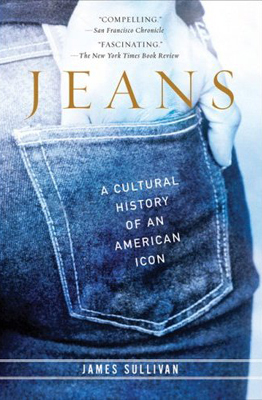
jeans-iconThere was one time when I was a little girl that he first shared a compliment with me — with all of us? I can’t quite recall. A co-worker or a boss had said something to him about how he “was as comfortable with a Big Mac as a filet mignon.” That praise meant a lot to Dad. I think it told him he’d managed to “better himself”* without becoming a snob.

And even though I’ve taking things in a much more intellectual and politicized direction, I wonder about the ways that my desire for social justice, and my ongoing practice in unpacking and understanding my privilege is a different flavor of that ideal. From a spiritual perspective, I wonder about the links between Dad’s (admittedly imperfect) egalitarianism and my desire to find compassion within myself  for people and my (hugely imperfect) practice towards the sort of acceptance that would allow me to open-heartedly “meet folks where they are.”

Maybe those are stretched connections. Maybe not.

What I know for sure: I still smile and think of Dad whenever I hear a Neil Diamond song.** And since this summer trip is an itinerary he wanted to bring the family on — we just didn’t have the chance to do it before he died — I might just be thinking of Dad a lot during this stretch of days.

Maybe I’ll load a Neil Diamond playlist on the iPod before I go.

* I know, I know: that’s an incredibly loaded and problematic way to put it. But I do think it kinda captured his perspective on the distinction between his childhood experiences and the middle-class life he was able to build for us.

** Except when I’m tearing up. Even five years later, grief can be a tricky tricky thing.

———-

Image credit: http://fashiontribes.typepad.com/main/2007/06/forever_in_blue.html


Peace Out

peace_out_by_wirdoudesigns-d62lrkoSo today’s proposal went in and things got locked down at work, the suitcases are pretty much packed, the house-sitter is keyed up, and the boarding passes are printed. Guess it’s almost time for vacation.

Of course, all of this is being done in my usual human & imperfect fashion. The house is WAY messier than I would have preferred the house-sitter to see, but I ran out of time. There’s a couple tasks at work I wanted to get done before I “handed the baton,” but I ran out of time. (Sense a theme here?) I didn’t get as many posts in the bank as I wanted to, but — sing it with me! — I ran out of time.

Oh well, I do the best I can. And sometimes my best includes packing rather too many clothes so that I have lots of options and therefore (with any luck) can stave off some of the waves of physical and existential insecurity that happen when I’m with my extended family. The luggage scale confirms that I am within airline limit, so I’ll just count my blessings on that score and let my ego-selves have this little piece of comfort. If having the extra clothes options helps me stay in my body, enjoy all the new sights and sounds, and maybe even get deeper insight into my lineal and family patterns? That’s a trade I’m willing to make.

———-

For all the “cut corners” and imperfect execution around different pieces of the pre-trip preparations, there’s one piece of preparation I’m giving its due measure to: taking the time to set an intention for this journey.

I’m not using the term in the way it so often gets public airplay in a manifestation/law of attraction kind of context. Phillip Moffitt, in Yoga Journal, does a good job of defining intention-setting from a Buddhist perspective, a definition much more in harmony with my use of the process:

Setting intention, at least according to Buddhist teachings, is quite different than goal making. It is not oriented toward a future outcome. Instead, it is a path or practice that is focused on how you are “being” in the present moment. Your attention is on the ever-present “now” in the constantly changing flow of life. You set your intentions based on understanding what matters most to you and make a commitment to align your worldly actions with your inner values.

The extra layer in my practice is to use the process as another way of seeking Spirit’s guidance — usually through drawing a card and using the card’s message as a springboard to help shape the intention I create. (See here for a description of someone doing a similar practice as a way to kick into a new year.)

Drawing a card allows me to get out of my own way and get more of a true read on whatever it is I’m going to be studying/transmuting in a particular experience. Instead of fooling myself into thinking I know what I’m going to be studying, in a very assumptive, ego-driven, self-fulfilling prophecy kind of way.

So, my card has been drawn and I will shortly go to do a little writing meditation on the card’s message. Then, if my usual system holds true, I’ll let my unconscious work on the question while I’m sleeping, and I’ll formally put pen to paper to scribe my intention tomorrow morning. Maybe even while I’m at the airport.

Stay safe, y’all. Catch you on the flip side.

———-

Image credit: http://wirdoudesigns.deviantart.com/art/Peace-Out-367171800

On Modulations and Tone

(Quick hit: another proposal due tomorrow, and also much in the way of packing/preparing for the house-sitter. Still, since these grounds will be semi-fallow for a stretch of time, I am compelled to put something up, even if it’s more quotes from others’ writing than words of my own.)

tone_police_sheriffAs I’ve been expressing my outrage over various current issues during the last several weeks, I’ve been aware of a delicate push-pull within my system around the issue of tone: how to speak strongly without “going overboard.” In short, being just a little tiny bit invested in tone policing myself.

Obviously, that investment has only been a few pences’ worth — I know what bullshit tone policing is:

The tone argument is a form of derailment, or a red herring, because the tone of a statement is independent of the content of the statement in question, and calling attention to it distracts from the issue at hand. Drawing attention to the tone rather than content of a statement can allow other parties to avoid engaging with sound arguments presented in that statement, thus undermining the original party’s attempt to communicate and effectively shutting them down.

And, therefore, I don’t do a whole lot of policing myself. But I do a little.

For example, I know I’ve said the phrase “morally repugnant” a few times in the last week as I’ve been responding to SCOTUS’ shenanigans. Plenty strong of a description, I suppose. But a step or two shy of the word I hear in my head to label these decisions and the misogynist world-view they embody: evil. (Yeah, I went there.)

I’ve been lucky thus far not to have anyone outside of myself pull the tone policing card on my writing. If that had occurred, I’d probably have responded with an explanation of the ways that anger is justifiable, appropriate, and even inevitable in situations that reveal the many injustices of the kyriarchy. To quote Do or Die:

Living in a world that reminds you daily of your lesser worth as a human being can make a person very tired and emotional. When someone says something oppressive . . . it feels like being slapped in the face, to the person on the receiving end. The automatic response is emotion and pain. It’s quite exhausting and difficult to restrain the resulting anger. And, frankly, it’s cruel and ridiculous to expect a person to be calm and polite in response to an act of oppression. Marginalized people often do not have the luxury of emotionally distancing themselves from discussions on their rights and experiences. 

[. . .] Now, I’m not saying it’s okay to be abusive, or oppressive in response to a person who fucks up. But anger is valid. Anger is valid, anger is important, anger brings social change, anger makes people listen, anger is threatening, and anger is passion. Anger is NOT counterproductive; being “nice” is counterproductive. Nobody was ever given rights by politely asking for them. Politeness is nothing but a set of behavioral expectations that is enforced upon marginalized people.

And this is all true to my understanding of the world and of human psychology, and of activism and social justice work.

But a day or two ago, I happened across something that puts even another lens on the occasional necessity of outrage and outraged speech.

If you speak about injustice and privileged people get offended, people will condescendingly explain to you that things are easier to hear if you are nice, and that you are more likely to convince people if you speak to them respectfully.

This is true, and often important to keep in mind – but people who say that to you in a conversation about injustice are usually missing the point.

They’re ignoring something fundamentally important about addressing injustice: Sometimes, the goal is not to convince privileged people to treat others better. Sometimes, the goal is to convince marginalized people that the way they are being treated is unjust and that it’s possible to resist.

Now, I’ll admit to the smallest bit of discomfort about the phraseology around “convincing marginalized people . . . that it’s possible to resist.” Something about it rings a bit too close to “white savior” territory for my liking.

Nonetheless, there’s a piece of this that’s really opening my perspective. What are the ways my writing is for the public (it is in a public forum after all), and what are the ways I am the primary beneficiary of my words? How does my writing help me overcome the habits of self-silencing?  Are there times I’m hoping to change minds and hearts, and other times where I have no expectation to “convert” disbelievers but simply need to sound a rallying cry for myself, my friends, my allies? Or sometimes a paradoxical mixture of both those strands?

What my purpose for writing isn’t an either/or but instead is a plurality, a yes/and?

———-

Image credit: http://thetonepolice.tumblr.com