Immoral Hobbies

feminist-hammerSometimes I feel as if I am becoming a wind-up doll of feminist outrage: point me in the direction of the newest misogynist disgrace, turn my key a few times, then watch me sputter and rant away. And maybe I’ll break this pattern, one of these years. But how can I do anything but voice my outrage when there are so many legitimately rage-inducing things happening every damn day?!?

Today’s miscarriage of justice is brought to you by the highest court in the land. As summarized by ABC News:

In a deeply divisive case pitting advocates of religious liberty against women’s right’s groups, the Supreme Court said today that two for profit corporations with sincerely held religious beliefs do not have to provide a full range of contraceptives at no cost to their employees pursuant to the Affordable Care Act.

So, in other words:

https://twitter.com/bakerbk/statuses/483642132750553090

(h/t The Advocate)

Never mind the hypocritical contrast, reported by Forbes back in April, between Hobby Lobby’s 401k investments and the “deeply held religious principles” argued before SCOTUS:

In what just may be the most stunning example of hypocrisy in my lifetime, Mother Jones has uncovered numerous investments on the part of Hobby Lobby’s retirement fund in a wide variety of companies producing abortion and contraception related products. . . . In the case of the Hobby Lobby corporation, the company is closely held by the Green family who purport to have strong religious objections to certain types of contraceptive devices and are suing to protect those religious rights.

Remarkably, the contraceptive devices and products that so offend the religious beliefs of this family are manufactured by the very companies in which Hobby Lobby holds a substantial stake via their employee 401(k) plan.

Never mind all the ways this decision is actually deeply out-of-step with public opinion on the matter:

According to a new Reuters/Ipsos poll that surveyed more than 10,600 people earlier this month, the majority of Americans don’t believe that business owners should be able to invoke their religious beliefs in order to avoid offering contraceptive coverage to their workers. (ThinkProgress)

Let’s just look at the decision itself and all of the ways it is appallingly bad.

First is the way this decision supports bad science: Hobby Lobby’s argument against supporting its employees’ access to these particular contraceptives is based in the fervently held and entirely incorrect belief that these contraceptives function as abortifacients:

Had any court subjected the Greens’ claims to evidentiary proof, it surely would have reached the same conclusion shared by the scientific community: None of the mandated contraceptive devices to which the Greens and Hobby Lobby object are “abortion-inducing.” (RH Reality Check)

Which brings me to major terrifying problem number two: the “minefield” of implications opened up by the Court’s ruling “that commercial enterprises, including corporations, along with partnerships and sole proprietorships, can opt out of any law (saving only tax laws) they judge incompatible with their sincerely held religious beliefs” (Justice Ginsberg’s dissent, as quoted by HuffPo). Many other commentators have remarked upon the ruling’s possible implications for business owners to justify a denial of additional modes of care that contradict their deeply-held religious beliefs — even when those beliefs are profoundly controverted by medical evidence and practice. To quote Justice Ginsburg again (this time, by way of Mother Jones):

Would the exemption…extend to employers with religiously grounded objections to blood transfusions (Jehovah’s Witnesses); antidepressants (Scientologists); medications derived from pigs, including anesthesia, intravenous fluids, and pills coated with gelatin (certain Muslims, Jews, and Hindus); and vaccinations[?]

But wait: the decision’s main author, Justice Samuel Alito, has headed that “slippery slope” argument off at the pass by specifically articulating the narrowness of the scope of influence for this legal precedent (via Slate):

This decision concerns only the contraceptive mandate and should not be understood to mean that all insurance mandates, that is for blood transfusions or vaccinations, necessarily fail if they conflict with an employer’s religious beliefs.

So corporations-that-have-been-awarded-legal-personhood don’t get to impose their religious beliefs on employees’ health care? Unless they’re policing women’s sexuality and reproductive cycles, of course.

Why does this not make me feel better?

Enter major terrifying problem number three: the mind-numbing misogyny at play. Again. Yet and always, ever and ever again.

“What we saw today was five male justices essentially rule that discrimination against women is not discrimination at all,” Ilyse Hogue, President of NARAL Pro-Choice America, countered. “They said it’s OK for bosses to make personal decisions about health care which we pay for with our labor.” (CNN)

No matter the legal rhetoric, the message about women and sex remains the same. It seems appropriate that that quote from Ellen Willis is from the essay “Abortion: Is a Woman a Person?” Because what’s at stake in a decision like this – and in a debate like this – is women’s basic humanity, of which sexuality is an integral part. Yes, contraception is about health and women often need birth control for medical reasons – but we also need it for sex, and that’s just fine. (The Guardian)

Oh, SCOTUS. Some days you’re at the vanguard of American growth and progress, sometimes you are just appallingly retrograde.

I have some slim level of hope that the obscenity of this ruling will, in hindsight, turn out to be one of those “winning a battle but losing the war” moments, as Slate suggests it may become:

Ever since the lawsuits began over the HHS contraception coverage mandate, the claim has been that the attacks are not about sex but about religion—which presumably has broader implications than simply resenting women’s sexual liberation. But this decision limits the employer’s religious reach exclusively to judgments about the employee’s personal use of her own vagina, and no further. . . . [I]t’s ultimately not good for the religious right to have one of its own—Alito—limit the scope of legitimate religious grousing to matters of sexuality, as if religion has nothing else going for it. Hobby Lobby may have won this battle. But it won at the price of portraying the Christian right as little more than a movement of sex-obsessed busybodies.

But considering the long-standing tradition (then and now) of policing women’s sexuality, there’s part of me be that wonders if supporters of this decision will actually be thrilled to claim the title of sex-obsessed busybodies. Because they have the way the truth and the light, and they’re saving all us evil feminists from our wantonness! No wait: they don’t actually give much of a shit about us feminists females. It’s all about protecting those poor children. At least until fetal implantation in the uterine wall. Everything after that — pre-natal health care, maternity leave, sane child-care options (both for working mothers, and also an economy where a single middle-class income is capable of supporting someone wanting to be a stay-at-home Mom or Dad)? You’re on your own.

Which is why I remain the wind-up doll of feminist outrage.

———-

At least this all serves as an opportunity to remember what a bad-ass Ruth Bader Ginsberg is. Not only did she write a blistering 35-page dissent (linked in its entirety on Scribd), she took the not-unprecedented-but-still-highly-unusual step of reading her dissent from the bench:

Dissents from the bench are a rare departure from the Court’s carefully choreographed movements. Reserved for cases in which there are heated disputes among the justices, they gave a dissenter the ability to publicly shame the majority for perceived errors. (U.S. News and World Report)

RBG-I-dissentNotorious RBG, I [heart] you!

———-

Image credits:

Feminist hammer: http://youngfeministadventures.blogspot.com/2009/07/feminist-act-of-blogging.html

I dissent: http://abovethelaw.com/2013/07/seeking-submissions-for-our-notorious-r-b-g-competition/

Crazy Like a Fox

Dear Fox Executives,

Why do you always kill the things I love? Is it greed? Corporate stupidity? Do you have some spy-bugs in my house just to figure out what I like, what I’m getting passionate about, so you can hurry up and cancel it ‘cos you have something specifically against me?

One of my first recollections of this pattern is from the early 90’s, when The Adventures of Brisco County Jr. was unceremoniously cancelled after only one cracking season. Luckily, I was able to follow Bruce Campbell to other projects like Herc and Xena, but still it hurt. A clever, comical steampunk western: fresh, funny and fun. And yet away it went.

kirk_firefly-gets-one-season_5174

Of course, the level of cultural tragedy you created by canceling Firefly is legend. Even now, 12 years later, the level of wasted potential around that is enough to make a grown woman weep quietly in her beer — or glass of water, as “the woman” is more prone to be drinking nowadays. The show was creative, funny, suspenseful. The cast gelled in a way that is rare enough for actors to reminisce about a “once in a lifetime” job and for audience members to create clip compilations on YouTube capturing favorite lines and scenes. We Whedonites proved you wrong by making the DVD sales explode to a large enough degree that the “Big Damn Movie” happened, but none of that erases the way that Joss’s skills in the long narrative arc could have given me years of enjoyment in Firefly’s universe. But you, Fox TV? You killed that dream dead.

(Of course, in said BDM, Joss also killed a couple of the things I love, which means that even if there were a miraculous Firelfy reboot, the experience would be made more hollow. But that’s for Joss’s own “Why do you kill all the things I love?” letter — and Gaia knows, he’s earned one. And you know what, Fox TV executives? This hypothetically less-satisfying Firefly reboot is still always and eternally hypothetical because the show is never coming back. And why is that? Because you killed that dream dead.)

one-does-not-simply-get-over-fireflys-cancellation

When you scheduled Joss’s show Dollhouse a few years later, I’m sure I was part of a legion of fans wanting to ask Mr. Whedon “What are you smoking?” Going back into business with the antichrist….that’ll end well. And I’ll admit that season 1 took a bit of time to find its footing (see exhibit A: Buffy). But Epitaph One blew the top off this universe, and showed how, once again, we were likely to get the best of the long game in seasons 2-5 (again, exhibit A: Buffy, and also exhibit B: Angel). Sure enough, season 2 was kicking ass and taking names, and yet, according to the Fox executive’s suite, that was still all she wrote.

In between these flirtations with Joss Whedon falls the aborted television run that perhaps sticks in my craw more than any other: another “screw you” to Nathan Fillion, this time for his series Drive. The official series record shows that Fox gave this 4 episodes before pulling the plug. But that doesn’t even begin to capture the indignities you made the show suffer. First you burned off the first two world-and-myth-creating episodes in the Friday night death slot, then you showed episodes 3 and 4 in the “normal” early-week slot — never mind the fact that viewers coming into the regular time slot wouldn’t be able to figure out what the hell was going on because you burned off the world-creation eps on Friday night!! Ultimate time elapsed: about a week and a half.

I know that every now and then a show hits the zeitgeist and becomes a phenomenal smash from night one, but that event is awfully rare and isn’t really something you should count on. So maybe, just maybe, you should give a show longer than 10 days?

As I was looking up some of the air dates on these broadcasting murders, I found a terrific article by Kevin Guhl on Topless Robot that catalogs many of your other crimes against TV-manity. this includes a bunch of early cancellations — like Arrested Development, The Tick, and Wonderfalls — that weren’t included in my lament because those shows just never became my personal obsessions the way Firefly, Dollhouse, Brisco County and Drive did. When all is said and done, though, how can I disagree with this trenchant analysis?

The Fox Network is the fucking devil. How many times in the last 20 years has this story repeated itself? Fox greenlights an awesome show. Many viewers love it and practically become obsessed with the show. Fox then cancels the series after a handful of episodes because the ratings did not climb fast enough for the impatient, small-minded execs at Fox. . . . The network manages to find and purchase some of the most imaginative shows on television, and then proceeds to sentence them to a quick execution to the horror of the viewing audience. Even worse, Fox itself often sabotages its own shows by poor and erratic scheduling. Fox’s sports coverage has a history of pre-empting and therefore destroying great shows. No wonder no one watched, you fucktards; they couldn’t find the show! As for ratings, Fox obviously has unrealistic expectations to think that a show will succeed so immediately, especially in a day and age when there’s so much competition.

Yeah, what he said. Give a freaking show longer than 10 days, all right?

fox-says-cancelled

And don’t you dare fuck with Sleepy Hollow.

———-

This is the belated response to the Day 15 prompt from Writing 101:

You’re told that an event that’s dear to your heart — an annual fair, festival, or conference — will be cancelled forever (or taken over by an evil organization). Write about it. For your twist, read your piece aloud, multiple times. Hone that voice of yours!

I only had to angle the topic slightly to fit this whole feminist/geek-girl/memoir thing I got going on. As for the whole “finding your voice” thing, I didn’t pay that much attention. Like I’ve said before, no matter what other insecurities I have about writing in general and blogging in specific, I’m pretty sure that I’ve found an authentic voice to use here on JALC.

———-

Image credits:

Kirk: http://www.funniestmemes.com/funniest-memes-firefly-gets-one-season/

Boromir: http://www.troll.me/2012/04/27/boromir/one-does-not-simply-get-over-fireflys-cancellation/

Ylvis: http://sunnydale.co.vu/post/62295470041/cariebeara81492-did-you-just

When the Fat Lady Sings

BrunnhildeI am about a month behind the times in commenting on this, but back near the middle-to-end of May, I saw an NPR post about a distressing batch of reviews responding to Tara Erraught’s performance as Octiavian in Der Rosenkavalier at the Glyndenbourne Festival.

As summarized by Anastasia Tsioulcas (from a compilation gathered by Norman Lebrecht on his blog Slipped Disc),

What is stunningly apparent is just how much a woman’s body matters onstage — way more, if these five critics are to be believed, than her voice, her technique, her musicality or any other quality. . . . Bonus disgrace points to [Rupert] Christiansen [of The Telegraph], by the way, for going after the other lead in Rosenkavalier for having the temerity to be a working parent: “Kate Royal … has recently sounded short of her best and stressed by motherhood.” Kudos for pinpointing motherhood as the source of Royal’s putative shortcomings. She couldn’t possibly have been overbooked, or feeling under the weather — couldn’t have been any other reason, right?

Tsioulcas observes that the lone dissenting voice in this chorus of fat-shaming was a female opera critic; she also does a bit of counterpoint to see if these critics are as likely to mention issues of weight/stature when reviewing the work of male classical singers. (They’re not. In other news: water is wet.)

As tempting as it might be to reduce this controversy to some simplistic formula like “men critics are bad patriarchal meanies while women support each other,” that kind of reductiveness is not entirely what I see going on here. To shift to Maclean’s summary of the point-counterpoint:

Elle magazine accused critics of “fat-shaming” Erraught, who isn’t even particularly heavy by normal standards. It seemed to many like the culmination of at least a decade of unrealistic expectations for opera singers’ looks, especially among women. . . . Alice Coote, a star English mezzo-soprano, blogged on the music news site Slipped Disc to defend Erraught and remind critics that opera is “all about the human voice.” And Elle’s Natalie Matthews wondered “why bring up her weight at all?” finding the issue irrelevant to opera singing.

Others argue that it isn’t irrelevant at all. They fear that the view expressed by Coote and others could bring back the days when singers like Luciano Pavarotti were cast for singing alone, even in parts they were physically unfit for. “I don’t believe opera is all about singing,” says Wayne Gooding, editor of Opera Canada. “It’s all about music theatre. There are many reasons why somebody may not be appropriate for a particular role: wrong kind of voice, or wrong timbre, too old or too young, and yes, wrong look.” [Conrad L.] Osborne adds that “physical appropriateness, within reason, is a perfectly legitimate artistic consideration.”

(Okay, yeah, that passage also lends itself a bit to gender bifurcation, considering that once again the voices defending Erraught are female, and the voices defending body-policing are male. But that wasn’t what I was intending to look at. Move along, nothing to see here…)

Let me hone in on the pieces I wanted to chew over: the emphasis of opera as musical theater, and the tricky territory of artistic vision in creating a stage production of any show. As Anne Midgette summarized last week in the Washington Post*– the column that got me thinking that maybe, weeks later, it still was worth writing about this:

On one side of this debate are those who hold that opera is a musical experience and therefore looks are not as important as sound (witness the success of extremely large singers such as Luciano Pavarotti and Montserrat Caballé). On the other are those who aver that opera is also a theatrical experience and that appearance matters. Guess what. You’re both right. I’ve been at opera performances where the staging was awful but the singing was glorious, and nothing else mattered. I’ve been at opera performances where the production was so compelling that I was willing to overlook so-so singing. These things have to be taken on a case-by-case basis. Any time you make rules about what art “has” to be, you’re doing it wrong.

I do want there to be room for artists and creators and theater companies to be able to communicate a unique vision in their artworks, whether that be a painting, a poem, or a stage production. And it’s an uncomfortable truth that if your artistic creation has any focus to it, then there are likely other viable choices and representations that have been excluded in the creation of a particular emphasis.

Off the top of my head, I can think of three vastly different productions of Macbeth — one I attended, one was directed by a friend of mine, and the third had a friend as a member of the acting company. They all had fascinating “hooks” to them — one a meditation on ethnic violence with stagecraft that alluded to the Serbo-Croatian wars in the 1990s; one an all-female cast that thoughtfully turned the all-male productions of Shakespeare’s day inside-out; and the final one an exploration of the legacy of European colonization and of military dictatorship. Each one of these was a worthwhile lens through which to explore the original text, and there is absolutely no way that all three of those lens could have co-existed in a single production. So maybe it’s perfectly legitimate for a director to prioritize whatever he wants to prioritize in casting a show, whether it’s weighing voice over looks or vice-versa.

Except.

There’s a reason I used the gendered pronoun “he” in talking about directors, above. HuffPo: “According to Fandor, women make up a total of five percent — five percent! — of the directors in Hollywood, down from nine percent in 1998.” The Guardian: “Only 24% of directors employed by the theatres during 2011-12 were women. Looking at creative crews as a whole (directors, designers, sound designers, lighting designers and composers) only 23% of the total employed were women.”

To quote Midgette again:

The reason that “Taragate” has blossomed into such a focus of opinion and argument is that it encapsulates current flash points in our society: how we talk about weight and think about weight and how we look at and evaluate women and women’s bodies. . . . [T]here’s also a disingenuous way in which male critics (and the majority of performing-arts critics are still men) protest that it is perfectly relevant to criticize a woman not for what she does, but for how she looks. . . .

I will defend the right of critics to have strong opinions and unpopular opinions and to offer blunt and unflattering descriptions of performers. And I continue to aver that people would be even more upset if critics went away and there were no criticism at all. But it’s naive in a #YesAllWomen world to deny the implicit sexism of the discourse here. And to offer it is less an offense to our womanhood than to our intelligence.

Are there times that the emphasis on physicality can have artistic integrity to it, and if so, when and under what conditions? And when is that emphasis just another vehicle to reinforce patriarchal/misogynist cultural standards?

———-

One of the reasons this all has been so top-of-mind for me is that I am trying to decide whether to audition for a show this upcoming week. It’s been a production/audition cycle that’s been on my radar since I first started thinking about community theater a month ago, and I still haven’t figured out what I’m going to do.

I’ve felt the pain of not receiving a part, knowing (and sometimes even having it acknowledged) that I was a better singer and actor than the woman cast, but also knowing that the woman cast was thinner and prettier than me. And so I wonder whether there’s any chance of goodness stemming from bringing my “overweight” body into the audition hall, or if that’s just such a set-up for judgement and rejection that it’s not even worth engaging in.

I’d better figure this out soon. ‘Cos if I’m going to do it, I need to choose in time to actually make the audition window. And if I choose against auditioning, I want that to be an actual conscious choice, rather than me dithering until the window of opportunity closes on its own and I never actually had to take ownership of my life and choices.

This lady’s still (and forever?) fat. Is she singing? The jury’s out.

* See, they do have some respectable journalists on staff!

———-

Image credit: http://www.phrases.org.uk/meanings/it-aint-over-until-the-fat-lady-sings.html

Tempest in a Tent

Amaluna Girl Boy NetMr. Mezzo and I have tickets for the late-afternoon performance of Cirque du Soleil’s Amaluna. As any self-respecting couple out-on-the-town would be expected to do, we’re going out to dinner afterwards — although it’ll be a fairly low-key affair, given how batshit-early I need to get up tomorrow morning to knock out a 50-page proposal write-through before heading out to church choir.

All of which is to say: no lengthy post on JALC tonight.

I’ve seen a couple of Cirque shows in Vegas, and one touring production that was hosted at Temple University’s basketball stadium. However, even though I saw the big Cirque tent built at the corner of Broad and Washington for many-a-year during my time in Philly, I’ve never actually had the “big tent Cirque” experience till now. So I’m intrigued.

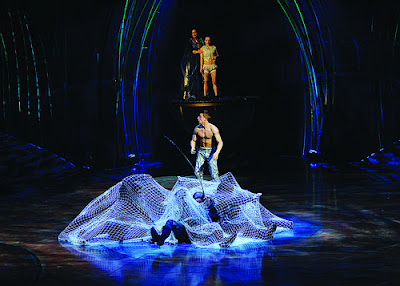
I’ve also seen tell that Amaluna is (loosely!) based on Shakespeare’s The Tempest, which adds a whole other level of interest for me. (It’s actually that core detail which moved Mr. Mezzo and me instantly from “do we want to go?” into “hell yes, let’s pick the date!”) The fact that the show was conceived by Diane Paulus, whose revival of Hair I looooove just adds an extra extra attraction.

I wonder if this show, and my desire to say something about it, will turn out to be just the inspiration I need to “phoenix up” my other long-neglected blog.

A girl can hope — such stuff as dreams are made on….

———-

Image credit: http://tapeworthy.blogspot.com/2012/06/shakespeare-without-words-hamlet-and.html


Melting My Heart

Years and years ago, I saw a Christmas-themed TV commercial where an adorable redhead is running to tell her parents that Santa had arrived! As they walk into the living room to see mountains of gifts piled up, Dad says something about “Those must have been some cookies you left out for Santa last night.” And the adorable redhead says….

Wait, let me do a Youtube check and see if I can embed the punchline for you to see with your own eyes:

(I [heart] the Internet.)

cheese-dogI have remembered this commercial with shocking clarity because it made such a profound impression on me. I, like this fictional Santa, am much more a lover of cheese than of cookies. Y’all may recall that different times throughout my HCG journey I talked about missing cheese, and when I was in that last stage of partial food restriction (fats okay, but still no carbs or grains), the thing I was most happy to bring back into my daily routine was cheese. I’m still having a cheese and egg white omelet for breakfast most mornings,* and there’s plenty of days where my late afternoon protein boost is a cheese stick or two. (Except the days it’s a small container of cashews.)

From childhood into adulthood, when I had toast or an English muffin for breakfast, I would always want to have a slice of melted cheese on top, instead of jelly. And my absolutely favorite food during my childhood was  macaroni and cheese. Lest I oversell the contrast between my childhood self and my sage maturity today, let me be really clear: I have not outgrown that love for mac & cheese. (Nor do I ever want to.)

But, even though I feel greatly abashed and embarrassed to say this — especially on a week when there’s been this whole kerfuffle about the FDA’s attempt (thankfully abandoned) to ban the making of artisanal cheeses — I have a confession to make.

I love Velveeta.

Your toxic kisses make my heart race
Faster than a cheetah
I’ve been stapled and spindled
My willpower’s dwindled
You melt resistance down like hot Velveeta!

~Reefer Madness, “Mary Jane/Mary Lane

I know, I know. Velveeta isn’t even really a cheese. The label on the box says “pasteurized recipe cheese food,” and I don’t know exactly what that means, but I do know it means “not really a real cheese.

And yet, it was a core pillar of my formative cheesy experiences. Something about its peculiar, pasteurized and processed nature gives it that uniquely “liquid gold” melty-ness. So, for many many childhood foods in my memory — the melted sauce for mac & cheese, melting a slice of cheese on top of that English muffin, cheeseburgers on the grill, cheese melted into an omelet for Sunday brunch, or even our cheese fondue on Christmas Eve — Velveeta was part of the recipe.

During those few years when we lived in Brasil, whenever Dad would head stateside for a business trip, we’d send him with an extra-large suitcase. It’d be mostly empty on the flight to the USA, and then would return chock-full of Velveeta cheese blocks and cans of Campbell’s Tomato Soup. Mom would host her own personal Velveeta cooking festival,** and I, hopelessly picky about food and struggling always to adjust to the heat, the flavors and the concrete surfaces of Sao Paolo, would feel, if only for a few dinners, like I was home.

As years have worn on, I have come more and more to replace Velveeta with really real cheeses in my life. So now, the morning omelet is made with colby-cheddar shred, the afternoon cheese sticks are mozzarella or cheddar, and if I’m melting cheese on top of toast it’ll be swiss or provolone. As for that Christmas Eve fondue? My brother-in-law, who is quite a talented cook but who doesn’t get much of a chance to express that with his work schedule, has taken that over and concocts a new and yummy combination every year.

But still. A block of Velveeta has been a perpetual staple in my fridge for my entire adult life, maintaining its prominence for two specific dishes: mac & cheese and queso. There’s even an unopened package in my fridge right now. (Why do you think it was so easy for me to get the precise wording off the box describing how it’s not really a real cheese?)

I bought it on autopilot right before I started the HCG journey, so it’s been sitting there a while. That hasn’t especially worried me — I figure the expiration date is probably 2023 or something. But I haven’t quite figured out whether I’m going to start eating it again, or toss it out unopened. I’m also not sure which imagined outcome of eating it scares me more: the possibility that my reset palate will find the flavor to be not-very-enjoyable and that my nostalgic love for Velveeta will be tarnished, or the possibility that renewed relationship with Velveeta will slide me right down the rabbit-hole of over-processed food all the time….

Until I can figure that out, I guess the package will just sit there on the bottom shelf of the fridge.

[Post-script] Writing 101, Day 10 prompt:

Tell us about your favorite childhood meal — the one that was always a treat, that meant “celebration,” or that comforted you and has deep roots in your memory.

Free free to focus on any aspect of the meal, from the food you ate to the people who were there to the event it marked.

Today’s twist: Tell the story in your own distinct voice.

Obviously, rather than following the suggestion to the letter, I ended up following the thread of a beloved food throughout multiple times and events. I also didn’t fret overmuch about “finding my voice.” If there is nothing else I am certain about in writing JALC, I do know that my voice here is authentic and authentically mine.

I can’t remember if I’ve talked about this before, but every time I sit down to write a post, and every time I feel blank or blocked within the process, the same prayer runs through me like a mantra: “Say it plain, say it true.” And yeah, my version of saying things “plain” is a slightly unusual version of the term.*** But that prayer, that compass guides me to true north. Every time. [/Post-script]

* Okay, it’s really one whole egg and a half-cup of egg whites.

** Our family’s separate body of Campbell’s Tomato Soup cuisine will, alas, have to wait for another day.

*** Perhaps the understatement of the year.

———-

Image credit: http://veryhilarious.com/i-notice-you-have-cheese/

A Matter of Perspective

different-perspective-238x300Back in college, I took one creative writing class. One of the exercises was to create a scene and tell it from two different perspectives. Being very much in a “write what you know” place, I concocted something about one student dropping by another’s dorm room to pick up notes from a missed class.

I created laughingly amateurish levels of contrast between the two characters and a somewhat tense snip of dialogue for this hand-off. Then I presented the exact same dialogue, Rashomon-style, through both POVs, trying to suggest the truth beneath each set of false assumptions. The borrower, who through the eyes of the lender looked prim, overdressed and snobby, was actually tense because she was late meeting her parents for a dinner out. While the lender, who looked through the borrower’s eyes as disorganized and a slob, was…actually, I can’t quite remember what angle I took for her inner life.

I was unaccountably proud of myself for the discipline I’d shown in reproducing the dialogue so precisely within both pieces, and how I’d worked so hard to make sure that neither girl came off entirely the villain. Which is why the most instructive piece for me about the whole experience was the response of one of my classmates — when the conversation turned to my pieces in the weekly portfolio, it became very clear that she’d bought so entirely into the perspective of the notes-lender that she’d disregarded everything I’d tried to show to explain and justify the borrower’s behavior.

———-

The lens of one’s perspective can be incredibly strong in the way it filters our understanding of what we see and experience in the world. Last fall, I saw coverage of a research study by Yale law professor Dan Kahan:

Kahan conducted some ingenious experiments about the impact of political passion on people’s ability to think clearly.  His conclusion, in Mooney’s words: partisanship “can even undermine our very basic reasoning skills…. [People] who are otherwise very good at math may totally flunk a problem that they would otherwise probably be able to solve, simply because giving the right answer goes against their political beliefs.”

In other words, say goodnight to the dream that education, journalism, scientific evidence, media literacy or reason can provide the tools and information that people need in order to make good decisions.  It turns out that in the public realm, a lack of information isn’t the real problem.  The hurdle is how our minds work, no matter how smart we think we are.  We want to believe we’re rational, but reason turns out to be the ex post facto way we rationalize what our emotions already want to believe.

This study is merely the latest of a healthy line of investigation, much of it done under the umbrella of behavioral economics, into human irrationality, manipulatability and decision-making. My passing interest in this work is one of the reasons I’m so certain that cultural transformation needs to be rooted in both the head (facts) and the heart (emotions).

But the odd offshoot of this is the ways that I’m also a little more suspicious of the notion of “putting myself in someone’s else’s shoes.” I mean, there’s lots and lots of time where the practice of compassion, the striving to understand another person’s perspective is valuable.

Sometimes, though, I wonder if the gulf of perspective is wider than can be crossed in an imagination event. A co-worker of mine back in Philly always talked about the risk of “conversations with disbelievers” — wouldn’t our advocacy energy, she wondered,  be better spent speaking to people who shared some (or all) of our core values but didn’t yet see the connection between those values and our work, rather than by trying to “convert” individual holding values drastically different from ours?

I think there’s something to that.

I also worry about the many, many ways that the news media “ideal” of balanced coverage of an issue is actually a subtle way to reinforce the assumptions and lies of the cultural status quo.  By now, the slogan “Fair and Balanced” has become self-parody, an eternal punchline:

http://www.hulu.com/watch/618470

There’s also the longstanding tradition of stories presenting two talking heads, each on one side of a controversial issue. But what are the cultural prejudices that get reaffirmed by the decision of which topics are controversial and need the point-counterpoint treatment. Remember back when I talked about media response to the book The Obesity Paradox? That story, which dared to suggest that fat prejudice might not be a good idea, required GMA’s medical editor to show up and talk about how we all still need to watch our BMI and monitor our weight. But the 2,600 diet tips and programs that have been profiled on GMA since then? Do you think there’s been any requirement for our sage Dr. to talk about how weight isn’t an accurate measure of health, and the physical harm caused by dieting/weight cycling behaviors? Of course not! (Citations here.)

And then there’s the flip side, when crackpot theories are given far more cultural dominance than they deserve* in the interest on presenting “both sides” of a story. To continue on the thread of climate change:

I’m a week behind on my John Oliver, so it’s possible that he did something so incredibly kick-ass this past Sunday night as to take the top spot on my list. But, barring that possibility, I think this moment from Episode 3 is the best damn thing he’s ever done:

(Though bringing down the FCC comments site over net neutrality preventing cable company fuckery was kind of cool, too.)

———-

[Post-script] This meditation was prompted by the Day 9 prompt for Writing 101:

A man and a woman walk through the park together, holding hands. They pass an old woman sitting on a bench. The old woman is knitting a small, red sweater. The man begins to cry. Write this scene.

Today’s twist: write the scene from three different points of view: from the perspective of the man, then the woman, and finally the old woman.

It’s another prompt that seems more aptly designed for fiction writers than for the memoirist/cultural gadfly kind of writer such as myself. But no complaints: it was a fun topic to think about, even if I took the assignment a little “slant” once again. [/Post-script]

* Actually, a “crackpot theory getting more cultural dominance that it rightly deserves” is a pretty damn accurate description of fat shaming/fat stigma, too….

———-

Image credit: http://www.questforanewperspective.com/simple-living/why-have-a-different-perspective/

Jukebox Memories

[Set-up] Okay, the Writing 101 folks are definitely on a roll with their advocacy of free-writing. Today’s prompt (Day 3!) is partly about a topic, but it’s mostly about committing yourself to a daily, full-out free-writing practice, a la Natalie Goldberg in Writing Down the Bones — no stopping, no editing, just allowing yourself to lose control and get beyond the self-censoring into the marrow of things.

Now, I don’t necessarily have a complaint against this notion in the abstract (says she with the daily morning pages/soul writing practice). I’m less convinced about my willingness to post that level of unexpurgated free-write out for all to see. For me, the thing about free-writing is exactly the way it functions as a safe space to be messy and uncontrolled and just blurt out every molecule, knowing that you can then build on the raw passion and bring in craft and shape and structure. (Do you know how hard Kerouac worked to craft that “spontaneous voice” in On the Road?!?)

But anyhow, I’m going to play the good student, set my timer for 15 minutes and type like a madwoman (in the attic?) on the topic at hand. After that, I’ll decide whether to hit “publish” or to save the free-write content as a private artifact while shaping a public blog-post.

Oh, and the topic? “Write about the three most important songs in your life — what do they mean to you?” [/Set-up]

musicThis is as unfair a question as you could possibly ask. Only three? You have got to be kidding me. With as important as music has been in my life, the idea of narrowing my life down to a jukebox with only three 45s in it is simply ludicrous.

But here’s a first thought. “Carol of the Birds” — French, maybe 14th or 15th century? It was the first time I sang a solo in a choir/stage performance. 3rd grade (we were Brasil at the time, not that that’s a pertinent detail), preparing for the Christmas concert. This was back in the days that schools still had music programs, so a Christmas concert was a regular kind of event. And the full “choir” — elementary classes — sang verses 1 and 3, with then little old me singing verse two. I honestly can’t remember at this distance whether there was an audition, whether I was just selected, whether I shared the solo with another girl. I just remember it being the first chance I really sang on my own in a public performance, and, for better and for worse, that was the start of the many years of singing and performing I have had to this day. With the love of music and expression and also all the greedy ego-desire for the spotlight and for acknowledgement. It’s such an obscure little carol that I have at least one CD in my holiday music collection that I keep primarily because it has a version of that carol on it. (Not that the rest of the CD sucks, it’s just a generally unexceptional playlist and performance style. But then this one song with all the depth of personal meaning and memory it inspires for me.)

During all my reading around the Isla Vista murders, I somehow stumbled across an article about Tori Amos and her song “Me and a Gun,” and the way it’s served as a galvanizing inspiration for women to share their own stories of sexual assault and sexual violence. Having said that and implied I might be writing my own similar thing, I’m actually going to take a slight left turn and say that the Tori Amos song that’s ringing in my head since that story is actually “Silent all These Years.” It has some of the same tone of surviving past traumas and finding one’s voice. Which are both things that speak pretty deeply to me. Thinking of the ways I’ve talked, at least obliquely, at some of my past patterns of keeping myself contained and hidden, and the stumbling efforts I take now and again to find ways to speak the truth. (I hate saying the phrase “my truth” because it has a bit of self-indulgent “new age” tone to it. Like, let me inform you about MY truth and therefore ignore your lived experience and perspective.  Though saying some thing is baldly THE truth doesn’t really do any better at ALL to ease the idea of denying other perspectives and experiences.) Anyhow, “I’ve been here, silent all these years” is ringing in my mind’s ear. I was here all along. Keeping silent, but I was here all along.

And why don’t I go the somewhat cliched route and talk about a wedding song? Our first dance was to Jason Mraz’s — what the hell is the title? this is fucking embarrassing. I can hear the tune in my head.

Okay shift. Let’s think about “Here Comes the Sun” — the James Taylor/Yo-Yo Ma arrangement that was the inspiration for our wedding musicians (flute and guitar) for a key moment in the ceremony: taking two roses from separate vases and then putting them in a vase together to signifying the joining and interweaving of two lives into one. Simple and somewhat cliche, and at some level you’d kind of expect it to be a little silly, since we’d been living together for 5 years or so by the time the wedding day rolled around. And yet this simple piece of ritual was incredibly moving and meaningful, and then as we stood holding each other’s hands and there was still a whole lot of song left to listen two, both Mr. Mezzo and I came close to finally losing our cool and becoming soggy weeping-with-joy sorts of messes.

And that’s a good stall tactic, but I still can’t remember the Mraz song.

Oh you done done  me [. . . ] so hot that I melted.”  Trying frantically to come up with more of the lyrics so I could maybe get my way to the title. This is really embarrassing. Anyhow, whenever we hear the song come on the radio, we normally dance for a t least a few seconds’ time. We’ve done that in grocery stores, in the middle of cooking, all kinds of unexpected moments and places. So I guess it’s not the title or the words that are most important to me. It’s that feeling of hearing the particular lilt of rhythm and melody and then celebrating.

Buzz!

[Post mortem] I am constitutionally unable to send this out into the world without at least correcting the spelling errors — because otherwise, I’m not so sure this would even be intelligible as English. Beyond that, I’m going to let this go up as-is, not especially ‘cos I’m thrilled about it but because it’s an insanely busy week at work. Started editing at 4 AM this morning, will have to do the same tomorrow, so there’s just not enough awake minutes left in my system for me to come up with a better alternative.

Oh? And here’s the song I blanked on. Unsurprisingly, the title came back to me within 90 seconds of that damn buzzer ringing….

[/Post mortem]

———-

Image credit: http://wantoncreation.wordpress.com/2012/06/25/my-top-ten-bands-music-monday-3/

Be Still, My Weeping Heart

Hulk-YAWPMr. Mezzo and I watched Ryan Murphy’s HBO adaptation of The Normal Heart this evening. I’d not seen the original play performed, although I had read it numerous times as part of my teaching and dissertation work. So I was really interested to see what differences there might be between Kramer’s play and Murphy’s film.*

The play debuted off-Broadway in 1985. And its initial impetus and power is summarized by Mary McNamara in the LA Times thusly:

In the early 1980s several things were obvious to writer Larry Kramer. Gay men were literally dropping dead and neither the government nor the medical establishment seemed to be doing much to stop it. Moreover, no one, outside of other — increasingly terrified — gay men, seemed to care.

So Kramer wrote “The Normal Heart,” a blunt instrument of a play debuting in 1985 in which his thinly disguised avatar, a New York writer called Ned Weeks, watches friends die, helps form the Gay Men’s Health Crisis center and does a lot of yelling. About homophobia and the Holocaust, about the perils of the closet, about society’s unforgivable hypocrisy and gay men’s own self-destructiveness.

“The Normal Heart” was a howling call to action, designed to push people out of their ignorance, complacency and seats to demand justice, and funding, for all.

Almost 30 years have passed since the play’s debut, and more than 30 years since the CDC first reported mysterious cases of kaposi’s sarcoma. With the unfolding of so much time (and the waves of cultural change wrapped in these decades), I’ll admit I was among the many individuals wondering a little bit about whether the movie would be meaningful, or effective.

It was. In a different way, but yes: deeply effective. To quote Tim Goodman in The Hollywood Reporter:

The movie is a way to remember. It takes something revered in theater circles and give it a wide release with a cache of bright stars. It will get seen, and the message about the horrible history of the beginning of the AIDS epidemic won’t be forgotten. . . . For those people who didn’t see the play or, more importantly, weren’t there to witness or read about the onset of what was first described as “gay cancer,” The Normal Heart works best as modern history. Knowing what we do now, it’s hard to fathom that so many people looked the other way.

It’s a bit hard for me to judge the film’s effectiveness as “modern history” because of the peculiarity of my knowledge around the early years of the HIV/AIDS epidemic. I’ll unpack that story in full some other day.**

Suffice for the moment to say that much in my adolescence — socioeconomic privilege, suburban home, mainstream media diet — worked to keep the spread of HIV/AIDS completely off of my threshold of awareness. However, since I chose to write my (ultimately unfinished) dissertation about artistic responses to the AIDS epidemic, I made up for my early years of sheltered ignorance with a lot of research and study.

Still, it’s one thing to research a topic, and it’s quite another to bear witness. And it is in bearing witness to those first years where I am was most profoundly moved by Murphy’s film. To my ears, Kramer’s play had always functioned better as a piece of agitprop than anything else. A howl of outrage, a wake-up call — a piece that condemned inaction but perhaps not one that opened the heart to sympathy or empathy.

And don’t get me wrong: I don’t intend this observation to suggest I have any less respect for Kramer’s play. I am not a member of the tone police, and I know that yawps of outrage and agitprop are vitally necessary. I also believe that acts of witness and stories that inspire empathy are necessary, too. Which is why it’s such an amazing thing for the seed of Kramer’s work and activism to have offered me both of those gifts.

Back in the day, Kramer’s play was one of the things that woke me up to AIDS, to its early spread, and especially to the devastating effects of prejudice and homophobia. The play opened my eyes; it made me angry.

And tonight, Murphy’s film helped re-ignite my empathy for what it might have been like to live through the early years of HIV/AIDS. It bore witness to a time when a community felt such sorrow and loss and — because of cultural disdain and indifference — it faced those losses alone. The film opened my heart; it made me cry.

Both gifts of awareness. Both gifts to be grateful for.

* For lack of a better coinage, I’m going to talk about these two different adaptations as “Kramer’s play” and “Murphy’s film.” I haven’t yet done a textual comparison, but the screenplay sure senses different enough from the original script that I think there’s some validity to addressing these as distinct — though related — artworks, rather than talking about them as two interpretations of a core text.

** I wrote a damn novella last night, so I’m trying to be a bit less loquacious tonight. Especially since I have to get up early tomorrow for work.

———-

Image credit: http://poetry.rapgenius.com/Tom-schulman-dead-poets-society-yawp-freestyle-scene-annotated#note-1685661


What We Measure Matters

I don’t usually write about the details of my 9-to-5 work (0r 8-to-6, or whatever) here in the Wild West of the blogosphere. Besides my general level of caution about being “inappropriate” or “indiscreet,” I also know someone in my circle of acquaintance who was quite literally Dooced, some years ago. So yeah: I consider discretion to be very much the better part of valor.

Marshallville-One-room-Schoolhouse-300x225What I do feel comfortable saying is that I do advancement work for an educational non-profit — which is the field and non-profit sector I’ve been working in for 11 years now. And, because it’s helpful to my work AND because I have a genuine interest in the topic, I regularly make the time to read books, articles, blogposts, etc. that help me expand my understanding of the challenges, trends, concerns, and opportunities that exist in schools and in the educational field writ large. Sometimes I even borrow books from the office “library” to help me stay plugged in.

And today, in that spirit — between the truly massive amount of sleeping I did last night, the tiny bit of laundry-folding/house-puttering that occurred, and then the lengthy nap that was required ‘cos I hadn’t slept enough last night* — I finished reading Mike Rose’s collection of essays Why School?

Rose’s subtitle, Reclaiming Education for All of Us, is suggestive of his desire to refocus the lens of educational discourse away from the usual obsessive focus on knowledge and workforce preparation as signaled by the results of high-stakes standardized testing. This desire is summarized by Rose in this HuffPo post about the book:

There’s not much public discussion of achievement that includes curiosity, reflectiveness, imagination, or a willingness to take a chance, to blunder. Consider how little we hear about intellect, aesthetics, joy, courage, creativity, civility, understanding. For that matter, think of how rarely we hear of commitment to public education as the center of a free society. . . . My hope is that “Why School?” contributes to a more humane and imaginative discussion of schooling in America.

The book is an engaging and thought-provoking read, and I definitely recommend it for folks interested in education. Be aware going in that the book is about asking big questions and providing answers that rest at the level of ideals, values, and visions. Not so many concrete implementable suggestions, but that’s okay by me.

Rose lays out a cogent analysis of how current educational trends are the inevitable flowering of a flawed set of values. I found some of the middle essays in the collection most persuasive and illuminating on this score.

For example, “Business Goes to School”  highlights the self-serving contradictions of a corporate culture that demands the education system prepare critically reflective problem-solving workers-of-the-future while also selling an easy economy of glitz and glamour and anti-intellectualism:

So many of the commercially driven verbal and imagistic messages that surround our young people work against the development of the very qualities of mind the business community tells the schools it wants. (61)

“Reflections on Intelligence in the Workplace and the Schoolhouse” calls out the intellectual laziness of intellectual snobbery around defining “intelligence” as solely located in the institutions of schoolhouse and university:

If we think that whole categories of people–identified by class, by occupation–are not that bright, then we reinforce social separations and cripple our ability to talk across our current cultural divides. . . . To acknowledge our collective capacity is to take the concept of variability seriously. . . . To affirm this conception of mind and work is to be vigilant for the intelligence not only in the boardroom but on the shop floor; in the laboratory and alongside the house frame; in the workshop and in the classroom. This is a model of mind that befits the democratic imagination. (86-87)

And, finally,** “Re-mediating Remediation”  draws on Rose’s own teaching history to argue that the most effective way to increase literacy skills for teen, college and adult learners is to address reading and writing challenges in the context of challenging, engaging, age-appropriate metrical, rather than through the usual menu of “dumbed down” workbook assignments:

[W]riting filled with grammatical error does not preclude engagement with sophisticated intellectual material, and that error can be addressed effectively as one is engaging such material. (130, emphasis added)

I am inclined to agree with Rose’s analysis that a lot of the flaws and misguided obsessions in the U.S. educational system are rooted in these flawed values and prejudices. Given that reality, I would suggest that an essential first step in effectively rethinking American education would be to plant the seeds of different, more functional values. And I’m grateful to Rose for carrying that task forward so persuasively.

* D’you think last weekend’s work finally caught up with me? I think so, too.

** “Finally” insofar as it’s the final essay I’m going to specifically highlight — not that this is the final insightful thing Rose has to say…

———-

Image credit: http://www.hcsv.org/visit/tour-the-village/marshallville-school/

The Challenge that Wasn’t


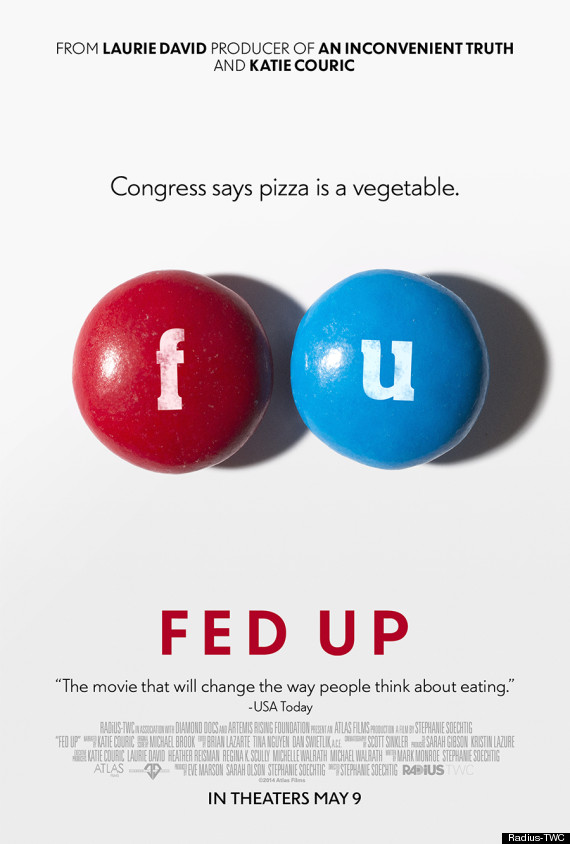
http://www.huffingtonpost.com/2014/04/10/fed-up-poster_n_5127876.html

This morning, Dan Harris and Katie Couric were on GMA reporting out on their separate experiences trying Couric’s 10-Day “Fed Up Challenge.” Basically, the challenge is an awareness-raising publicity stunt designed to accompany the release of the new documentary that, as Mark Bittman describes in the NYTimes, presents “heavy-hitting facts about the dangers of the overconsumption of sugar and other hyperprocessed food.”

Couric and the other filmmakers encouraged a sugar-elimination regime that may sound familiar to followers of my HCG journey: fresh fruits and natural sugars are okay. The challenge instead is about avoiding anything that has added sugar in it. And I’m assuming part of the motivation behind issuing this challenge was to raise some level of public awareness about the shocking number of packaged and processed foods that contain added sugars — even when you might not expect them to.

Of course, the funny thing about Couric’s challenge, when seen through an it’s-all-about-me lens, was the ways that this “new” 10-day challenged overlapped so perfectly and precisely with the final days of my HCG journey. So for me, the “challenge” to avoid added sugars was pretty much routine by the time Couric was talking about it on the news shows.

But that’s just me. I find myself wondering how many folks have chosen/will choose to take this project on.  The website currently lists close to 28,000 registrants, but my mind is racing with so many possibilities — some significant portion of those folks may have tried and stopped, or there could be many more folks who are doing the challenge without registering, and there may be folks who come across the film and the challenge in weeks to come who add themselves to the list of participants — that I can’t tell if the figure of 28,000 participants is a Mama Bear, Papa Bear, or Baby Bear kind of number. (Too big, too small, or just right?)

And whatever the number of participants is, I wonder how many of them are being impacted by the experience. Do they find the preponderance of sugar on food labels as shocking as I did? Are they contemplating changing the structure of their food habits, or are they waiting out the time before going on the next sugar binge? (And, to stop deflecting and judging others and instead to take my own damn inventory: which of those possibilities will be my path? I’ve already had some cheese popcorn and a small piece of chocolate tonight, so it didn’t take me hardly any time post-HCG to dip my toe back into the addictive waters…)

Bittner is hopeful that the movie will make an impact on the American public:

The movie addresses what the former Food and Drug Administration commissioner David Kessler calls “one of the great public health epidemics of our time.” The greater public needs to know that.

As of this writing, the movie is in 19 markets, and doing well. If it were in hundreds of theaters, it would probably change more lives than any movie released this year, because if people see the film, they will get the message. It’s not a subtle one.

And it certainly seems as if there’s enough fear of impact that the inevitable backlash from the corporate machine has started. (As, thankfully, has the backlash against the backlash, most cogently embodied by Boston’s own* Union of Concerned Scientists.)

So, I remain curious to see how this will unfold.

———-

I’m also feeling into the question of whether I’m going to see the movie, and if so, when and where I will choose to do so. I have some hesitation because of all the ways I expect the film will give me stabby feelings. Both in the desire to strike out against the food industry, but also, I fear, in my desire to take a knife to the filmmakers themselves.

Because I am pretty damn sure that the film’s argument in many instances is going to boil down to “It’s sugar’s fault for making us fat!” After all, the HuffPo teaser for the film from which I got the poster, above, leads not with the scientifically accurate and scarier facts about diabetes and the food industry, but instead with society’s true monster-under-the-bed: being fat!**

The more nuanced and accurate perspective would be to say: “Sugar causes numerous health challenges and deficits which are sometimes but not always correlated with (not causing) weight gain, so we should focus on the sugar and not on monitoring people’s body size.”

Anyone want to quote me Vegas odds for that possibility? Don’t bother: I know full well there’s not a snowball’s chance in Rome of seeing that inconvenient polemic anywhere in Fed Up. More’s the pity.

* Okay, “Cambridge,” not Boston proper. I’m still having some hometown pride…

** And believe me when I say that was the least offensive of the options I found to link to as image sources.