Good Fatty, Bad Fatty

As I continue coming to grips with last Friday’s diagnosis, I’m facing up to some uncomfortable emotional realities around the Venn diagram of overlaps between my life, my habits, my body and my diagnoses.*

Now, I don’t think I was wrong when I theorized that part of why I was thrown for such a loop last Friday had to do with me (falsely) believing that I was off the hook, only to have a sudden reversal of fortune. But another huge piece of this is just a plain old shame spiral.

The conventional rhetoric around Type 2 diabetes and my version of prediabetes is very much that it’s, like, totally preventable. That makes it very easy for me—in my usual perfectionist, hard-on-myself way—to think of myself as being “to blame” for being prediabetic. And that self-flagellation takes me down the shame path pretty darn fast.

I am now 100% in the ranks of the “bad fatty,” and I am having all kinds of shame and sadness around that.

Continue reading “Good Fatty, Bad Fatty”

February Recap and Looking Ahead

So, with the end of another month, time to milk another post out of the ongoing process of monitoring my progress on all these reading challenges. (One, two, three.) As with January, I’m going to do a small snapshot report on where I stand in regards to my initial reading plan, and where there’s been changes.

And, in light of the new diagnosis and research project I have going on, I’m also going to be putting some thought into a change of direction for the rest of 2019.

Continue reading “February Recap and Looking Ahead”

Sweet as Sugar and Ready to Punch Someone

I’ve spent much of the last 24 hours being low energy and feeling sorry for myself. Yesterday afternoon, I had more annoying & distressing follow-up from last Friday’s distressing news, so I gave myself yesterday evening and most of today to lick my wounds and regain some level of equilibrium.

I’ve held off on writing about what’s going on for this past week because I was waiting to get to some place where things were sufficiently processed/sorted/settled that I’d be able to lay things out clearly. However, I’m realizing that my thoughts and feelings are likely to be changeable for a nice stretch of time, so I might as well just start talking about things. So, welcome to JALC: The Messiness.

Here’s what’s up: Last Friday, I officially received a diagnosis of prediabetes.

Continue reading “Sweet as Sugar and Ready to Punch Someone”

Veronica’s Still on Vacay

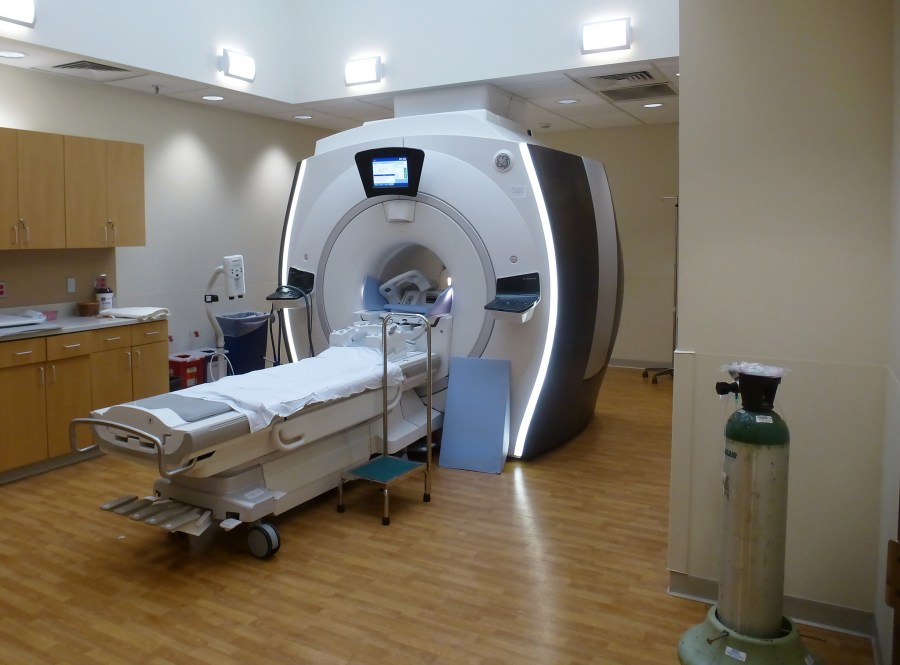
So, how’d that MRI go, when all was said and done?

Basically, everything went fine. The reading was all clear: no new areas of abnormality, so I’ve a clean bill of breast health till it’s time for my next mammogram.

The experience itself was, well, an experience.

Between last summer’s procedures and this latest scan, I’ve realized that I’m going to be spending time on the regular lying face down on medical tables with the girls hanging down through some sort of opening. Intellectually, I understand the use-value of this: gravity helps pull the breast tissue away form the rest of the chest wall, thereby making it easier to get a clear scan of the parts we’re wanting to scan.

Still, I feel as if some small part of my bodily dignity has died in this whole process, never to be resurrected again.

It is damn hard to feel like an empowered grown-up in this kind of set-up.

Continue reading “Veronica’s Still on Vacay”

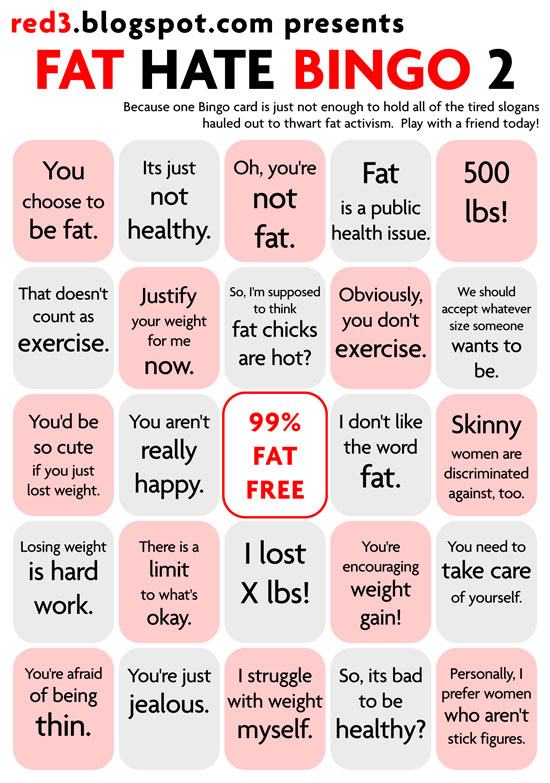
Why I Hate Weight Watchers

Over the past couple months, I’ve been in the interesting position of being faced with the news that a couple different friends are embarking on paths in pursuit of intentional weight loss. One joined Weight Watchers and one had bariatric surgery.
These different news flashes presented me with a momentary conundrum: considering everything I have read and learned in the last decade about how intentional weight loss doesn’t work, and my own desire to be a size acceptance advocate*, what, I asked myself, should I say in response to these friends making choices I didn’t especially agree with?

The Shape I’m In

One of the main living-my-life endeavors that has occupied my time and energy during my “forgetting how to write” patch was doing a show. Yes, after all was said and done, I got a part in that Sondheim show I blogged about back in May, when I was convinced I hadn’t passed muster. Go figure.

The show was Sondheim’s Company, which, for the uninitiated, circles on a group of friends in 1970 NYC: one single guy/womanizer (Bobby), 3 of his girlfriends, and 5 married couples who use their get-togethers with Bobby as a way to ease/escape whatever tensions are going on within the marital bond.

Continue reading “The Shape I’m In”

Handing Out Sticks

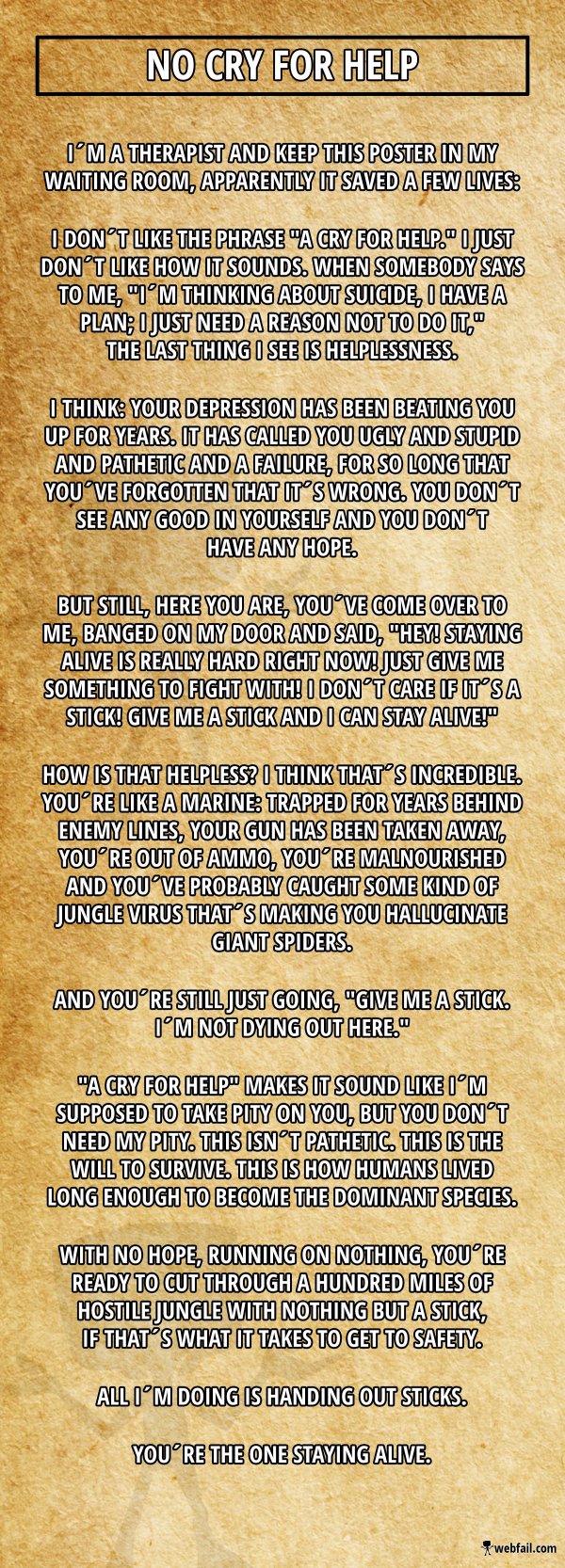
Famous blogger Matt Walsh has kicked off a bit of a tempest by writing two posts about Robin Williams’ death. The first one, basically, tried to draw a bright-line boundary between the concepts of depression and suicide. This interpretive framework (and Walsh’s reasons for wanting to drawing this sharp boundary) is pretty well summarized here:

First, suicide does not claim anyone against their will. No matter how depressed you are, you never have to make that choice. That choice. Whether you call depression a disease or not, please don’t make the mistake of saying that someone who commits suicide “died from depression.” No, he died from his choice. He died by his own hand. Depression will not appear on the autopsy report, because it can’t kill you on its own. It needs you to pull the trigger, take the pills, or hang the rope. To act like death by suicide is exactly analogous to death by malaria or heart failure is to steal hope from the suicidal person. We think we are comforting him, but in fact we are convincing him that he is powerless. We are giving him a way out, an excuse. Sometimes that’s all he needs — the last straw.

Then, after the post went viral and lots of people took issue with it, Walsh wrote a somewhat testy follow-up to: 1) decry the vitriol of individuals who misrepresented/misunderstood his first post and 2) provide more detailed justification of his position.

Among the many voices I’ve seen either directly or indirectly rebutting Walsh’s argument….

Pastor Jean-Daniel Williams, who writes:

If I commit suicide, perhaps, as you claim, it will be ‘’my’’ choice. But I doubt it. I have spent more than half my life listening to my own body betray me, my own mind telling me that it would be better to die. . . . Living is the pro-active choice. Is suicide a choice? It has been a free choice every time I have ever said no so far. I have chosen to say no. That is not because we can blindly, arrogantly, say that it is a moral choice, though. It is because I have been really lucky that I am (still) healthy enough to say no. The thing is, saying ‘’no’’ to suicide is evidence that I am healthy enough to say no. But, if I should ever commit suicide, it will not be because ‘’I’’ made the choice, but because my depression would have.

Kristi, on the blog “What is Matt Walsh wrong about today?” provides some valuable information about the effect of depression on one’s cognitive and decision-making capabilities:

Matt says suicide is a choice, but what makes a choice a choice is the presence of logic, reason, and objectivity to evaluate its merits. Depression can rob your brain of the ability to think that way. My friend Derek, a pharmacist, knows a thing or two about this. In his own words:

“In a euthymic (or normal, mildly-positive) attitude, the effect of a choice is either a reward, perhaps the blast of dopamine from a great run, or a detriment, the exhaustion of inactivity. In a person with clinical depression, both sides of that choice respond with a similar lack of neurotransmission.

A patient suffering from severe depression may not even be able to tell the choice apart. Even if objectively they know that running is good, couch is bad, they will experience the same neurochemical state regardless.”

[. . . ] So no, depression doesn’t appear on autopsy reports. But when a 500-lb thirty-year old drops dead at his desk, the autopsy reads “cardiac arrest” rather than “morbid obesity”. As usual, Matt is glossing over nuances. He thinks things are black and white—that a choice is a choice. He’s wrong. In absence of a healthy neurological system, not all actions are choices.

[SIDEBAR] Even though the fat activist in me is yearning to give significant bandwidth to the false assumptions and lack of medical evidence in Kristi’s facile conflation of “cardiac arrest” and “morbid obesity,” I’m mostly going to let it slide because I’m on a different topical horse tonight. Allow me merely a gentle hat tip to my HAES basics post, my critique of BMI, and my puzzlement at the unproductive insanity of fat-shaming. [/SIDEBAR]

[SIDEBAR THE SECOND] I am clearly way too ill-informed about the blogosphere as I hang out typing furiously in my little isolated corner of the wild, wild web. I don’t think I had ever heard of Matt Walsh till this folderol, yet he’s a prominent enough Internet figure to have earned his own dedicated counter-narrative. I don’t know if I’m impressed or horrified. [/SIDEBAR THE SECOND]

Although he doesn’t name check Walsh at all, Peter DeGiglio might as well be writing a targeted counterpoint against Walsh, articulating more reasons for understanding Williams’ death as being caused by the disease of depression:

I tried to get the old friend to understand by using my go-to comparison in this conversation. I asked, “Well, what if it was cancer?” His answer came back like a clichèd line from an after-school special. He proclaimed, “Well, that you can’t help!”

And therein, my friends, lies the problem in our dialogue on mental illness. [. . .]

What I believe people need to understand is that Robin Williams took his own life because he lost his battle with a serious medical condition. Take again my cancer analogy. Think about it: The last possible stage of any type of cancer that can effect a person is death. When one loses their battle with cancer, they die. The cancer cells take over and shut down the body for good. The same can be said for Bi-Polar Disorder and Major Depressive Disorder (aka simply “Depression”). The last possible stage of these diseases is death. The difference is that instead of cancer cells destroying the body, the body is destroyed instead by thoughts and feelings, causing the afflicted person to be convinced that the only way to end the suffering is through death at their own hands.

Essentially, he had “Thought Cancer”

———–

I feel half-vulture playing all this out on the screen. Yet another fan doing pop psychology when a celebrity dies, and doing so without much regard for the feelings of those individuals who are actually, acutely, intimately affected by his death.

So why am I even sailing these rocky waters?

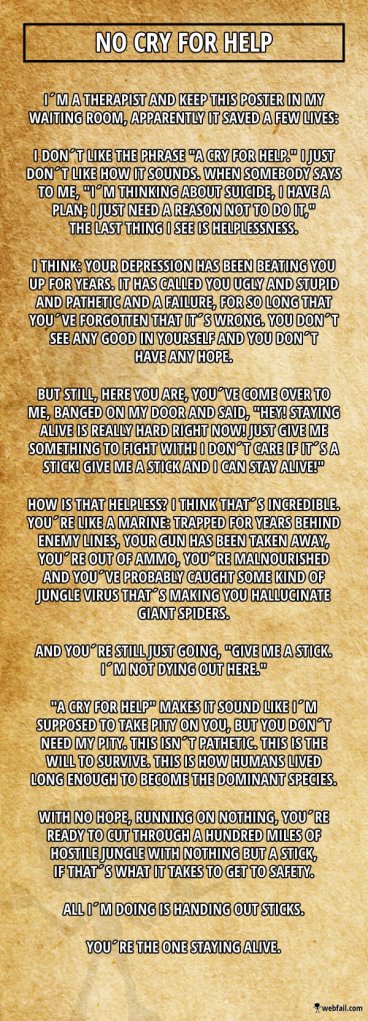
Because however much I disagree with Walsh’s perspective, no matter how fervently I believe that those suggesting we say Williams died of depression are onto a deep psychological and spiritual truth — well, here’s an uncomfortable truth of my own.

Part of me wants Walsh to be right.

I want to believe that my depression is something I can rein in, get under control. I’ve been really lucky to be able to manage the condition for several years now without prescriptions. This is nothing I’m saying as a mark of strength, of health, or of any other sort of virtue. The operative word is “luck.” Yes, I work damn hard to maintain my psychological health, but I also know you can do everything “right” and still be challenged with disease. So, yeah, I am deeply grateful for my good fortune, but I know that tomorrow’s health and tomorrow’s brain chemistry are far from guaranteed.

It’d be easier if Walsh were right. More comforting, in a childish control-freak kind of way. To know that I just need to find and follow the proper recipe so’s to be sure that I will never have to stare down the maw of despair and depression again.

But that’s not how life works.
no-cry-for-help

———-

Image credit: http://en.webfail.com/855852d8b8b
Beyond the Filters of Human Decency

Back during JALC’s first lifespan, I took some small enjoyment from watching my WordPress dashboard to see what sorts of google searches brought readers to my posts. (I even used that as an excuse for a quick one-liner-type post way back when.) Google has since redone its programming, so there’s much less of that possible on JALC’s current life cycle.

Nowadays, most everything is hidden behind an “unknown search terms” privacy curtain. I haven’t the slightest level of understanding as to why certain terms making it out from behind the curtain to appear on my dashboard, but since I know the dashboard list is a mysteriously reduced and redacted version of the “real” list, I just haven’t really paid that dashboard feature much attention this time around.

Until I got back form my trip Sunday night and saw a new phrase in that screen field:

we hate ragen chastain

In case you don’t know, Ragen Chastain is a fat activist, someone I would say is out helping lead the movement. She has a book, an active speaking calendar and is currently co-organizing an online Fat Activism Conference that will take place from August 22-24. And she has a blog, a blog that is one of my go-to sources to continue expanding my awareness and evolving my thinking around fat acceptance and health at every size.

I would wager that Chastain and I wouldn’t see eye to eye on everything. For example, my guess is that she would consider my recent HCG journey simply to be a capitulation to diet culture, even though I contextualized it for myself as a detox experience. And, you know what? If she did have some questions about my motivations, and how mixed they might have been, I can respect that. ‘Cos Gaia knows, I had to do a lot of my own inner discernment to keep unwinding my old weight loss programming so that I could keep the goals of my HCG journey distinct from losing weight. And the uncomfortable reality is that no matter how hard I worked to keep my own focus in the detox lens, my decision to do HCG meant that I financially supported a company that makes its living off of diet culture, women’s insecurity, and size policing. (Ugh.)

So yeah, I can respect how Chastain and I might have differing opinions on some things. But the level of puzzlement and shock I felt about that search term being used to find this blog is largely driven by the great level of respect I feel for Chastain, her work, her voice. (My best guess, looking back at my old posts, is that the phrase must have made contact with one of my own FA/HAES rants where I quoted one of Chastain’s posts and then talked about “hating” some fat-shaming shenanigan-or-other.)

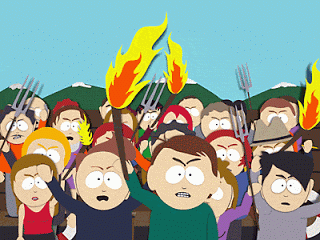
SPmobThe other piece of my upset about having been, even ever-so-peripherally, connected to that phrase is the general sense of despair and discouragement I feel about the ugly way that people treat each other, out here on the Interweb.

Often, I see the most virulent, soul-staining ugliness in misogynist response to feminist writing of some sort or other. For further commentary on this subject, see Chastain’s blog, Shakesville, Jezebel, Pacific Standard, Forbes, and the Washington Post.* To quote Shakesville:

Every time, the people with whom I share this experience express shock. It is always, always, a surprise that a woman who does public advocacy is subjected to this sort of abuse.

And it shouldn’t be. Because every single woman I know who does public advocacy is subjected to it. . . .

And then we are told not to talk about it. We are told that we empower the people who do this to us. No. NO. Victims do not empower abusers. People who refuse to acknowledge that abuse do. People who tell victims to be silent do.

I am not going to be silent. I am tired of people being surprised. I am tired of hearing “I’m sorry this happens to you.” I don’t want shock and I don’t want pity.

I want your fucking awareness and I want your fucking anger.

I want us to talk about the real costs of being a woman who does public advocacy. I want us to acknowledge how the costs of providing a safe space is that we stand on the line and absorb massive amounts of abuse. I want us to make noise about the people who create an atmosphere in which women are discouraged from participation.

And I want people to stop telling me to be quiet about it.

In addition to the politicized, misogynist harassment, there’s the general garden-variety flavors of awfulness.

Actress Zelda Williams, daughter of comedy great Robin Williams who died Monday from an apparent suicide, has quit social media after receiving taunts from Internet trolls.

Williams abandoned her Twitter and Instagram accounts Tuesday after saying at least two people were sending her Photoshopped images of her father’s dead body and other disturbing messages.

“I’m sorry. I should’ve risen above,” she wrote in her final tweet. “Deleting this from my devices for a good long time, maybe forever. Time will tell. Goodbye.”

The episode proves that, with the anonymity of the Internet, some people will be horrible no matter the situation. (CNN)

buffy_hush1Though I don’t know enough of the facts to say this for sure, I can’t help wondering whether Williams’s daughter was receiving more online harassment than his two sons, and whether she was targeted for that higher level of harassment because — well, because we live in a fucking kyriarchy, that’s because. And if my vague suspicions are true, well then there’s a very fine line indeed between “garden-variety” Internet awfulness and the misogynist endeavor to silence women’s voices.

I don’t often use the word “hate” to describe my feelings for people. Cultural trends, political positions, social patterns, even individual actions — those I’ll use the term for often enough, but not so much for referencing an individual person, in their entirety. So suffice it to say that I’m really kinda hating the way that JALC was connected (however temporarily, however peripherally) to someone on just that sort of hate-filled trip.

* PS– Am I the only one who found it odd that the WaPo’s main angle was to talk about how online harassment was viewed by or affecting the female writer’s male partner? I’m not saying, I’m just saying…

———–

Image credits: 

South Park: http://designaterobertson.blogspot.com/2012/05/your-south-park-tigers.html

Buffy: http://mentalunlockdown.com/2014/04/19/hush-ed-or-hearthstones-positive-result-from-the-gentlemens-visit/

In Need of Eyebrow Pencil

You ever heard of trichotillomania? It’s a disorder where someone pulls out their own hair — sometimes a little, sometimes a lot, sometimes just eyebrows & eyelashes, sometimes from the scalp or other areas of the body.

The Trichotillomania Learning Center defines the disorder thusly:

Trichotillomania (trick-o-til-o-MAY-nee-ah) is a disorder that causes people to pull out the hair from their scalp, eyelashes, eyebrows, pubic area, underarms, beard, chest, legs or other parts of the body, resulting in noticeable bald patches. Hair pulling varies greatly in its severity, location on the body, and response to treatment. For some people, at some times, trichotillomania is mild and can be quelled with a bit of extra awareness and concentration. For others, at times the urge may be so strong that it makes thinking of anything else nearly impossible.

Trichotillomania (also referred to as TTM or “trich”) is currently defined as an impulse control disorder but there are still questions about how it should be classified. It may seem to resemble a habit, an addiction, a tic disorder or obsessive-compulsive disorder. Most recently, it is being conceptualized as part of a family of “body-focused repetitive behaviors” (BFRBs) along with skin picking and nail biting.

I’m bringing this up on account of the fact that my eyebrows are currently half-gone. Seriously. At this point, I’m trying to figure out whether it’s better to just pluck the rest of things out and draw my “eyebrows” on with a makeup pencil until they have a chance to grow back, or continue muddling forward with my patchy half-torn-out eyebrows as-is. (At least the frames of my glasses and the cut of my bangs provide some level of camouflage, whichever approach I choose.)

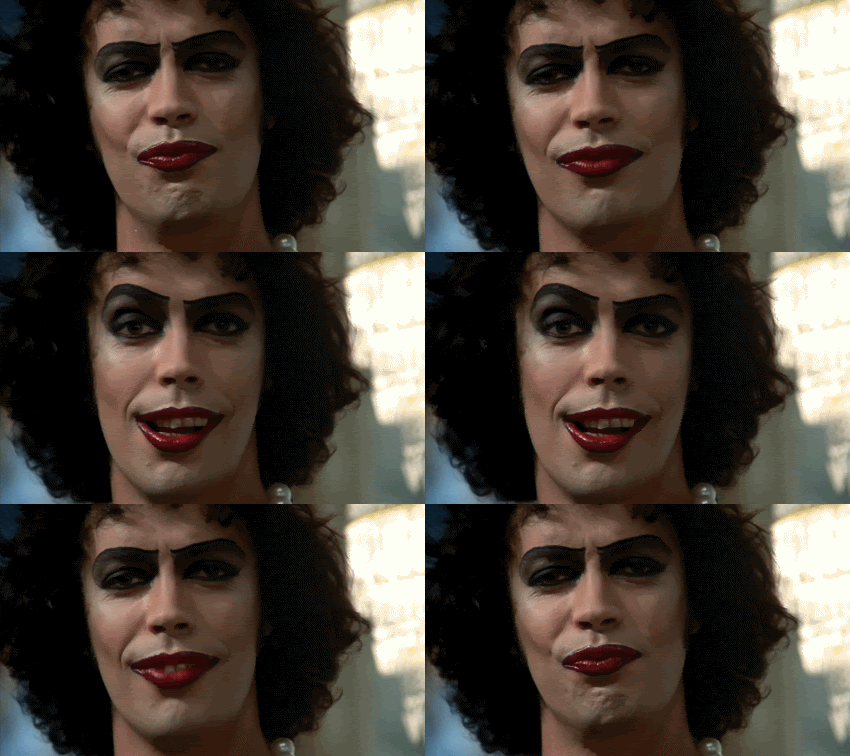
FrankenfurterEyebrowNow, I’ve never been sure as to whether the term “trichotillomania” officially applies to me — I don’t have any sort of formal diagnosis, nor have I bothered to have a doctor’s consultation about the topic. And I feel some level of concern around the possibility of taking a condition that is a very real source of struggle for folks (see: ABC News, Psych Central, Psychology Today and U.S. News & World Report) and co-opting it as a description for my own unconscious stress-behaviors.

And yet, half of my eyebrows are gone, and I don’t see any of the rest of my co-workers with strangely patchy brows. I was also particularly fascinated to see the connection drawn by the TLC between hair-pulling and other repetitive behaviors like nail-biting. Because after sternly self-discplining myself to cease that habit for a month so I could be well-manicured for The Cruise, I am fully off-the-wagon on that score, and my nails have all been bit to shreds.

So I guess it’s safe to say I’m not handling my stress as well as one might hope.

Oh well. At some level, it’s hard to get myself worked up over this particular limitation in my ability to handle the stresses of life. Maybe the the term trichotillomania would fit, if I ever chose to talk to a diagnostician about it. Even if that’s true, I’m fortunate enough to have a very mild expression of this behavior: now-and-again patchy eyebrows and occasionally a pulled-outeyelash or two. I’ve had this habit for decades, and it’s never escalated beyond that.

So all things considered and as odd as this may sound: I remain profoundly grateful for the plain dumb luck that has allowed me to have such (relatively) good fortune in my life. Even if I will be combing my bangs a little bit low for a few weeks….

———-

Image credit: http://globalgrind.com/2013/08/06/guide-steps-to-perfect-eyebrows-photos/