
 One of my other weekend activities was to get a somewhat-overdue haircut (and a color touch-up, though that was more on-time).
I had a haircut scheduled two weeks ago, but my hairdresser got sick, and I just decided to grit my teeth and wait till the Saturday coloring appointment I already had on the books.
The upshot of all this scheduling information is that my last haircut prior to this one was the weekend before I flew down to begin the HCG protocol. So, my hairdresser hadn’t seen me since this whole journey began. And I guess I look different enough now for it to be noticeable.
“You look great! Have you lost weight?”
Welcome to the compliment minefield.
———-
[HAES/FA Basics Break]
Just for clarity, let’s recap some of the reasons why this particular “compliment” is deeply problematic and not very complimentary.
As a start, here’s Regan Chastain at Dances with Fat:
People who undertake weight loss attempts are often encouraged to motivate themselves by hating their current bodies. When they are successful at short term weight loss, they are encouraged to look back at their “old body” with shame, scorn, and hatred. And that’s a big problem.
Not just because at some point the person will probably start to think “if everyone is talking about how great I look now, how did they think I looked before?” but also because the vast majority of people gain back their weight in two to five years. Then they are living in a body that they taught themselves to hate and be ashamed of, remembering all of those compliments. Yikes.
Tracy I at Fit, Feminist, and (almost) Fifty unpacks some of the deeper implications of this compliment, and its collusion within a structure of the Foucauldian panopticon:*
It reinforces the idea that it’s okay to let people know that we are monitoring and judging their bodies. One thing that shocked my friend in the story I opened with was that she really didn’t even know the person who commented on her weight. And yet the person felt completely entitled to say something. What kind of a twisted world do we live in where the state of our bodies is fair game for comments from whoever feels like making them?
Finally, here’s a meditation from Michelle Parrinello-Cason at Balancing Jane on the question of what exactly we’re praising when we compliment weight loss.
What if I say “Have you lost weight? You’re looking great!” to someone who has been starving himself for weeks. Now I’ve reinforced that behavior.
What if I tell someone she looks great when she’s actually suffering weight loss as a side effect from a deadly disease (as happened to this woman’s friend who was suffering from Lupus).
We don’t know what we’re praising if we’re only praising a result. If our goal is to encourage people to take care of themselves and to be healthy, then shouldn’t we make sure that we’re actually encouraging people to, you know, take care of themselves and be healthy?
If someone gets up an hour early and went for a run, we should praise that. That’s hard work.
If someone cooked healthy meals all week long for themselves and their family, we should praise that. That’s hard work. [. . .]
If we rethink the way that we give praise, we can begin to restructure our norms. If we praise hard work instead of outcomes and acknowledge beauty wherever we see it and the people who are doing that hard work don’t get any thinner, we’re still reinforcing positive, healthy changes. Isn’t that what we really want to value as a culture?
[/Break]
———-
For all that I agree with these multiple analyses about the problems behind my hairdresser’s statement, I also agree with Golda Poretsky at Body Love Wellness about the root cause of these “compliments”:
I think people are, in some ways, nearly literally blinded by weight loss culture. So when they read something or someone as beautiful they make an automatic connection between beauty and weight loss. I really don’t blame people for that. I think that most of us who have woken up from weight loss culture have been truly hurt by it (or have great empathy for someone close to us who has been hurt by it), so people who haven’t had that experience often just see our current weight loss culture as normal.
So the question becomes, what do you do in the moment? Depending on the context and your relationship to that person, you can handle the compliment of “You look great. Did you lose weight?” in many ways.
Among the options Poretsky lists are saying a simple thanks, setting a boundary against public discussion of your weight, or using humor to redirect the conversation. In the moment on Saturday morning, I didn’t select any of those precise options, though I feel as if I kind of rolled them all together, a bit.
I thanked her and said I’d been doing this detox diet for a number of weeks, limiting my food to lean proteins and fresh produce. I was sure some weight loss had occurred as a side effect of the detoxing, but that’s not my focus.
“Do you have an ultimate weight loss goal?”**
“Nope,” I repeated, “that’s not my focus.“
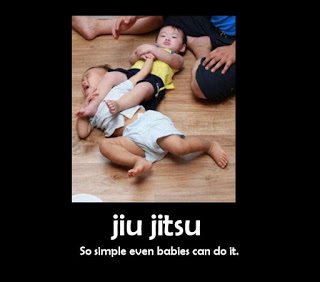
And that’s where we left the topic. Me wanting to acknowledge and appreciate her desire to say something nice and kind, while also jiu-jitsuing my way out of the specific value proposition (thin=beautiful=virtuous; fat=ugly=lazy cow) she was unconsciously peddling.
* I stumbled across this blog tonight looking for good links to use here and I am already head over heels in love with Tracy’s intelligence and insights.
** You see, this bit shows as much as anything how deeply unconscious and blinded we are by the weight loss culture. When an otherwise lovely young woman hears a statement about how weight loss isn’t my focus and then without blinking an eye disregards that assertion to ask me my weight loss goal, there’s nothing else to call that but a symptom of cultural insanity.
———-
Image credit: http://www.groundnevermisses.com/2012/02/striking-grappling-traditional-mma.html


 Self-Love: It's Just Another Lifestyle Change